KI-Beratung Beta

Gutscheinbedingungen

**Gültig vom 23.11. bis 30.11.2026 | Gültig für nicht preisgebundene fremdsprachige Bücher | Einzelne Artikel können ausgeschlossen sein | Online auf www.bücher.de einlösbar | Click & Collect nur mit Online-Zahlung (Paypal/Kreditkarte) vorab | Nicht kombinierbar mit anderen Gutscheinen oder Preisaktionen | Nur einmal pro Einkauf einlösbar | Gutschein wird auf max. 500€ Bestellwert angerechnet | Keine Barauszahlung | Nicht gültig für Versandkosten und Services

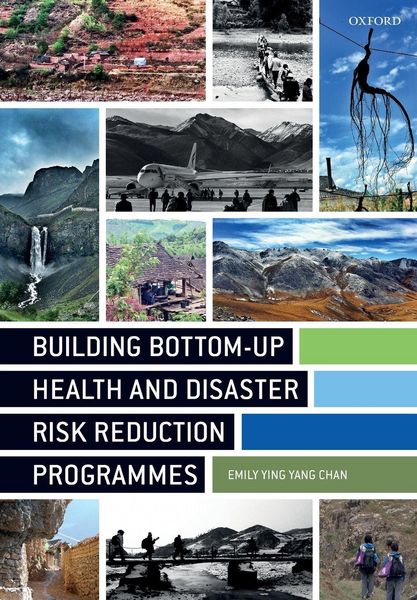
Produktbild: Building Bottom-Up Health and Disaster Risk Reduction Programmes

Building Bottom-Up Health and Disaster Risk Reduction Programmes

68,99 €

inkl. gesetzl. MwSt., Versandkostenfrei


Beschreibung

As a backdrop of the Sustainable Development Goals (SDGs) (2016-2030), the United Nations pointed out that more than 6 million children still died before the age of five by 2015. At least 1.8 billion people across the world still consumed fecally contaminated drinking water and 2.4 million lacked access...

Beschreibung

As a backdrop of the Sustainable Development Goals (SDGs) (2016-2030), the United Nations pointed out that more than 6 million children still died before the age of five by 2015. At least 1.8 billion people across the world still consumed fecally contaminated drinking water and 2.4 million lacked access to basic sanitation services such as toilets or latrines, while nearly 1,000 children died every day of preventable water and sanitation-related diarrhoeal diseases. Rural areas fare far worse: Children in rural areas are about 1.7 times more likely to die before their fifth birthday as those in urban areas. About 16 per cent of the rural population do not use improved drinking water sources, compared to 4 per cent of the urban population. About 50 per cent of people living in rural areas lack improved sanitation facilities, compared to only 18 per cent of people in urban areas. Far too many one-off rural on-site public health knowledge transfer projects fail to deliver results in the long run, and the knowledge in question cannot be retained in the rural communities after the NGO and development workers are gone. In addition to external constraints, this is often due to a lack of theoretical understanding among NGO practitioners and volunteers and basis for evaluation and improvement of health relief programmes. Based on public health theories and illustrated by relevant examples, this book introduces how health, emergency and disaster preparedness education programmes could be organised in remote rural Asia, which could become useful reference materials for organisers and volunteers of rural development projects. This book is an introductory to intermediate level textbook and reference book for healthcare professionals, fieldworkers, volunteers and students who are interested in promoting health and emergency and disaster risk reduction. The book is developed from the experience and insights gained from the long-established CCOUC Ethnic Minority Health Project in China. It also incorporates new lessons from CCOUC's recent projects in Asia countries like Bhutan, Nepal and Democratic People's Republic of Korea.

Produktdetails

Einband

Taschenbuch

Erscheinungsdatum

01.01.2018

Verlag Oxford University Press
Seitenzahl

360

Produktdetails

Einband

Taschenbuch

Erscheinungsdatum

01.01.2018

Verlag Oxford University Press
Seitenzahl

360

Maße (L/B/H)

24,4/17/1,9 cm

Gewicht

621 g

Sprache

Englisch

ISBN

978-0-19-880717-9

Herstelleradresse

Libri GmbH
Europaallee 1
36244 Bad Hersfeld
DE

Email: gpsr@libri.de

Noch keine Bewertungen vorhanden

Verfassen Sie die erste Bewertung zu diesem Artikel

Helfen Sie anderen Kundinnen und Kunden durch Ihre Meinung.

Kundinnen und Kunden meinen

Bewertungen (0)

Die Leseprobe wird geladen.
  • Produktbild: Building Bottom-Up Health and Disaster Risk Reduction Programmes
    • 1: Introduction: An example of programme development: CCOUC Ethnic Minority Health Project
    • 2: Public health principles for health and disaster risk reduction programmes
    • 3: Health promotion planning approaches, human behavourial change models, and health promotion theories
    • 4: Public health in rural Asia I
    • 5: Public health in rural Asia II
    • 6: From theory to practice
    • 7: Issues in rural health and key messages for health and disaster risk reduction education programmes
    • 8: Special topics in rural health I: natural disasters and climate change
    • 9: Special topics in rural health II: border towns, plantation, and nomadic pastoralists
    • 10: Special topics in rural health III: older persons, migration, and technology
    • 11: Conclusion
    • Appendix 1: Basic knowledge and skills of Chinese citizens on health literacy
    • Appendix 2: Semi-structured questions for indepth interviews with village heads
    • Appendix 3: Example of focus group discussion questions
    • Appendix 4: Basic information of focus group interviewees
    • Appendix 5: A sample of health and disaster response survey research questionnaire
    • Index