Gutscheinbedingungen

**Gültig bis 10.06.2026 / Gültig für gebrauchte Bücher / Mindestbestellwert 20,00 € / Einzelne Artikel können ausgeschlossen sein / Online auf www.bücher.de.de / Nicht kombinierbar mit anderen Gutscheinen oder Preisaktionen / Nur einmal pro Einkauf einlösbar / Gutschein wird auf max. 500€ Bestellwert angerechnet / Keine Barauszahlung / Nicht gültig für Versandkosten und Services

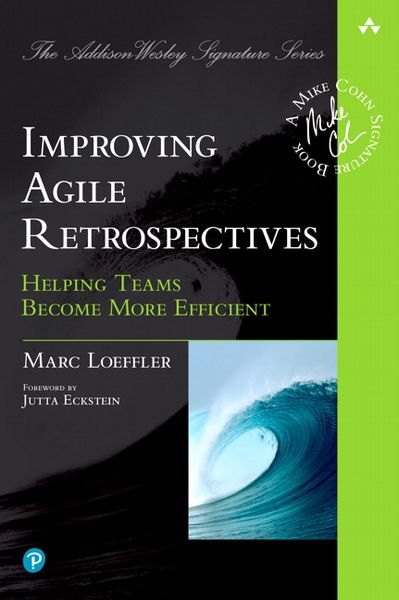
Produktbild: Improving Agile Retrospectives: Helping Teams Become More Efficient
- 12%

Improving Agile Retrospectives: Helping Teams Become More Efficient Helping Teams Become More Efficient

12% sparen

27,99 € UVP 31,99 €

inkl. gesetzl. MwSt., Versandkostenfrei

Lieferung nach Hause

Beschreibung

Produktdetails

Einband

Taschenbuch

Erscheinungsdatum

02.01.2018

Verlag

Pearson

Seitenzahl

272

Maße (L/B/H)

22,9/15,2/1,5 cm

Gewicht

363 g

Auflage

1

Sprache

Englisch

ISBN

978-0-13-467834-4

Beschreibung

Produktdetails

Einband

Taschenbuch

Erscheinungsdatum

02.01.2018

Verlag

Pearson

Seitenzahl

272

Maße (L/B/H)

22,9/15,2/1,5 cm

Gewicht

363 g

Auflage

1

Sprache

Englisch

ISBN

978-0-13-467834-4

Herstelleradresse


Email: info@bod.de

Kundinnen und Kunden meinen

0 Bewertungen

Informationen zu Bewertungen

Zur Abgabe einer Bewertung ist eine Anmeldung im Konto notwendig. Die Authentizität der Bewertungen wird von uns nicht überprüft. Wir behalten uns vor, Bewertungstexte, die unseren Richtlinien widersprechen, entsprechend zu kürzen oder zu löschen.

Die Bewertungen sind nach Format, Anzahl Sterne und Datum sortiert.

Verfassen Sie die erste Bewertung zu diesem Artikel

Helfen Sie anderen Kund*innen durch Ihre Meinung

Kundinnen und Kunden meinen

0 Bewertungen filtern

Die Leseprobe wird geladen.
  • Produktbild: Improving Agile Retrospectives: Helping Teams Become More Efficient
  • Foreword by Jutta Eckstein     xv

    Preface     xix

    Chapter 1  Retrospectives 101     1

    1.1 What Is a Retrospective?     1

    1.2 New Year’s Eve Retrospective     6

    1.3 The Retrospective Phase Model     8

        1.3.1 Phase 1: Set the Stage     9

        1.3.2 Phase 2: Check Hypothesis     12

        1.3.3 Phase 3: Gather Data     13

        1.3.4 Phase 4: Generate Insights     16

        1.3.5 Phase 5: Define Experiments     17

        1.3.6 Phase 6: Closing     19

    1.4 Finding Activities for Each of the Phases     22

        1.4.1 Agile Retrospectives Book     23

        1.4.2 Retromat     23

        1.4.3 Retrospective Wiki     24

        1.4.4 Tasty Cupcakes     24

        1.4.5 Gamestorming    25

    1.5 The Prime Directive     26

    Chapter 2  Preparing Retrospectives     31

    2.1 Preparation     31

        2.1.1 What Period of Time Should Be Discussed?     31

        2.1.2 Who Should Take Part?     32

        2.1.3 Is There a Topic?     33

    2.2 The Right Time, the Right Place     34

    2.3 The Right Material    36

        2.3.1 The Right Markers     36

        2.3.2 The Right Sticky notes     37

        2.3.3 The Right Flipchart Paper     38

    2.4 Food     39

    2.5 The Agenda     40

    Chapter 3  The First Retrospective     43

    3.1 Preparation     43

    3.2 Set the Stage: Car Comparison     45

    3.3 Gather Data    46

    3.4 Generate Insights: 5 Whys     49

    3.5 Define Next Experiments: Brainstorming     50

    3.6 Closing: ROTI     53

    Chapter 4  The Retrospective Facilitator     55

    4.1 How Do I Become a Good Facilitator?     55

        4.1.1 Respect Different Communication Styles     58

        4.1.2 Paraphrasing     59

        4.1.3 Support Participants     59

        4.1.4 Stacking     60

        4.1.5 Encourage     61

        4.1.6 Feedback Emotion     61

        4.1.7 Intended Silence     62

        4.1.8 Listen for Common Ground     63

        4.2 Visual Facilitation     63

        4.2.1 The 1×1 of Visual Structure     64

    4.3 Visual Retrospectives     71

        4.3.1 The Speedboat Retrospective     71

        4.3.2 Trading Cards     74

        4.3.3 Perfection Game     76

        4.3.4 Force Field Analysis     78

        4.3.5 Sources of Inspiration for Visual Facilitation ...80

    4.4 Internal or External     81

        4.4.1 Tips for Internal Facilitators    83

        4.4.2 External Facilitators     85

    4.5 After the Retro Is Before the Retro     87

    Chapter 5  From the Metaphor to the Retrospective     91

    5.1 The Orchestra Retrospective     93

        5.1.1 Set the Stage     94

        5.1.2 Gather Data     95

        5.1.3 Generate Insights     97

        5.1.4 Define Experiments and Hypothesis     98

        5.1.5 Closing     99

    5.2 The Soccer Retrospective     99

        5.2.1 Preparation     100

        5.2.2 Set the Stage     100

        5.2.3 Gather Data     101

        5.2.4 Generating Insights     102

        5.2.5 Define Next Experiments and Hypothesis     102

        5.2.6 Closing     103

    5.3 The Train Retrospective     103

        5.3.1 Set the Stage     103

        5.3.2 Gather Data     104

        5.3.3 Generate Insights     105

        5.3.4 Define Experiments and Hypothesis     106

        5.3.5 Closing     107

    5.4 The Kitchen Retrospective     107

        5.4.1 Set the Stage     107

        5.4.2 Gather Data     108

        5.4.3 Generate Insights     109

        5.4.4 Define Experiments and Hypothesis     111

        5.4.5 Closing     111

    5.5 The Pirate Retrospective     111

        5.5.1 Set the Stage     112

        5.5.2 Gather Data     113

        5.5.3 Generate Insights     114

        5.5.4 Define Experiments and Hypothesis     115

        5.5.5 Closing     116

    Chapter 6  Systemic Retrospectives     119

    6.1 Systems     120

        6.1.1 Static and Dynamic     122

        6.1.2 Complicated and Complex     122

    6.2 System Thinking     124

        6.2.1 Causal Loop Diagrams     125

        6.2.2 Current Reality Tree     137

        6.2.3 Limitations of System Thinking     142

    6.3 Complexity Thinking     143

        6.3.1 Martie—The Management 3.0 Model     144

        6.3.2 The ABIDE Model     147

    Chapter 7  Solution-Focused Retrospectives     155

    7.1 The Solution-Focused Approach     156

        7.1.1 Problem Talk Creates Problems, Solution Talk Creates Solutions     156

        7.1.2 Focus on the Better Future     157

        7.1.3 No Problem Happens All the Time; There Are Always Exceptions That Can Be Utilized     158

        7.1.4 If It Works, Do More of It     159

        7.1.5 If It’s Not Working, Do Something Different     160

        7.1.6 Small Steps Can Lead to Big Changes     161

        7.1.7 Focus on Strength and Skills     161

        7.1.8 Understand and Trust That Each Person Is an Expert in His or Her Own Situation     162

        7.1.9 Keep the Attitude of Not Knowing     162

        7.1.10 Be Patient and Confident     163

        7.1.11 The Prime Directive of Retrospectives    164

    7.2 A Solution-Focused Retrospective in Five Steps     165

        7.2.1 Opening     165

        7.2.2 Set Goals     167

        7.2.3 Find Meaning     170

        7.2.4 Initiate Action     172

        7.2.5 Check Results     175

        7.2.6 A Brief, Solution-Focused Retrospective     176

    Chapter 8  Distributed Retrospectives     179

    8.1 Forms of Distributed Retrospectives     179

        8.1.1 Multiple Distributed Teams     179

        8.1.2 Teams with Singly Distributed Employees     183

        8.1.3 Scattered Teams     185

    8.2 The Right Tools     186

        8.2.1 Web Whiteboard     187

        8.2.2 Stormz Hangout     188

        8.2.3 Lino     189

    8.3 General Tips for Distributed Retrospectives     190

        8.3.1 Keep It Short     190

        8.3.2 Stay within the Timeframe     190

        8.3.3 Use Stacking     190

        8.3.4 Prepare the Participants     190

        8.3.5 Use Communication Tools Effectively     191

        8.3.6 Meet Regularly     191

    Chapter 9  Alternative Approaches     193

    9.1 Work Retrospectives     193

        9.1.1 Set the Stage     194

        9.1.2 Gather Data     194

        9.1.3 Work Phase     195

        9.1.4 Experiences     195

    9.2 Fortune Cookie Retrospectives     196

    9.3 Powerful Questions     198

    Chapter 10  Typical Problems and Pitfalls     201

    10.1 Poor Preparation     201

    10.2 A Lot of Discussions but No Results     202

        10.2.1 Conflicting Opinions     202

        10.2.2 Indecision     204

        10.2.3 Lack of a Clear Time Frame     205

    10.3 Too Many Results    206

    10.4 Disinterest in (Further) Improvement     207

        10.4.1 Improvements Were Never Implemented     208

        10.4.2 Improvements Have No Effect     208

        10.4.3 The Team Was Not Given Enough Time     209

    10.5 Focus on the Negative     209

    10.6 Focus on Factual Topics     210

    Chapter 11  Change Management     215

    11.1 Agile Change Management     216

    11.2 Initiating Change Processes     217

        11.2.1 Set the Stage     217

        11.2.2 Gather Data     219

        11.2.3 Generate Insights     220

        11.2.4 Next Experiments     221

        11.2.5 Closing     223

    11.3 Accompanying Change Processes     224

        11.3.1 Set the Stage     224

        11.3.2 Check Hypotheses     224

        11.3.3 Gather Data     225

        11.3.4 Generate Insights     225

        11.3.5 Define Next Experiments     226

        11.3.6 Closing     228

    Index     231