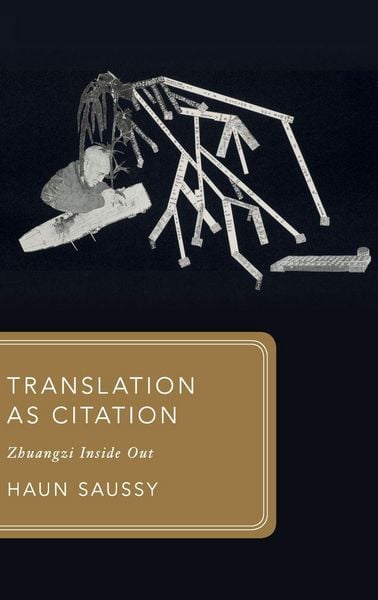
Translation as Citation Zhuangzi Inside Out
123,99 €
inkl. gesetzl. MwSt.,
Lieferung nach Hause
Beschreibung
Produktdetails
Einband
Gebundene Ausgabe
Erscheinungsdatum
14.03.2013
Verlag
Oxford University PressSeitenzahl
164
Maße (L/B/H)
24/16,1/1,4 cm
Gewicht
426 g
Sprache
Englisch
ISBN
978-0-19-881253-1
This volume examines translation from many different angles: it explores how translations change the languages in which they occur, how works introduced from other languages become part of the consciousness of native speakers, and what strategies translators must use to secure acceptance for foreign works. Haun Saussy argues that translation doesn't amount to the composition, in one language, of statements equivalent to statements previously made in another language. Rather, translation works with elements of the language and culture in which it arrives, often reconfiguring them irreversibly: it creates, with a fine disregard for precedent, loan-words, calques, forced metaphors, forged pasts, imaginary relationships, and dialogues of the dead. Creativity, in this form of writing, usually considered merely reproductive, is the subject of this book. The volume takes the history of translation in China, from around 15 CE to the modern period, as its source of case studies. When the first proponents of Buddhism arrived in China, creativity was forced upon them: a vocabulary adequate to their purpose had yet to be invented. A Chinese Buddhist textual corpus took shape over centuries despite the near-absence of bilingual speakers. One basis of this translating activity was the rewriting of existing Chinese philosophical texts, and especially the most exorbitant of all these, the collection of dialogues, fables, and paradoxes known as the Zhuangzi. The Zhuangzi also furnished a linguistic basis for Chinese Christianity when the Jesuit missionary Matteo Ricci arrived in the later part of the Ming dynasty and allowed his friends and associates to frame his teachings in the language of early Daoism. It would function as well when Xu Zhimo translated from The Flowers of Evil in the 192s. The chance but overdetermined encounter of Zhuangzi and Baudelaire yielded a 'strange music' that retroactively echoes through two millennia of Chinese translation, outlining a new understanding of the translator's craft that cuts across the dividing lines of current theories and critiques of translation.
Noch keine Bewertungen vorhanden
Verfassen Sie die erste Bewertung zu diesem Artikel
Helfen Sie anderen Kundinnen und Kunden durch Ihre Meinung.
Kurze Frage zu unserer Seite
Vielen Dank für dein Feedback
Wir nutzen dein Feedback, um unsere Produktseiten zu verbessern. Bitte habe Verständnis, dass wir dir keine Rückmeldung geben können. Falls du Kontakt mit uns aufnehmen möchtest, kannst du dich aber gerne an unseren Kund*innenservice wenden.
zum Kundenservice