KI-Beratung Beta

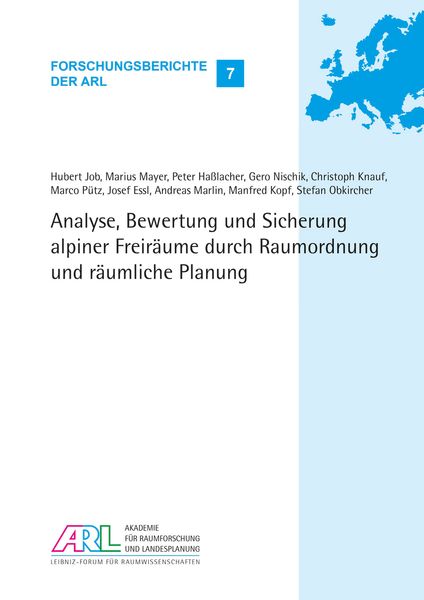
Produktbild: Analyse, Bewertung und Sicherung alpiner Freiräume durch Raumordnung und räumliche Planung
Band 7

Analyse, Bewertung und Sicherung alpiner Freiräume durch Raumordnung und räumliche Planung

10,90 €

inkl. gesetzl. MwSt., Versandkostenfrei


Beschreibung

The analysis, evaluation and safeguarding of Alpine open spaces through regional and spatial planning Alpine open spaces are becoming noticeably scarcer. This statement applies to the inherently restricted area of permanent settlement in the Alps, which, e. g., covers only 11.8 % of the territory of...

Beschreibung

The analysis, evaluation and safeguarding of Alpine open spaces through regional and spatial planning Alpine open spaces are becoming noticeably scarcer. This statement applies to the inherently restricted area of permanent settlement in the Alps, which, e. g., covers only 11.8 % of the territory of the Tyrol. The population is growing in many of the valleys and with it the infrastructure required. However, the open spaces, situated at altitudes above the settlements, are also being successively broken up and exploited using technical equipment (e. g. cable cars, hydro-electric facilities) or increasingly intensive types of use (e. g. e-mountain bikes). In Bavaria the conservation of open space began as early as 1972 with the implementation of the Alpine plan (Alpenplan), which set spatial planning objectives for the entire Alpine area. This led to the division of the Bavarian Alpine area into three zones of varying intensity of traffic use, a true legislative innovation. The so-called Zone C was intended for nature protection, still in its infancy at that time, and also aimed to reduce natural Alpine hazards. Primarily, however, this planning initiative was related to the role of the landscape for recreation, i. e. to leisure and touristic activities in natural surroundings. Today, there are similar initiatives of varying success in all the Germanspeaking Alpine states and in Switzerland. This paper aims to analyse these initiatives, comparing and critically assessing their stipulation, functioning and planning implementation. As the conservation of open space is a transnational issue, especially in the Alps, which are dissected by many political borders, reference is also made to the framework provisions of the internationally binding Alpine Convention from 1991 and to the new EU initiative EUSALP, and their potential consequences. The focus of attention is, however, on bringing together approaches for conserving open space for people (local inhabitants and their traditional economic activities, but also visitors) and natural heritage. Presentday regional and spatial planning practices related to Alpine open spaces in the Germanspeaking Alps and in Switzerland are presented and critically evaluated and future options for harmonising approaches across the borders are discussed.

Produktdetails

Einband

Taschenbuch

Erscheinungsdatum

13.04.2017

Abbildungen

mit farb. Abb. und Karten

Verlag ARL – Akademie für Raumentwicklung in der Leibniz-Gemeinschaft

Produktdetails

Einband

Taschenbuch

Erscheinungsdatum

13.04.2017

Abbildungen

mit farb. Abb. und Karten

Verlag ARL – Akademie für Raumentwicklung in der Leibniz-Gemeinschaft
Seitenzahl

88

Maße (L/B/H)

29,7/21/0,7 cm

Gewicht

293 g

Auflage

1. Auflage

Sprache

Deutsch

ISBN

978-3-88838-084-6

Herstelleradresse

DE

Email: info@bod.de

Noch keine Bewertungen vorhanden

Verfassen Sie die erste Bewertung zu diesem Artikel

Helfen Sie anderen Kundinnen und Kunden durch Ihre Meinung.

Kundinnen und Kunden meinen

Bewertungen (0)

  • Produktbild: Analyse, Bewertung und Sicherung alpiner Freiräume durch Raumordnung und räumliche Planung