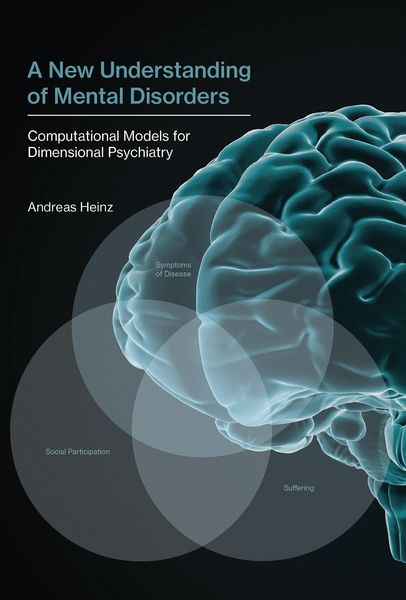
A New Understanding of Mental Disorders Computational Models for Dimensional Psychiatry
29,99 €
inkl. gesetzl. MwSt.,
Lieferung nach Hause
Beschreibung
Produktdetails
Einband
Gebundene Ausgabe
Erscheinungsdatum
06.10.2017
Abbildungen
35 b&w illus., Illustrationen, nicht spezifiziert
Verlag
MIT PressSeitenzahl
224
Maße (L/B/H)
23,6/15,6/2,2 cm
Gewicht
452 g
Sprache
Englisch
ISBN
978-0-262-03689-4
A new computational and dimensional approach to understanding and classifying mental disorders: modeling key learning and decision-making mechanisms across different mental disorders.
Even as researchers look for neurobiological correlates of mental disorders, many of these disorders are still classified solely according to the manifestation of clinical symptoms. Neurobiological findings rarely help diagnose a specific disease or predict its outcome. Although current diagnostic categories are questionable (sometimes labeling common states of human suffering as disorders), traditional neuroimaging approaches are not sophisticated enough to capture the neurobiological markers of mental disorder. In this book, Andreas Heinz proposes a computational and dimensional approach to understanding and classifying mental disorders: modeling key learning and decision-making mechanisms across different mental disorders. Such an approach focuses on the malleability and diversity of human behavior and its biological underpinnings.
Heinz explains basic learning mechanisms and their effects on human behavior, focusing not on single disorders but on how such mechanisms work in a multitude of mental states. For example, he traces alterations in dopamine-reinforcement learning in psychotic, affective, and addictive disorders. He investigates to what extent these basic dimensions of mental disorders can account for such syndromes as craving and loss of control in addiction, positive and negative mood states in affective disorders, and the altered experience of self and world associated with psychotic states. Finally, Heinz explores the clinical and therapeutic implications of such accounts. He argues that a focus on learning mechanisms, with its emphasis on human creativity and resilience, should help reduce the stigma of mental disorder.
Noch keine Bewertungen vorhanden
Verfassen Sie die erste Bewertung zu diesem Artikel
Helfen Sie anderen Kundinnen und Kunden durch Ihre Meinung.
Kurze Frage zu unserer Seite
Vielen Dank für dein Feedback
Wir nutzen dein Feedback, um unsere Produktseiten zu verbessern. Bitte habe Verständnis, dass wir dir keine Rückmeldung geben können. Falls du Kontakt mit uns aufnehmen möchtest, kannst du dich aber gerne an unseren Kund*innenservice wenden.
zum Kundenservice