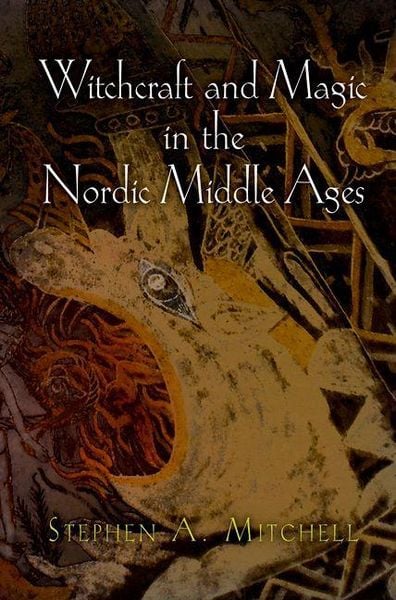
Witchcraft and Magic in the Nordic Middle Ages
-
- Taschenbuch
- eBook ausgewählt
-
Form:Einzelkauf Download
-
Sprache:Englisch
43,99 €
inkl. gesetzl. MwSt.Beschreibung
Produktdetails
Format
ePUB
Kopierschutz
Ja
Family Sharing
Nein
Text-to-Speech
Ja
Erscheinungsdatum
06.06.2011
Verlag
Nyu PressSeitenzahl
384 (Printausgabe)
Dateigröße
2686 KB
Sprache
Englisch
EAN
9780812203714
Stephen A. Mitchell here offers the fullest examination available of witchcraft in late medieval Scandinavia. He focuses on those people believed to be able-and who in some instances thought themselves able-to manipulate the world around them through magical practices, and on the responses to these beliefs in the legal, literary, and popular cultures of the Nordic Middle Ages. His sources range from the Icelandic sagas to cultural monuments much less familiar to the nonspecialist, including legal cases, church art, law codes, ecclesiastical records, and runic spells. Mitchell's starting point is the year 1100, by which time Christianity was well established in elite circles throughout Scandinavia, even as some pre-Christian practices and beliefs persisted in various forms. The book's endpoint coincides with the coming of the Reformation and the onset of the early modern Scandinavian witch hunts. The terrain covered is complex, home to the Germanic Scandinavians as well as their non-Indo-European neighbors, the Sámi and Finns, and it encompasses such diverse areas as the important trade cities of Copenhagen, Bergen, and Stockholm, with their large foreign populations; the rural hinterlands; and the insular outposts of Iceland and Greenland. By examining witches, wizards, and seeresses in literature, lore, and law, as well as surviving charm magic directed toward love, prophecy, health, and weather, Mitchell provides a portrait of both the practitioners of medieval Nordic magic and its performance. With an understanding of mythology as a living system of cultural signs (not just ancient sacred narratives), this study also focuses on such powerful evolving myths as those of "the milk-stealing witch," the diabolical pact, and the witches' journey to Blåkulla. Court cases involving witchcraft, charm magic, and apostasy demonstrate that witchcraft ideologies played a key role in conceptualizing gender and were themselves an important means of exercising social control.
Kundinnen und Kunden meinen
Verfassen Sie die erste Bewertung zu diesem Artikel
Helfen Sie anderen Kund*innen durch Ihre Meinung
Kurze Frage zu unserer Seite
Vielen Dank für dein Feedback
Wir nutzen dein Feedback, um unsere Produktseiten zu verbessern. Bitte habe Verständnis, dass wir dir keine Rückmeldung geben können. Falls du Kontakt mit uns aufnehmen möchtest, kannst du dich aber gerne an unseren Kund*innenservice wenden.
zum Kundenservice