KI-Beratung Beta

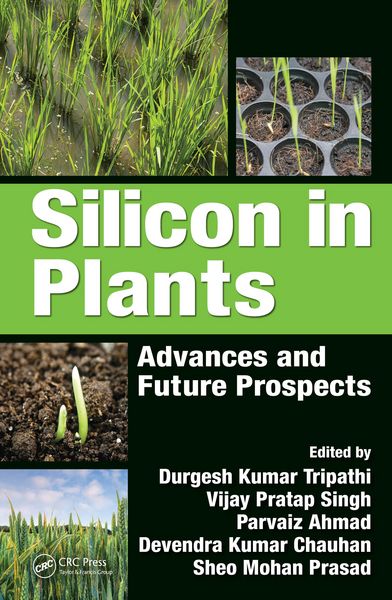
Produktbild: Silicon in Plants

Silicon in Plants Advances and Future Prospects

73,49 €

inkl. gesetzl. MwSt.

Beschreibung

In the present era, rapid industrialization and urbanization has resulted in unwanted physiological, chemical, and biological changes in the environment that have harmful effects on crop quality and productivity. This situation is further worsened by the growing demand for food due to an ever increasing...

Beschreibung

In the present era, rapid industrialization and urbanization has resulted in unwanted physiological, chemical, and biological changes in the environment that have harmful effects on crop quality and productivity. This situation is further worsened by the growing demand for food due to an ever increasing population. This forces plant scientists and agronomists to look forward for alternative strategies to enhance crop production and produce safer, healthier foods. Biotic and abiotic stresses are major constraints to crop productivity and have become an important challenge to agricultural scientists and agronomists due to the fact that both stress factors considerably reduce agriculture production worldwide per year.

Silicon has various effects on plant growth and development, as well as crop yields. It increases photosynthetic activity, creates better disease resistance, reduces heavy metal toxicity, improves nutrient imbalance, and enhances drought tolerance. Silicon in Plants: Advances and Future Prospects presents the beneficial effects of silicon in improving productivity in plants and enhancing the capacity of plants to resist stresses from environmental factors. It compiles recent advances made worldwide in different leading laboratories concerning the role of silicon in plant biology in order to make these outcomes easily accessible to academicians, researchers, industrialists, and students. Nineteen chapters summarize information regarding the role of silicon in plants, their growth and development, physiological and molecular responses, and responses against the various abiotic stresses.

Produktdetails

Format

PDF

Kopierschutz

Ja

Family Sharing

Nein

Text-to-Speech

Nein

Produktdetails

Format

PDF

Format

eBooks im PDF-Format haben eine festgelegte Seitengröße und eignen sich daher nur bedingt zum Lesen auf einem tolino eReader oder Smartphone. Für den vollen Lesegenuss empfehlen wir Ihnen bei PDF-eBooks die Verwendung eines Tablets oder Computers.

Kopierschutz

Ja

Kopierschutz

Zum Lesen dieses eBooks auf Geräten der tolino Familie sowie auf sonstigen eReadern und am PC benötigen Sie eine ByteBook-ID. Weitere Hinweise zum Lesen von kopiergeschützten eBooks finden Sie unter Hilfe/Downloads.

Family Sharing

Nein

Family Sharing

Mit Family Sharing können Sie eBooks innerhalb Ihrer Familie (max. sechs Mitglieder im gleichen Haushalt) teilen. Sie entscheiden selbst, welches Buch Sie mit welchem Familienmitglied teilen möchten. Auch das parallele Lesen durch verschiedene Familienmitglieder ist durch Family Sharing möglich. Um eBooks zu teilen oder geteilt zu bekommen, muss jedes Familienmitglied ein Konto bei Thalia oder einem anderen tolino-Buchhändler haben. Weitere Informationen finden Sie unter Hilfe/Family-Sharing.

Text-to-Speech

Nein

Text-to-Speech

Bedeutet Ihnen Stimme mehr als Text? Mit der Funktion Text-to-Speech können Sie sich im tolino webReader und in der aktuellen Thalia – Lesen & Hören App das eBook vorlesen lassen. Weitere Informationen finden Sie unter Hilfe/Text-to-Speech.

Erscheinungsdatum

08.12.2016

Herausgeber
Verlag Taylor & Francis eBooks
Seitenzahl

392 (Printausgabe)

Dateigröße

7095 KB

Sprache

Englisch

EAN

9781498739504

Barrierefreiheit
  • keine Vorlesefunktionen des Lesesystems deaktiviert
  • Seitennummerierung folgt dem gedruckten Werk

Noch keine Bewertungen vorhanden

Verfassen Sie die erste Bewertung zu diesem Artikel

Helfen Sie anderen Kundinnen und Kunden durch Ihre Meinung.

Kundinnen und Kunden meinen

Bewertungen (0)

Weitere Artikel findest du in

Die Leseprobe wird geladen.
  • Produktbild: Silicon in Plants