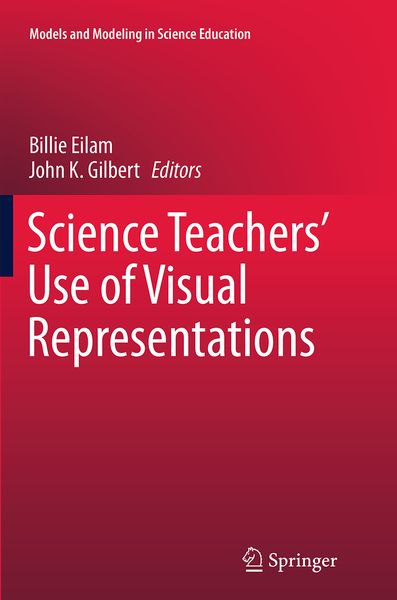
Science Teachers’ Use of Visual Representations
-
- Hardcover
- Taschenbuch ausgewählt
- eBook
-
Sprache:Englisch
97,99 €
inkl. gesetzl. MwSt.,
Lieferung nach Hause
Beschreibung
Produktdetails
Einband
Taschenbuch
Erscheinungsdatum
10.09.2016
Abbildungen
VIII, 65 illus., schwarz-weiss Illustrationen
Herausgeber
Billie Eilam + weitereVerlag
SpringerSeitenzahl
338
Maße (L/B/H)
23,5/15,5/1,9 cm
Gewicht
528 g
Auflage
Softcover reprint of the original 1st edition 2014
Sprache
Englisch
ISBN
978-3-319-37466-6
This book examines the diverse use of visual representations by teachers in the science classroom. It contains unique pedagogies related to the use of visualization, presents original curriculum materials as well as explores future possibilities.
The book begins by looking at the significance of visual representations in the teaching of science. It then goes on to detail two recent innovations in the field: simulations and slowmation, a process of explicit visualization. It also evaluates the way teachers have used different diagrams to illustrate concepts in biology and chemistry.
Next, the book explores the use of visual representations in culturally diverse classrooms, including the implication of culture for teachers’ use of representations, the crucial importance of language in the design and use of visualizations and visualizations in popular books about chemistry. It also shows the place of visualizations in the growing use of informal, self-directed science education.
Overall, the book concludes that if the potential of visualizations in science education is to be realized in the future, the subject must be included in both pre-service and in-service teacher education. It explores ways to develop science teachers’ representational competence and details the impact that this will have on their teaching.
The worldwide trend towards providing science education for all, coupled with the increased availability of color printing, access to personal computers and projection facilities, has lead to a more extensive and diverse use of visual representations in the classroom. This book offers unique insights into the relationship between visual representations and science education, making it an ideal resource for educators as well as researchers in science education, visualization and pedagogy.
Kundinnen und Kunden meinen
Verfassen Sie die erste Bewertung zu diesem Artikel
Helfen Sie anderen Kund*innen durch Ihre Meinung
Kurze Frage zu unserer Seite
Vielen Dank für dein Feedback
Wir nutzen dein Feedback, um unsere Produktseiten zu verbessern. Bitte habe Verständnis, dass wir dir keine Rückmeldung geben können. Falls du Kontakt mit uns aufnehmen möchtest, kannst du dich aber gerne an unseren Kund*innenservice wenden.
zum Kundenservice