
KI-Beratung Beta

Gutscheinbedingungen

**Gültig vom 23.11. bis 30.11.2026 | Gültig für nicht preisgebundene fremdsprachige Bücher | Einzelne Artikel können ausgeschlossen sein | Online auf www.bücher.de einlösbar | Click & Collect nur mit Online-Zahlung (Paypal/Kreditkarte) vorab | Nicht kombinierbar mit anderen Gutscheinen oder Preisaktionen | Nur einmal pro Einkauf einlösbar | Gutschein wird auf max. 500€ Bestellwert angerechnet | Keine Barauszahlung | Nicht gültig für Versandkosten und Services

  • Produktbild: The Metamorphosis of the World
  • Produktbild: The Metamorphosis of the World

The Metamorphosis of the World How Climate Change is Transforming Our Concept of the World

25,99 €

inkl. gesetzl. MwSt., Versandkostenfrei


Beschreibung

We live in a world that is increasingly difficult to understand. It is not just changing: it is metamorphosing. Change implies that some things change but other things remain the same capitalism changes, but some aspects of capitalism remain as they always were. Metamorphosis implies a much more radical...

Beschreibung

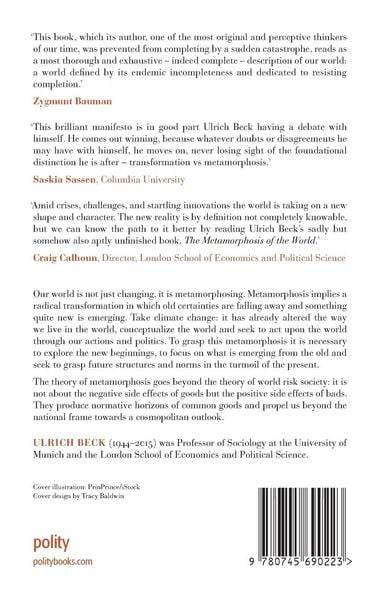
We live in a world that is increasingly difficult to understand. It is not just changing: it is metamorphosing. Change implies that some things change but other things remain the same capitalism changes, but some aspects of capitalism remain as they always were. Metamorphosis implies a much more radical transformation in which the old certainties of modern society are falling away and something quite new is emerging. To grasp this metamorphosis of the world it is necessary to explore the new beginnings, to focus on what is emerging from the old and seek to grasp future structures and norms in the turmoil of the present.
Take climate change: much of the debate about climate change has focused on whether or not it is really happening, and if it is, what we can do to stop or contain it. But this emphasis on solutions blinds us to the fact that climate change is an agent of metamorphosis. It has already altered our way of being in the world the way we live in the world, think about the world and seek to act upon the world through our actions and politics. Rising sea levels are creating new landscapes of inequality drawing new world maps whose key lines are not traditional boundaries between nation-states but elevations above sea level. It is creating an entirely different way of conceptualizing the world and our chances of survival within it.
The theory of metamorphosis goes beyond theory of world risk society: it is not about the negative side effects of goods but the positive side effects of bads. They produce normative horizons of common goods and propel us beyond the national frame towards a cosmopolitan outlook.

Produktdetails

Einband

Taschenbuch

Erscheinungsdatum

10.03.2017

Verlag Wiley
Seitenzahl

240

Produktdetails

Einband

Taschenbuch

Erscheinungsdatum

10.03.2017

Verlag Wiley
Seitenzahl

240

Maße (L/B/H)

21,6/13,9/2 cm

Gewicht

303 g

Sprache

Englisch

ISBN

978-0-7456-9022-3

Herstelleradresse

Libri GmbH
Europaallee 1
36244 Bad Hersfeld
DE

Email: gpsr@libri.de

Noch keine Bewertungen vorhanden

Verfassen Sie die erste Bewertung zu diesem Artikel

Helfen Sie anderen Kundinnen und Kunden durch Ihre Meinung.

Kundinnen und Kunden meinen

Bewertungen (0)

Die Leseprobe wird geladen.
  • Produktbild: The Metamorphosis of the World
  • Produktbild: The Metamorphosis of the World
  • Foreword

    Preface

    Introduction, Evidence, Theory

    Chapter I. Why metamorphosis of the world, why not transformation?

    Chapter II. Being God

    Chapter III. How climate change might save the world

    Chapter IV. Theorising metamorphosis

    Themes

    Chapter V. From class to risk-class: Inequality in times of metamorphosis

    Chapter VI. Where does the power go? Politics of invisibility

    Chapter VII. Emancipatory catastrophism: Common goods as side effects of bads

    Chapter VIII. Public bads: Politics of visibility

    Chapter IX. Digital risk: Failing of functioning institutions

    Chapter X. Meta-power game of politics: Metamorphosis of the nation and international relations

    Chapter XI. Cosmopolitan communities of risk: From United Nations to United Cities

    Outlook

    Chapter XII. Global Risk Generations: United in decline

    Bibliography