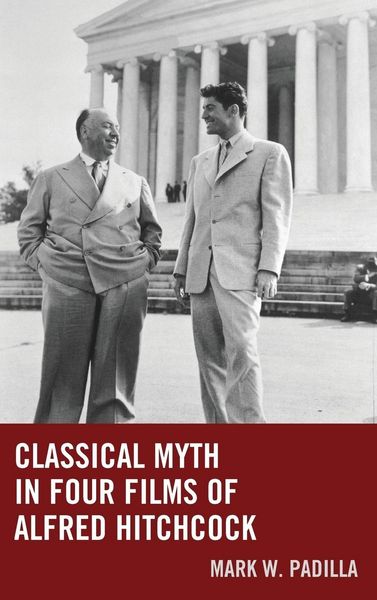
Classical Myth in Four Films of Alfred Hitchcock
-
- Hardcover ausgewählt
- Taschenbuch
- eBook
-
Sprache:Englisch
138,99 €
inkl. gesetzl. MwSt.,
Beschreibung
Produktdetails
Einband
Gebundene Ausgabe
Erscheinungsdatum
30.09.2016
Abbildungen
53 b/w photos;
Verlag
Ingram Publishers ServicesSeitenzahl
336
Maße (L/B/H)
23,5/15,7/2,4 cm
Gewicht
700 g
Sprache
Englisch
ISBN
978-1-4985-2915-0
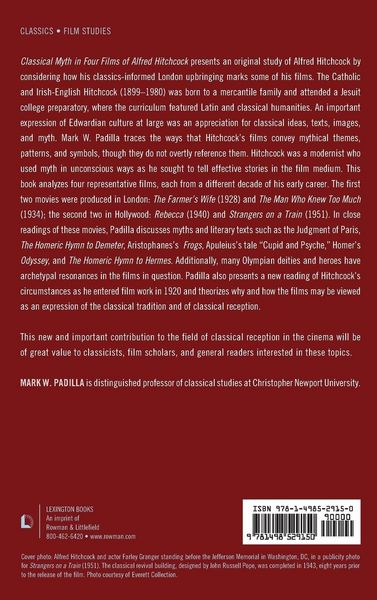
Classical Myth in Four Films of Alfred Hitchcock presents an original study of Alfred Hitchcock by considering how his classics-informed London upbringing marks some of his films. The Catholic and Irish-English Hitchcock (1899-1980) was born to a mercantile family and attended a Jesuit college preparatory, whose curriculum featured Latin and classical humanities. An important expression of Edwardian culture at-large was an appreciation for classical ideas, texts, images, and myth. Mark Padilla traces the ways that Hitchcock's films convey mythical themes, patterns, and symbols, though they do not overtly reference them. Hitchcock was a modernist who used myth in unconscious ways as he sought to tell effective stories in the film medium. This book treats four representative films, each from a different decade of his early career. The first two movies were produced in London: The Farmer's Wife (1928) and The Man Who Knew Too Much (1934); the second two in Hollywood: Rebecca (1940) and Strangers on a Train (1951). In close readings of these movies, Padilla discusses myths and literary texts such as the Judgment of Paris, The Homeric Hymn to Demeter, Aristophanes's Frogs, Apuleius's tale "Cupid and Psyche," Homer's Odyssey, and The Homeric Hymn to Hermes. Additionally, many Olympian deities and heroes have archetypal resonances in the films in question. Padilla also presents a new reading of Hitchcock's circumstances as he entered film work in 1920 and theorizes why and how the films may be viewed as an expression of the classical tradition and of classical reception. This new and important contribution to the field of classical reception in the cinema will be of great value to classicists, film scholars, and general readers interested in these topics.
Noch keine Bewertungen vorhanden
Verfassen Sie die erste Bewertung zu diesem Artikel
Helfen Sie anderen Kundinnen und Kunden durch Ihre Meinung.
Kurze Frage zu unserer Seite
Vielen Dank für dein Feedback
Wir nutzen dein Feedback, um unsere Produktseiten zu verbessern. Bitte habe Verständnis, dass wir dir keine Rückmeldung geben können. Falls du Kontakt mit uns aufnehmen möchtest, kannst du dich aber gerne an unseren Kund*innenservice wenden.
zum Kundenservice