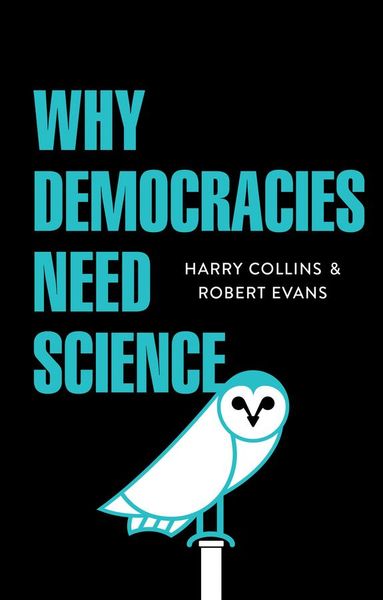
Why Democracies Need Science
-
- Hardcover ausgewählt
- Taschenbuch
- eBook
-
Sprache:Englisch
75,99 €
inkl. gesetzl. MwSt.,
Beschreibung
Produktdetails
Einband
Gebundene Ausgabe
Erscheinungsdatum
27.03.2017
Verlag
John Wiley & SonsSeitenzahl
200
Maße (L/B/H)
21,8/14/2,3 cm
Gewicht
386 g
Auflage
1. Auflage
Sprache
Englisch
ISBN
978-1-5095-0960-7
We live in times of increasing public distrust of the main institutions of modern society. Experts, including scientists, are suspected of working to hidden agendas or serving vested interests. The solution is usually seen as more public scrutiny and more control by democratic institutions - experts must be subservient to social and political life. In this book, Harry Collins and Robert Evans take a radically different view. They argue that, rather than democracies needing to be protected from science, democratic societies need to learn how to value science in this new age of uncertainty. By emphasizing that science is a moral enterprise, guided by values that should matter to all, they show how science can support democracy without destroying it and propose a new institution - The Owls - that can mediate between science and society and improve technological decision-making for the benefit of all.
Noch keine Bewertungen vorhanden
Verfassen Sie die erste Bewertung zu diesem Artikel
Helfen Sie anderen Kundinnen und Kunden durch Ihre Meinung.
Kurze Frage zu unserer Seite
Vielen Dank für dein Feedback
Wir nutzen dein Feedback, um unsere Produktseiten zu verbessern. Bitte habe Verständnis, dass wir dir keine Rückmeldung geben können. Falls du Kontakt mit uns aufnehmen möchtest, kannst du dich aber gerne an unseren Kund*innenservice wenden.
zum Kundenservice