KI-Beratung Beta

Gutscheinbedingungen

**Gültig vom 23.11. bis 30.11.2026 | Gültig für nicht preisgebundene fremdsprachige Bücher | Einzelne Artikel können ausgeschlossen sein | Online auf www.bücher.de einlösbar | Click & Collect nur mit Online-Zahlung (Paypal/Kreditkarte) vorab | Nicht kombinierbar mit anderen Gutscheinen oder Preisaktionen | Nur einmal pro Einkauf einlösbar | Gutschein wird auf max. 500€ Bestellwert angerechnet | Keine Barauszahlung | Nicht gültig für Versandkosten und Services

  • Produktbild: Exorcising Translation
  • Produktbild: Exorcising Translation

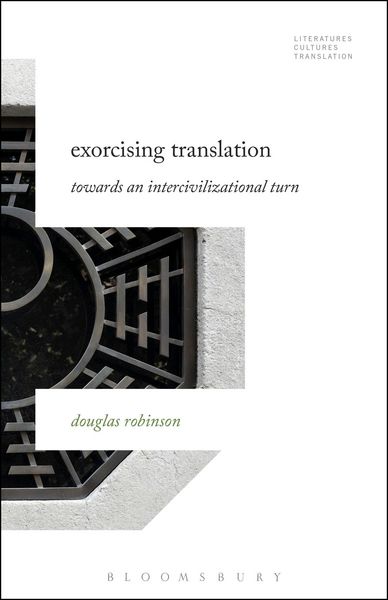
Exorcising Translation

159,99 €

inkl. gesetzl. MwSt., Versandkostenfrei


Beschreibung

Exorcising Translation, a new volume in Bloomsbury's Literatures, Cultures, Translation series, makes critical contributions to translation as well as to comparative and postcolonial literary studies. The hot-button issue of Eurocentrism in translation studies has roiled the discipline in the past few...

Beschreibung

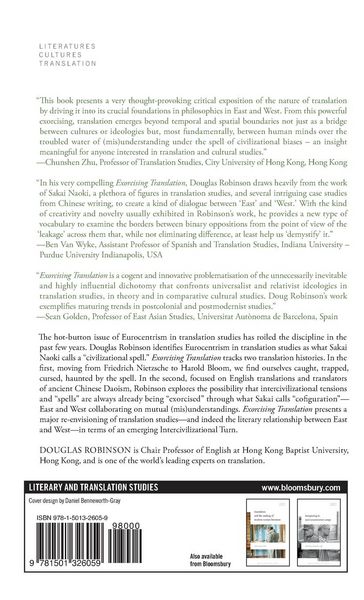
Exorcising Translation, a new volume in Bloomsbury's Literatures, Cultures, Translation series, makes critical contributions to translation as well as to comparative and postcolonial literary studies.
The hot-button issue of Eurocentrism in translation studies has roiled the discipline in the past few years, with critiques followed by defenses and defenses followed by enhanced critiques. Douglas Robinson identifies Eurocentrism in translation studies as what Sakai Naoki calls a "civilizational spell.†? Exorcising Translation tracks two translation histories. In the first, moving from Friedrich Nietzsche to Harold Bloom, we find ourselves caught, trapped, cursed, haunted by the spell. In the second, focused on English translations and translators of Chinese literature, Robinson explores accusations against American translators not only for their inadequate (or even totally absent) knowledge of Chinese and Daoism, but for their Americanness, their trappedness in individualistic and secular Western thought. A closer look at that history shows that Western thought and Chindese thought are mutually shaped in fascinating ways. Exorcising Translation presents a major re-envisioning of translation studies, and indeed the literary relationship between East and West, by a pioneering scholar in the field.

Produktdetails

Einband

Gebundene Ausgabe

Erscheinungsdatum

15.12.2016

Verlag Bloomsbury Academic
Seitenzahl

204

Produktdetails

Einband

Gebundene Ausgabe

Erscheinungsdatum

15.12.2016

Verlag Bloomsbury Academic
Seitenzahl

204

Maße (L/B/H)

22,2/14,5/1,5 cm

Gewicht

334 g

Sprache

Englisch

ISBN

978-1-5013-2605-9

Herstelleradresse

Libri GmbH
Europaallee 1
36244 Bad Hersfeld
DE

Email: gpsr@libri.de

Noch keine Bewertungen vorhanden

Verfassen Sie die erste Bewertung zu diesem Artikel

Helfen Sie anderen Kundinnen und Kunden durch Ihre Meinung.

Kundinnen und Kunden meinen

Bewertungen (0)

Die Leseprobe wird geladen.
  • Produktbild: Exorcising Translation
  • Produktbild: Exorcising Translation
  • Preface
    0.1 Panicked Eurocentrism
    0.2 The Structure of the Book
    0.3 Acknowledgments
    Chapter 1: Sakai Naoki on Translation
    1.1 Sakai's Model
    1.2 Implications for Civilizational Spells
    Chapter 2: The Casting of Civilizational Spells: Nietzsche as Precursor, Bloom as Ephebe
    2.1 Nietzsche 1: Slave Morality as a Civilizational Spell
    2.2 Nietzsche 2: The Mnemotechnics of Pain
    2.3 Bloom 1: The Western Canon as a Tug-of-War Between Civilizational Spells
    2.4 Bloom 2: The Canon as Memory as Pain
    2.5 Nietzsche 3: Guilt and Debt
    2.6 Nietzsche 4: The Desomatization of Somatic Codes
    2.7 Bloom 3: The Western Canon, Universalized
    2.8 Cofiguration?
    Chapter 3: East and West: Towards an Intercivilizational Turn
    3.1 An East-to-West Countertradition as a Cofigurative Regime of Translation
    3.2 The Occidentalist Attack on "Immature, Self-Centered Western Minds"
    3.2.1 Kirkland on Distortions of Daoism
    3.2.2 Problems in Kirkland's Attack
    3.3 Three Historical Stages of Laozi Translation
    3.3.1 Christianity
    3.3.2 Esotericism
    3.3.3 Romanticism
    3.4 First Conclusion: Civilizational Spells, Again
    3.5 Second Conclusion: Eurocentrism, Decentered
    3.6 Third Conclusion: An Intercivilizational Turn?
    References
    Endnotes
    Index