Introduction to Electrical Circuit Analysis
151,99 €
inkl. gesetzl. MwSt.,
Beschreibung
Produktdetails
Einband
Gebundene Ausgabe
Erscheinungsdatum
04.08.2017
Verlag
John Wiley & SonsSeitenzahl
434
Maße (L/B/H)
24,4/17/2,4 cm
Gewicht
889 g
Auflage
1. Auflage
Sprache
Englisch
ISBN
978-1-119-28493-2
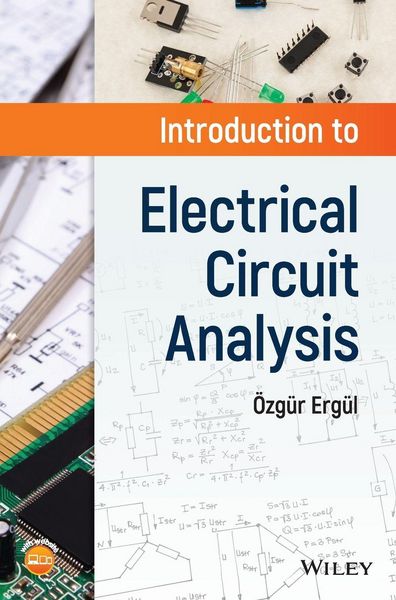
This book has been written for students on electrical engineering courses who don't necessarily possess prior knowledge of electrical circuits. Based on the author's own teaching experience, it covers the analysis of simple electrical circuits consisting of a few essential components using fundamental and well-known methods and techniques. Although the above content has been included in other circuit analysis books, this one aims at teaching young engineers not only from electrical and electronics engineering, but also from other areas, such as mechanical engineering, aerospace engineering, mining engineering, and chemical engineering, with unique pedagogical features such as a puzzle-like approach and negative-case examples (such as the unique "When Things Go Wrong..." section at the end of each chapter). Believing that the traditional texts in this area can be overwhelming for beginners, the author approaches his subject by providing numerous examples for the student to solve and practice before learning more complicated components and circuits. These exercises and problems will provide instructors with in-class activities and tutorials, thus establishing this book as the perfect complement to the more traditional texts.
* All examples and problems contain detailed analysis of various circuits, and are solved using a 'recipe' approach, providing a code that motivates students to decode and apply to real-life engineering scenarios
* Covers the basic topics of resistors, voltage and current sources, capacitors and inductors, Ohm's and Kirchhoff's Laws, nodal and mesh analysis, black-box approach, and Thevenin/Norton equivalent circuits for both DC and AC cases in transient and steady states
* Aims to stimulate interest and discussion in the basics, before moving on to more modern circuits with higher-level components
* Includes more than 130 solved examples and 120 detailed exercises with supplementary solutions
Noch keine Bewertungen vorhanden
Verfassen Sie die erste Bewertung zu diesem Artikel
Helfen Sie anderen Kundinnen und Kunden durch Ihre Meinung.
Kurze Frage zu unserer Seite
Vielen Dank für dein Feedback
Wir nutzen dein Feedback, um unsere Produktseiten zu verbessern. Bitte habe Verständnis, dass wir dir keine Rückmeldung geben können. Falls du Kontakt mit uns aufnehmen möchtest, kannst du dich aber gerne an unseren Kund*innenservice wenden.
zum Kundenservice