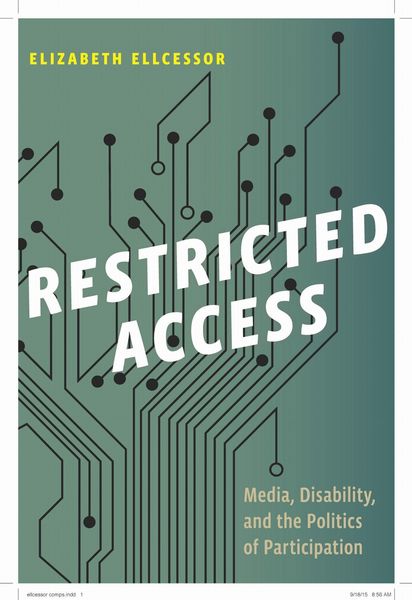
Restricted Access Media, Disability, and the Politics of Participation
-
- Taschenbuch ausgewählt
- eBook
-
Sprache:Englisch
34,99 €
inkl. gesetzl. MwSt.,
Lieferung nach Hause
Beschreibung
Produktdetails
Einband
Taschenbuch
Erscheinungsdatum
29.03.2016
Abbildungen
7 black and white illustrations
Verlag
New York UniversitySeitenzahl
272
Maße (L/B/H)
22,8/15,3/2 cm
Gewicht
402 g
Sprache
Englisch
ISBN
978-1-4798-5343-4
How reconsidering digital media and participatory cultures from the standpoint of disability allows for a full understanding of accessibility
While digital media can offer many opportunities for civic and cultural participation, this technology is not equally easy for everyone to use. Hardware, software, and cultural expectations combine to make some technologies an easier fit for some bodies than for others. A YouTube video without closed captions or a social network site that is incompatible with a screen reader can restrict the access of users who are hard of hearing or visually impaired. Often, people with disabilities require accommodation, assistive technologies, or other forms of aid to make digital media accessible-useable-for them.
Restricted Access investigates digital media accessibility-the processes by which media is made usable by people with particular needs-and argues for the necessity of conceptualizing access in a way that will enable greater participation in all forms of mediated culture. Drawing on disability and cultural studies, Elizabeth Ellcessor uses an interrogatory framework based around issues of regulation, use, content, form, and experience to examine contemporary digital media. Through interviews with policy makers and accessibility professionals, popular culture and archival materials, and an ethnographic study of internet use by people with disabilities, Ellcessor reveals the assumptions that undergird contemporary technologies and participatory cultures. Restricted Access makes the crucial point that if digital media open up opportunities for individuals to create and participate, but that technology only facilitates the participation of those who are already privileged, then its progressive potential remains unrealized. Engagingly written with powerful examples, Ellcessor demonstrates the importance of alternate uses, marginalized voices, and invisible innovations in the context of disability identities to push us to rethink digital media accessibility.
Kundinnen und Kunden meinen
Verfassen Sie die erste Bewertung zu diesem Artikel
Helfen Sie anderen Kund*innen durch Ihre Meinung
Kurze Frage zu unserer Seite
Vielen Dank für dein Feedback
Wir nutzen dein Feedback, um unsere Produktseiten zu verbessern. Bitte habe Verständnis, dass wir dir keine Rückmeldung geben können. Falls du Kontakt mit uns aufnehmen möchtest, kannst du dich aber gerne an unseren Kund*innenservice wenden.
zum Kundenservice