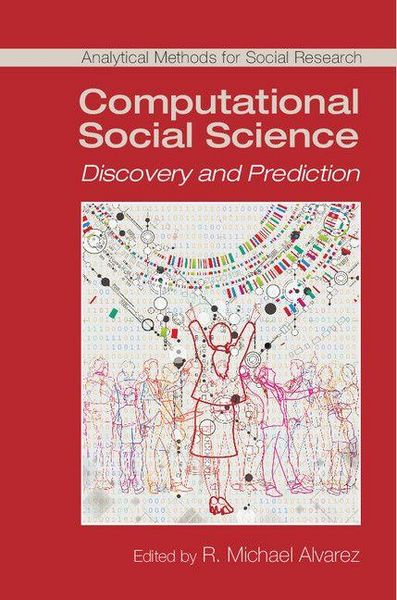

Computational Social Science
-
- Hardcover ausgewählt
- Taschenbuch
- eBook
-
Sprache:Englisch
157,99 €
inkl. gesetzl. MwSt.,
Beschreibung
Produktdetails
Einband
Gebundene Ausgabe
Erscheinungsdatum
09.04.2018
Abbildungen
46 b/w illus. 2 maps 18 tables, Zeichnungen, nicht spezifiziert, Karten, Tabellen, schwarz-weiss
Herausgeber
Alvarez R. MichaelVerlag
Cambridge AcademicSeitenzahl
338
Maße (L/B/H)
23,5/15,7/2,4 cm
Gewicht
700 g
Sprache
Englisch
ISBN
978-1-107-10788-5
Quantitative research in social science research is changing rapidly. Researchers have vast and complex arrays of data with which to work: we have incredible tools to sift through the data and recognize patterns in that data; there are now many sophisticated models that we can use to make sense of those patterns; and we have extremely powerful computational systems that help us accomplish these tasks quickly. This book focuses on some of the extraordinary work being conducted in computational social science - in academia, government, and the private sector - while highlighting current trends, challenges, and new directions. Thus, Computational Social Science showcases the innovative methodological tools being developed and applied by leading researchers in this new field. The book shows how academics and the private sector are using many of these tools to solve problems in social science and public policy.
Noch keine Bewertungen vorhanden
Verfassen Sie die erste Bewertung zu diesem Artikel
Helfen Sie anderen Kundinnen und Kunden durch Ihre Meinung.
Kurze Frage zu unserer Seite
Vielen Dank für dein Feedback
Wir nutzen dein Feedback, um unsere Produktseiten zu verbessern. Bitte habe Verständnis, dass wir dir keine Rückmeldung geben können. Falls du Kontakt mit uns aufnehmen möchtest, kannst du dich aber gerne an unseren Kund*innenservice wenden.
zum Kundenservice