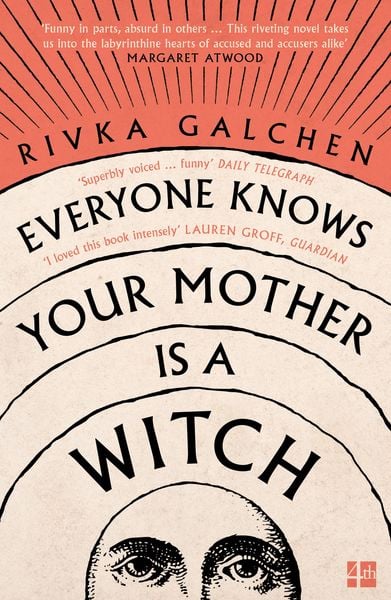
• Produktbild: Everyone Knows Your Mother is a Witch
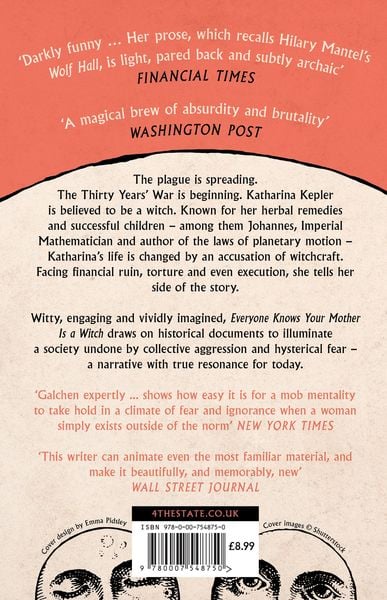
  • Produktbild: Everyone Knows Your Mother is a Witch
- 20%

Everyone Knows Your Mother is a Witch

Aus der Reihe Picador Paper
2
20% sparen

10,39 € UVP 13,00 €

inkl. gesetzl. MwSt., Versandkostenfrei

Lieferung nach Hause

Beschreibung

Produktdetails

Verkaufsrang

4410

Einband

Taschenbuch

Erscheinungsdatum

09.06.2022

Verlag

HarperCollins

Seitenzahl

288

Maße (L/B/H)

19,6/12,8/2 cm

Gewicht

213 g

Sprache

Englisch

ISBN

978-0-00-754875-0

Beschreibung

Produktdetails

Verkaufsrang

4410

Einband

Taschenbuch

Erscheinungsdatum

09.06.2022

Verlag

HarperCollins

Seitenzahl

288

Maße (L/B/H)

19,6/12,8/2 cm

Gewicht

213 g

Sprache

Englisch

ISBN

978-0-00-754875-0

EU-Ansprechpartner

Zeitfracht Medien GmbH
Ferdinand-Jühlke-Straße 7
99095 Erfurt
DE
produktsicherheit@zeitfracht.de

Herstelleradresse

HarperCollins Publishers UK
77-85 Fullham Palace Road
W6 JB London
GB
exportenquiries@harpercollins.co.uk

Kundinnen und Kunden meinen

2 Bewertungen

Informationen zu Bewertungen

Zur Abgabe einer Bewertung ist eine Anmeldung im Konto notwendig. Die Authentizität der Bewertungen wird von uns nicht überprüft. Wir behalten uns vor, Bewertungstexte, die unseren Richtlinien widersprechen, entsprechend zu kürzen oder zu löschen.

Die Bewertungen sind nach Format, Anzahl Sterne und Datum sortiert.

5 Sterne

(0)

4 Sterne

(2)

3 Sterne

(0)

2 Sterne

(0)

1 Sterne

(0)

Rivka Galchen - Everyone Knows Your Mother Is a Witch

Miss.mesmerized am 09.06.2021

Bewertungsnummer: 1505874

Bewertet: Buch (Gebundene Ausgabe)

Even though the Middle Ages are over, superstition and strange beliefs are still widespread among people. Thus, in 1615, Katharina Kepler finds herself accused of witchcraft by the people of her hometown of Leonberg in southern Germany. Times are hard, the Plague is spreading the Thirty Years’ War has just begun and somebody must be blamed for all the things happening. Katharina is an elderly widow, illiterate and mother of the astronomer Johannes Kepler. She leads a simple life, attending to her cow Chamomile. One day, however, Ursula Reinbold, accuses her of witchcraft, having offered a bitter drink which allegedly poisoned her, and surprisingly, the court not only listens but more and more people come forwards with testimonies of Katharina’s ill-doing. Only her neighbour, old Simon, who prefers to keep to himself, stands by her side. Rivka Galchen’s story is based on a true story, Johannes Kepler’s mother was a healer and herbalist and arrested for witchcraft. The famous son stopped his research in planetary motion to defend his mother. Not only Katharina became victim of this kind of accusation, the town’s advocate Lutherus Einhorn accused 15 women in one trial and had executed eight of them in 1615. At first, Katharina doesn’t take the accusation seriously, it is just talk for her, until she is put to prison and has to learn that more and more people come forward with other stories which seem to underline her doing black magic. She tries to counter the attack by accusing Ursula and her husband of slander, yet, her own case vanishes somewhere in the depth of local jurisprudence. “We all know she’s a witch. We’ve always know. The matter of how we came to know is simple – we already knew.” The accusations brought forward rage from poisoning, causing lameness, several deaths, injuring a woman’s foot, harming numerous people and animals – a long list which is getting more and more absurd during the story. I liked the interrogations of the inhabitants since they show not only the superstition they fall prey to, but also the dynamics of a small town which turns against one woman. Everything ill that has ever happened is simply attributed to Katharina. The allegations are so ridiculous that you could laugh weren’t it for Katharina’s case and the fact that the people’s testimonies seem to be believed. Even though the plot is based on a well-documented historical case, you can see more or less the same thing happening today. It is not the small town anymore, but the world wide web in which often just one single person brings forward an accusation – no need for proof anymore – and masses jump on the bandwagon and have their twitter trial even before the issue is sorted out. It doesn’t matter if the accused is later discharged or not, the only thing that counts is public opinion which is quick at passing a sentence. An entertaining read which outlines the dark sides of human nature – envy, greed, malicious gossip – and the danger that might come from it.

Rivka Galchen - Everyone Knows Your Mother Is a Witch

Miss.mesmerized am 09.06.2021
Bewertungsnummer: 1505874
Bewertet: Buch (Gebundene Ausgabe)

Even though the Middle Ages are over, superstition and strange beliefs are still widespread among people. Thus, in 1615, Katharina Kepler finds herself accused of witchcraft by the people of her hometown of Leonberg in southern Germany. Times are hard, the Plague is spreading the Thirty Years’ War has just begun and somebody must be blamed for all the things happening. Katharina is an elderly widow, illiterate and mother of the astronomer Johannes Kepler. She leads a simple life, attending to her cow Chamomile. One day, however, Ursula Reinbold, accuses her of witchcraft, having offered a bitter drink which allegedly poisoned her, and surprisingly, the court not only listens but more and more people come forwards with testimonies of Katharina’s ill-doing. Only her neighbour, old Simon, who prefers to keep to himself, stands by her side. Rivka Galchen’s story is based on a true story, Johannes Kepler’s mother was a healer and herbalist and arrested for witchcraft. The famous son stopped his research in planetary motion to defend his mother. Not only Katharina became victim of this kind of accusation, the town’s advocate Lutherus Einhorn accused 15 women in one trial and had executed eight of them in 1615. At first, Katharina doesn’t take the accusation seriously, it is just talk for her, until she is put to prison and has to learn that more and more people come forward with other stories which seem to underline her doing black magic. She tries to counter the attack by accusing Ursula and her husband of slander, yet, her own case vanishes somewhere in the depth of local jurisprudence. “We all know she’s a witch. We’ve always know. The matter of how we came to know is simple – we already knew.” The accusations brought forward rage from poisoning, causing lameness, several deaths, injuring a woman’s foot, harming numerous people and animals – a long list which is getting more and more absurd during the story. I liked the interrogations of the inhabitants since they show not only the superstition they fall prey to, but also the dynamics of a small town which turns against one woman. Everything ill that has ever happened is simply attributed to Katharina. The allegations are so ridiculous that you could laugh weren’t it for Katharina’s case and the fact that the people’s testimonies seem to be believed. Even though the plot is based on a well-documented historical case, you can see more or less the same thing happening today. It is not the small town anymore, but the world wide web in which often just one single person brings forward an accusation – no need for proof anymore – and masses jump on the bandwagon and have their twitter trial even before the issue is sorted out. It doesn’t matter if the accused is later discharged or not, the only thing that counts is public opinion which is quick at passing a sentence. An entertaining read which outlines the dark sides of human nature – envy, greed, malicious gossip – and the danger that might come from it.

Even though the Middle Ages…

Bewertung aus Mainz am 08.06.2021

Bewertungsnummer: 2996275

Bewertet: Buch (Gebundene Ausgabe)

Even though the Middle Ages are over, superstition and strange beliefs are still widespread among people. Thus, in 1615, Katharina Kepler finds herself accused of witchcraft by the people of her hometown of Leonberg in southern Germany. Times are hard, the Plague is spreading the Thirty Years’ War has just begun and somebody must be blamed for all the things happening. Katharina is an elderly widow, illiterate and mother of the astronomer Johannes Kepler. She leads a simple life, attending to her cow Chamomile. One day, however, Ursula Reinbold, accuses her of witchcraft, having offered a bitter drink which allegedly poisoned her, and surprisingly, the court not only listens but more and more people come forwards with testimonies of Katharina’s ill-doing. Only her neighbour, old Simon, who prefers to keep to himself, stands by her side. Rivka Galchen’s story is based on a true story, Johannes Kepler’s mother was a healer and herbalist and arrested for witchcraft. The famous son stopped his research in planetary motion to defend his mother. Not only Katharina became victim of this kind of accusation, the town’s advocate Lutherus Einhorn accused 15 women in one trial and had executed eight of them in 1615. At first, Katharina doesn’t take the accusation seriously, it is just talk for her, until she is put to prison and has to learn that more and more people come forward with other stories which seem to underline her doing black magic. She tries to counter the attack by accusing Ursula and her husband of slander, yet, her own case vanishes somewhere in the depth of local jurisprudence. “We all know she’s a witch. We’ve always know. The matter of how we came to know is simple – we already knew.” The accusations brought forward rage from poisoning, causing lameness, several deaths, injuring a woman’s foot, harming numerous people and animals – a long list which is getting more and more absurd during the story. I liked the interrogations of the inhabitants since they show not only the superstition they fall prey to, but also the dynamics of a small town which turns against one woman. Everything ill that has ever happened is simply attributed to Katharina. The allegations are so ridiculous that you could laugh weren’t it for Katharina’s case and the fact that the people’s testimonies seem to be believed. Even though the plot is based on a well-documented historical case, you can see more or less the same thing happening today. It is not the small town anymore, but the world wide web in which often just one single person brings forward an accusation – no need for proof anymore – and masses jump on the bandwagon and have their twitter trial even before the issue is sorted out. It doesn’t matter if the accused is later discharged or not, the only thing that counts is public opinion which is quick at passing a sentence. An entertaining read which outlines the dark sides of human nature – envy, greed, malicious gossip – and the danger that might come from it.

Even though the Middle Ages…

Bewertung aus Mainz am 08.06.2021
Bewertungsnummer: 2996275
Bewertet: Buch (Gebundene Ausgabe)

Even though the Middle Ages are over, superstition and strange beliefs are still widespread among people. Thus, in 1615, Katharina Kepler finds herself accused of witchcraft by the people of her hometown of Leonberg in southern Germany. Times are hard, the Plague is spreading the Thirty Years’ War has just begun and somebody must be blamed for all the things happening. Katharina is an elderly widow, illiterate and mother of the astronomer Johannes Kepler. She leads a simple life, attending to her cow Chamomile. One day, however, Ursula Reinbold, accuses her of witchcraft, having offered a bitter drink which allegedly poisoned her, and surprisingly, the court not only listens but more and more people come forwards with testimonies of Katharina’s ill-doing. Only her neighbour, old Simon, who prefers to keep to himself, stands by her side. Rivka Galchen’s story is based on a true story, Johannes Kepler’s mother was a healer and herbalist and arrested for witchcraft. The famous son stopped his research in planetary motion to defend his mother. Not only Katharina became victim of this kind of accusation, the town’s advocate Lutherus Einhorn accused 15 women in one trial and had executed eight of them in 1615. At first, Katharina doesn’t take the accusation seriously, it is just talk for her, until she is put to prison and has to learn that more and more people come forward with other stories which seem to underline her doing black magic. She tries to counter the attack by accusing Ursula and her husband of slander, yet, her own case vanishes somewhere in the depth of local jurisprudence. “We all know she’s a witch. We’ve always know. The matter of how we came to know is simple – we already knew.” The accusations brought forward rage from poisoning, causing lameness, several deaths, injuring a woman’s foot, harming numerous people and animals – a long list which is getting more and more absurd during the story. I liked the interrogations of the inhabitants since they show not only the superstition they fall prey to, but also the dynamics of a small town which turns against one woman. Everything ill that has ever happened is simply attributed to Katharina. The allegations are so ridiculous that you could laugh weren’t it for Katharina’s case and the fact that the people’s testimonies seem to be believed. Even though the plot is based on a well-documented historical case, you can see more or less the same thing happening today. It is not the small town anymore, but the world wide web in which often just one single person brings forward an accusation – no need for proof anymore – and masses jump on the bandwagon and have their twitter trial even before the issue is sorted out. It doesn’t matter if the accused is later discharged or not, the only thing that counts is public opinion which is quick at passing a sentence. An entertaining read which outlines the dark sides of human nature – envy, greed, malicious gossip – and the danger that might come from it.

Kundinnen und Kunden meinen

Everyone Knows Your Mother Is a Witch

von Rivka Galchen

0 Bewertungen filtern

Weitere Artikel findest du in

Die Leseprobe wird geladen.
  • Produktbild: Everyone Knows Your Mother is a Witch
  • Produktbild: Everyone Knows Your Mother is a Witch