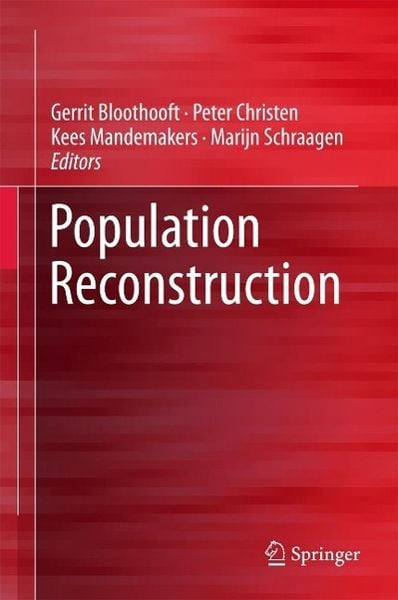
Population Reconstruction
-
- Hardcover
- Taschenbuch
- eBook ausgewählt
-
Form:Einzelkauf Download
-
Sprache:Englisch
53,49 €
inkl. gesetzl. MwSt.Beschreibung
Produktdetails
Format
Kopierschutz
Nein
Family Sharing
Nein
Text-to-Speech
Nein
Erscheinungsdatum
22.07.2015
Herausgeber
Gerrit Bloothooft + weitereVerlag
SpringerSeitenzahl
302 (Printausgabe)
Dateigröße
5637 KB
Auflage
1st ed. 2015
Sprache
Englisch
EAN
9783319198842
This book addresses the problems that are encountered, and solutions that have been proposed, when we aim to identify people and to reconstruct populations under conditions where information is scarce, ambiguous, fuzzy and sometimes erroneous.
The process from handwritten registers to a reconstructed digitized population consists of three major phases, reflected in the three main sections of this book. The first phase involves transcribing and digitizing the data while structuring the information in a meaningful and efficient way. In the second phase, records that refer to the same person or group of persons are identified by a process of linkage. In the third and final phase, the information on an individual is combined into a reconstruction of their life course.
The studies and examples in this book originate from a range of countries, each with its own cultural and administrative characteristics, and from medieval charters through historical censuses and vital registration, to the modern issue of privacy preservation. Despite the diverse places and times addressed, they all share the study of fundamental issues when it comes to model reasoning for population reconstruction and the possibilities and limitations of information technology to support this process.
It is thus not a single discipline that is involved in such an endeavor. Historians, social scientists, and linguists represent the humanities through their knowledge of the complexity of the past, the limitations of sources, and the possible interpretations of information. The availability of big data from digitized archives and the need for complex analyses to identify individuals calls for the involvement of computer scientists. With contributions from all these fields, often in direct cooperation, this book is at the heart of the digital humanities, and will hopefully offer a source of inspiration for future investigations.Noch keine Bewertungen vorhanden
Verfassen Sie die erste Bewertung zu diesem Artikel
Helfen Sie anderen Kundinnen und Kunden durch Ihre Meinung.
Kurze Frage zu unserer Seite
Vielen Dank für dein Feedback
Wir nutzen dein Feedback, um unsere Produktseiten zu verbessern. Bitte habe Verständnis, dass wir dir keine Rückmeldung geben können. Falls du Kontakt mit uns aufnehmen möchtest, kannst du dich aber gerne an unseren Kund*innenservice wenden.
zum Kundenservice