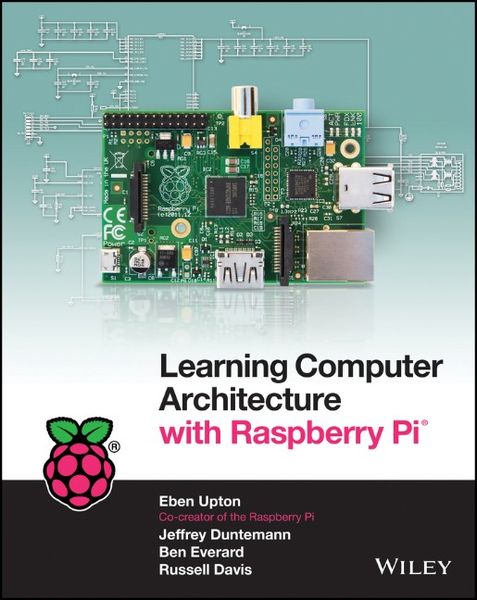
Learning Computer Architecture with Raspberry Pi
-
- Taschenbuch ausgewählt
- eBook
-
Sprache:Englisch
29,99 €
inkl. gesetzl. MwSt.,
Beschreibung
Produktdetails
Einband
Taschenbuch
Erscheinungsdatum
27.09.2016
Verlag
John Wiley & SonsSeitenzahl
528
Maße (L/B/H)
23,3/18,9/2,7 cm
Gewicht
895 g
Auflage
1. Auflage
Sprache
Englisch
ISBN
978-1-119-18393-8
In the 1980s, the tech revolution was kickstarted by a flood of relatively inexpensive, highly programmable computers like the Commodore. Now, a second revolution in computing is beginning with the Raspberry Pi. Learning Computer Architecture with the Raspberry Pi is the premier guide to understanding the components of the most exciting tech product available. Thanks to this book, every Raspberry Pi owner can understand how the computer works and how to access all of its hardware and software capabilities.
Now, students, hackers, and casual users alike can discover how computers work with Learning Computer Architecture with the Raspberry Pi. This book explains what each and every hardware component does, how they relate to one another, and how they correspond to the components of other computing systems. You'll also learn how programming works and how the operating system relates to the Raspberry Pi's physical components.
* Co-authored by Eben Upton, one of the creators of the Raspberry Pi, this is a companion volume to the Raspberry Pi User Guide
* An affordable solution for learning about computer system design considerations and experimenting with low-level programming
* Understandable descriptions of the functions of memory storage, Ethernet, cameras, processors, and more
* Gain knowledge of computer design and operation in general by exploring the basic structure of the Raspberry Pi
The Raspberry Pi was created to bring forth a new generation of computer scientists, developers, and architects who understand the inner workings of the computers that have become essential to our daily lives. Learning Computer Architecture with the Raspberry Pi is your gateway to the world of computer system design.
Noch keine Bewertungen vorhanden
Verfassen Sie die erste Bewertung zu diesem Artikel
Helfen Sie anderen Kundinnen und Kunden durch Ihre Meinung.
Kurze Frage zu unserer Seite
Vielen Dank für dein Feedback
Wir nutzen dein Feedback, um unsere Produktseiten zu verbessern. Bitte habe Verständnis, dass wir dir keine Rückmeldung geben können. Falls du Kontakt mit uns aufnehmen möchtest, kannst du dich aber gerne an unseren Kund*innenservice wenden.
zum Kundenservice