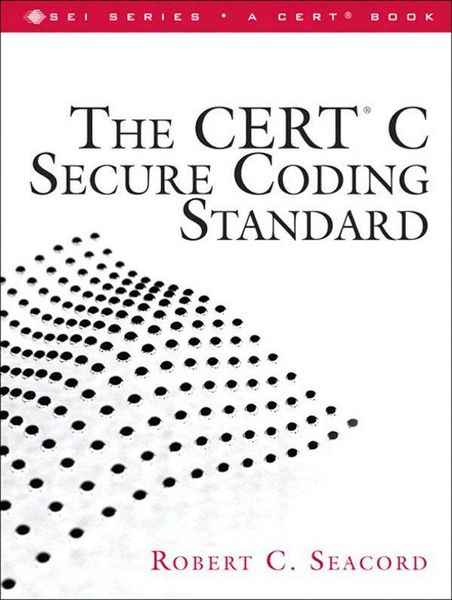
CERT C Secure Coding Standard, The A Systems Approach
-
- Einzelkauf Download ausgewählt
-
Sprache:Englisch
57,99 €
inkl. gesetzl. MwSt.Beschreibung
Produktdetails
Format
ePUB
Kopierschutz
Nein
Family Sharing
Nein
Text-to-Speech
Ja
Altersempfehlung
18 - 67 Jahr(e)
Erscheinungsdatum
14.10.2008
Verlag
Pearson ITPSeitenzahl
720 (Printausgabe)
Dateigröße
9321 KB
Auflage
1. Auflage
Sprache
Englisch
EAN
9780132702461
"I'm an enthusiastic supporter of the CERT Secure Coding Initiative. Programmers have lots of sources of advice on correctness, clarity, maintainability, performance, and even safety. Advice on how specific language features affect security has been missing. The CERT
® C Secure Coding Standard fills this need."
-Randy Meyers, Chairman of ANSI C
"For years we have relied upon the CERT/CC to publish advisories documenting an endless stream of security problems. Now CERT has embodied the advice of leading technical experts to give programmers and managers the practical guidance needed to avoid those problems in new applications and to help secure legacy systems. Well done!"
-Dr. Thomas Plum, founder of Plum Hall, Inc.
"Connectivity has sharply increased the need for secure, hacker-safe applications. By combining this CERT standard with other safety guidelines, customers gain all-round protection and approach the goal of zero-defect software."
-Chris Tapp, Field Applications Engineer, LDRA Ltd.
"I've found this standard to be an indispensable collection of expert information on exactly how modern software systems fail in practice. It is the perfect place to start for establishing internal secure coding guidelines. You won't find this information elsewhere, and, when it comes to software security, what you don't know is often exactly what hurts you."
-John McDonald, coauthor of The Art of Software Security Assessment
Software security has major implications for the operations and assets of organizations, as well as for the welfare of individuals. To create secure software, developers must know where the dangers lie. Secure programming in C can be more difficult than even many experienced programmers believe.
This book is an essential desktop reference documenting the first official release of The CERT® C Secure Coding Standard. The standard itemizes those coding errors that are the root causes of software vulnerabilities in C and prioritizes them by severity, likelihood of exploitation, and remediation costs. Each guideline provides examples of insecure code as well as secure, alternative implementations. If uniformly applied, these guidelines will eliminate the critical coding errors that lead to buffer overflows, format string vulnerabilities, integer overflow, and other common software vulnerabilities.
Noch keine Bewertungen vorhanden
Verfassen Sie die erste Bewertung zu diesem Artikel
Helfen Sie anderen Kundinnen und Kunden durch Ihre Meinung.
Kurze Frage zu unserer Seite
Vielen Dank für dein Feedback
Wir nutzen dein Feedback, um unsere Produktseiten zu verbessern. Bitte habe Verständnis, dass wir dir keine Rückmeldung geben können. Falls du Kontakt mit uns aufnehmen möchtest, kannst du dich aber gerne an unseren Kund*innenservice wenden.
zum Kundenservice