KI-Beratung Beta

Gutscheinbedingungen

**Gültig vom 05.10.2026 bis 07.10.2026 | Gültig für nicht preisgebundene fremdsprachige Bücher | Einzelne Artikel können ausgeschlossen sein | Online auf www.bücher.de einlösbar | Click & Collect nur mit Online-Zahlung (Paypal/Kreditkarte) vorab | Nicht kombinierbar mit anderen Gutscheinen oder Preisaktionen | Nur einmal pro Einkauf einlösbar | Gutschein wird auf max. 500€ Bestellwert angerechnet | Keine Barauszahlung | Nicht gültig für Versandkosten und Services

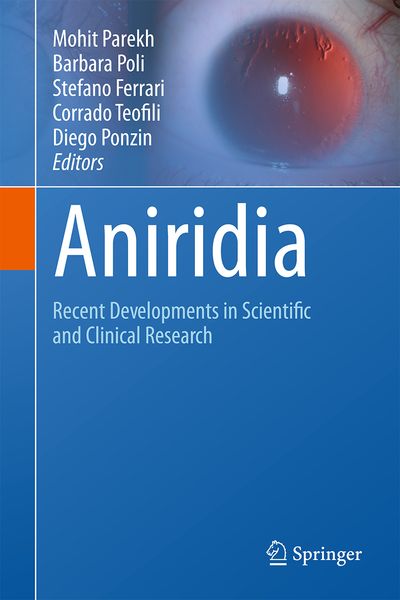
Produktbild: Aniridia
- 10%

Aniridia Recent Developments in Scientific and Clinical Research

10% sparen

95,99 € UVP 106,99 €

inkl. gesetzl. MwSt., Versandkostenfrei


Beschreibung

Produktdetails

Einband

Gebundene Ausgabe

Erscheinungsdatum

08.09.2015

Abbildungen

VIII, 192 p. 57 illus., 54 illus. in color.

Herausgeber

Mohit Parekh + weitere

Verlag

Springer

Seitenzahl

192

Maße (L/B/H)

24,1/16/1,6 cm

Gewicht

507 g

Sprache

Englisch

ISBN

978-3-319-19778-4

Beschreibung

Produktdetails

Einband

Gebundene Ausgabe

Erscheinungsdatum

08.09.2015

Abbildungen

VIII, 192 p. 57 illus., 54 illus. in color.

Herausgeber

Verlag

Springer

Seitenzahl

192

Maße (L/B/H)

24,1/16/1,6 cm

Gewicht

507 g

Sprache

Englisch

ISBN

978-3-319-19778-4

Herstelleradresse

Springer-Verlag KG
Sachsenplatz 4-6
1201 Wien
AT

Email: ProductSafety@springernature.com

Noch keine Bewertungen vorhanden

Verfassen Sie die erste Bewertung zu diesem Artikel

Helfen Sie anderen Kundinnen und Kunden durch Ihre Meinung.

Kundinnen und Kunden meinen

Bewertungen (0)

  • Produktbild: Aniridia

  • Preface.- What is Aniridia: Epidemiology, clinical features and genetic implications.- Optical Coherence Tomography imaging in patients with PAX6 mutations.- Aniridic Glaucoma: Diagnosis and Treatment.- Management of Glaucoma in Congenital Aniridia.- Clinical and surgical management of cataract in congenital aniridia.- The ocular surface in aniridia.- Aniridic Keratopathy: Conservative approaches.- Lamellar and penetrating keratoplasty in congenital aniridia.- Boston KPRo Type I as a viable alternative to visual rehabilitation in aniridia patients: advances and limitations.- Cell therapy for regeneration of the corneal epithelium aniridic patients.- Strategies for success in limbal allograft transplantation for aniridia.- The paediatric patient: identifying congenital aniridia as soon as possible.- Early diagnosis: the key roles of neonatologists, paediatricians and paediatric ophthalmologists.- Aniridia guides and aniridia-syndrome (Pax6-Syndrome).- Assessing the visual function in congenital aniridia and following the child during daily life.- Children with aniridia and healthcare systems: from needs assessment to a comprehensive programme of care and assistance.- European/international guidelines on Aniridia: the patients’ point of view.- What to do when diagnosed with Aniridia: the role of patients´ associations.- Conclusions and future perspectives.- Index.