KI-Beratung Beta

Produktbild: Managing Packaging Design for Sustainable Development

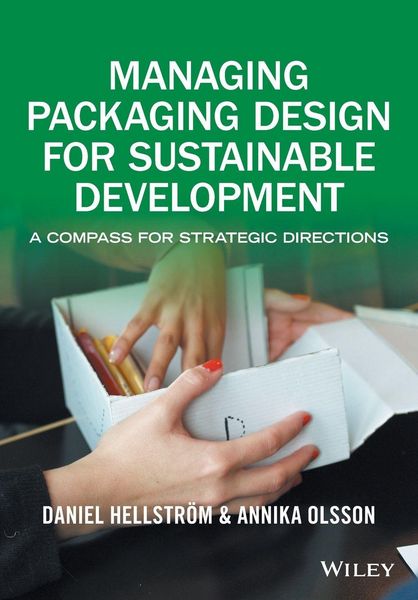
Managing Packaging Design for Sustainable Development A Compass for Strategic Directions

109,99 €

inkl. gesetzl. MwSt., Versandkostenfrei


Beschreibung

Produktdetails

Einband

Taschenbuch

Erscheinungsdatum

24.01.2017

Verlag

John Wiley & Sons Inc

Seitenzahl

240

Maße (L/B/H)

24,1/16,8/1,3 cm

Gewicht

476 g

Auflage

1. Auflage

Sprache

Englisch

ISBN

978-1-119-15093-0

Beschreibung

Produktdetails

Einband

Taschenbuch

Erscheinungsdatum

24.01.2017

Verlag

John Wiley & Sons Inc

Seitenzahl

240

Maße (L/B/H)

24,1/16,8/1,3 cm

Gewicht

476 g

Auflage

1. Auflage

Sprache

Englisch

ISBN

978-1-119-15093-0

Herstelleradresse

Libri GmbH
Europaallee 1
36244 Bad Hersfeld
DE

Email: gpsr@libri.de

Noch keine Bewertungen vorhanden

Verfassen Sie die erste Bewertung zu diesem Artikel

Helfen Sie anderen Kundinnen und Kunden durch Ihre Meinung.

Kundinnen und Kunden meinen

Bewertungen (0)

Die Leseprobe wird geladen.
  • Produktbild: Managing Packaging Design for Sustainable Development
  • Preface iii
     
    ACKNOWLEDGEMENTS viii
     
    PART I FUNDAMENTALS OF PACKAGING DESIGN 21
     
    1. Introduction to packaging 25
     
    1.1 Multiple functions of packaging 26
     
    1.2 Packaging legislations and regulations 31
     
    1.2.1 Administrative legislation and regulations 33
     
    1.2.2 Legislation and regulations for protecting the public 33
     
    1.2.3 Legislation and regulations for protecting designs 34
     
    1.2.4 Legislation and regulations for protecting the environment 34
     
    1.3 Packaging Terminology 36
     
    1.4 Packaging as a system 38
     
    1.5 Packaging goes beyond a single discipline 40
     
    1.6 Going multidisciplinary - Packaging Logistics 42
     
    References 46
     
    2. Sustainable development and packaging 49
     
    2.1 Sustainable development goals 50
     
    2.2 Three pillars of sustainable development 53
     
    2.2.1 People 54
     
    2.2.2 Planet 54
     
    2.2.3 Profit 55
     
    2.3 Looking back at the role of packaging 56
     
    2.4 Misconceptions of packaging 59
     
    2.4.1 Overpackaged or underpackaged? 60
     
    2.4.2 Wasteful or useful? 62
     
    2.4.3 How about the R's in waste hierarchies? 64
     
    2.5 Packaging contributions to sustainable development 66
     
    2.5.1 The reasons for packaging 67
     
    2.5.2 Adding value for people, profit and planet 68
     
    2.6 Packaging contributions to sustainable development for supply chains 70
     
    2.6.1 The research on sustainable supply chains 70
     
    2.6.2 The packaging impact in retail supply chains 72
     
    References 74
     
    3. Designing packaging 79
     
    3.1 The complexity of packaging design 80
     
    3.1.1 Layer one - packaging functions 81
     
    3.1.2 Layer two - the packaging system 81
     
    3.1.3 Layer three - functions and departments within organizations 82
     
    3.1.4 Layer four - between organizations 82
     
    3.1.5 Layer five - end consumers 83
     
    3.1.6 Layer six - distribution channels 84
     
    3.1.7 Layer seven - extending or closing the loop in circular systems 85
     
    3.1.8 Layer eight - time 86
     
    3.2 Challenges of dealing with the complexity 87
     
    3.2.1 Taking a holistic approach to packaging 89
     
    3.2.2 Integrating form and function 91
     
    3.2.3 Making trade-off decisions 93
     
    3.2.4 Sharing the risks and gains 95
     
    3.3 Organizing and managing packaging design 98
     
    3.3.1 Design thinking processes 99
     
    3.3.2 Managing the team 103
     
    3.4 Tools for packaging design 107
     
    3.4.1 Divergent phase tools -identifying needs and generating ideas 109
     
    3.4.2 Convergent phase tools - decision-making support 116
     
    3.4.3 Packaging design software and guidelines 120
     
    3.4.4 Strategic guidance towards sustainable development 122
     
    References 124
     
    PART II A PACKAGING DESIGN COMPASS FOR SUSTAINABLE DEVELOPMENT 133
     
    4. Introducing the compass 139
     
    4.1 Points of the compass 140
     
    4.2 Users of the compass 141
     
    4.3 How to navigate 142
     
    4.4 The making of the compass - our methodology 144
     
    References 147
     
    5. The directions of the compass 148
     
    5.1 Protection 148
     
    5.2 Material use 151
     
    5.3 Fill rate 153
     
    5.4 Apportionment 155
     
    5.5 User-friendliness 158
     
    5.6 Information and communication 160
     
    5.6.1 Information 161
     
    5.6.2 Communication 163
     
    References 165
     
    PART III PRACTICAL AND ILLUSTRATIVE CASES 167
     
    6. Product protection 173
     
    6.1 Better quality grapes for the people 175
     
    6.1.1 T