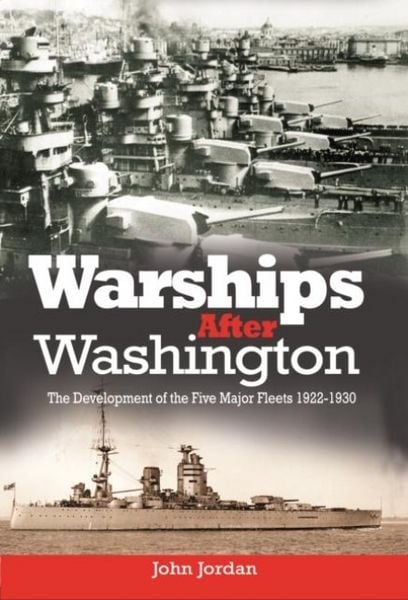

Warships After Washington
-
- Taschenbuch ausgewählt
- eBook
-
Sprache:Englisch
21,99 €
inkl. gesetzl. MwSt.,
Beschreibung
Produktdetails
Einband
Taschenbuch
Erscheinungsdatum
01.10.2015
Verlag
Pen & Sword Books LtdSeitenzahl
338
Maße (L/B/H)
23,3/15,4/2,7 cm
Gewicht
763 g
Sprache
Englisch
ISBN
978-1-4738-5273-0
The Washington Treaty of 1922, designed to head off a potentially dangerous arms race between the major naval powers, agreed to legally binding limits on the numbers and sizes of the principal warship types. In doing so, it introduced a new constraint into naval architecture and sponsored many ingenious attempts to maximise the power of ships built within those restrictions. It effectively banned the construction of new battleships for a decade, but threw greater emphasis on large cruisers. This much is broadly understood by anyone with an interest in warships, but both the wider context of the treaty and the detail ramifications of its provisions are little understood. The approach of this book is novel in combining coverage of the political and strategic background of the treaty - and the subsequent London Treaty of 1930 - with analysis of exactly how the navies of Britain, the USA, Japan, France and Italy responded, in terms of the types of warships they built and the precise characteristics of those designs. This was not just a matter of capital ships and cruisers, but also influenced the development of super-destroyers and large submarines. Now for the first time warship enthusiasts and historians can understand fully the rationale behind much of inter-war naval procurement. The Washington Treaty was a watershed, and this book provides an important insight into its full significance.
Noch keine Bewertungen vorhanden
Verfassen Sie die erste Bewertung zu diesem Artikel
Helfen Sie anderen Kundinnen und Kunden durch Ihre Meinung.
Kurze Frage zu unserer Seite
Vielen Dank für dein Feedback
Wir nutzen dein Feedback, um unsere Produktseiten zu verbessern. Bitte habe Verständnis, dass wir dir keine Rückmeldung geben können. Falls du Kontakt mit uns aufnehmen möchtest, kannst du dich aber gerne an unseren Kund*innenservice wenden.
zum Kundenservice