KI-Beratung Beta

Produktbild: Analyzing Computer System Performance with Perl::PDQ

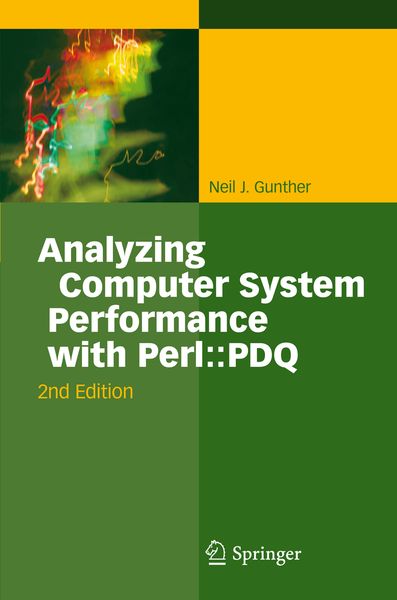
Analyzing Computer System Performance with Perl::PDQ

49,99 €

inkl. gesetzl. MwSt., Versandkostenfrei


Beschreibung

To solve performance problems in modern computing infrastructures, often comprising thousands of servers running hundreds of applications, spanning multiple tiers, you need tools that go beyond mere reporting. You need tools that enable performance analysis of application workflow across the entire enterprise....

Beschreibung

To solve performance problems in modern computing infrastructures, often comprising thousands of servers running hundreds of applications, spanning multiple tiers, you need tools that go beyond mere reporting. You need tools that enable performance analysis of application workflow across the entire enterprise. That's what PDQ (Pretty Damn Quick) provides. PDQ is an open-source performance analyzer based on the paradigm of queues. Queues are ubiquitous in every computing environment as buffers, and since any application architecture can be represented as a circuit of queueing delays, PDQ is a natural fit for analyzing system performance.

Building on the success of the first edition, this considerably expanded second edition now comprises four parts. Part I contains the foundational concepts, as well as a new first chapter that explains the central role of queues in successful performance analysis. Part II provides the basics of queueing theory in a highly intelligible style for the non-mathematician; little more than high-school algebra being required. Part III presents many practical examples of how PDQ can be applied. The PDQ manual has been relegated to an appendix in Part IV, along with solutions to the exercises contained in each chapter.

Throughout, the Perl code listings have been newly formatted to improve readability.

Rezension

From the reviews "The literature of computer performance analysis is generally composed of two groups: heavy theoretical treatises and performance cookbooks. […] Surprisingly, this book is exceptionally well balanced between theory and practice […] . I strongly recommend this book, both for the novice practitioner and for the experienced performance analyst. Both can extract a vast array of benefits, ranging from understanding the theoretical concepts of performance modeling, to building for themselves a powerful modeling tool […] ." Jair Merlo, Computing Reviews, May 2005From the reviews of the second edition:“Besides its case studies on applying queueing theory to the analysis of computer performance, this book on queueing circuits also includes a quick user guide to Perl Pretty Damn Quick (PDQ), a reference manual, and numerous examples. … The book is written to be a field manual for enlightened practitioners of performance analysis, or possibly a school textbook. … It is a laudable achievement to make performance analysis theoretical foundations available to anyone who is interested and can master high-school algebra.” (A. Squassabia, ACM Computing Reviews, December, 2011)

Produktdetails

Einband

Taschenbuch

Erscheinungsdatum

28.11.2014

Abbildungen

XXVIII, 474 p.

Verlag Springer Berlin

Produktdetails

Einband

Taschenbuch

Erscheinungsdatum

28.11.2014

Abbildungen

XXVIII, 474 p.

Verlag Springer Berlin
Seitenzahl

474

Maße (L/B/H)

23,5/15,5/2,8 cm

Gewicht

756 g

Auflage

2nd ed. 2011

Sprache

Englisch

ISBN

978-3-642-43713-7

Herstelleradresse

Springer-Verlag KG
Sachsenplatz 4-6
1201 Wien
AT

Email: ProductSafety@springernature.com

Noch keine Bewertungen vorhanden

Verfassen Sie die erste Bewertung zu diesem Artikel

Helfen Sie anderen Kundinnen und Kunden durch Ihre Meinung.

Kundinnen und Kunden meinen

Bewertungen (0)

  • Produktbild: Analyzing Computer System Performance with Perl::PDQ
  • Part I Preliminary Concepts.- Why Queues Rule Performance Analysis.- Measurement Tools and Techniques.- Time - The Zeroth Performance Metric.- Part II Basic Queueing Theory for PDQ.- Getting the Jump on Queueing.- Queueing Systems for Computer Systems.- Linux Load Average.- Performance Bounds and Log Jams.- Part III Practical Application of PDQ.- Pretty Damn Quick|A Slow Introduction.- Multicomputer Analysis with PDQ.- How to Scale an Elephant with PDQ.- Client/Server Analysis with PDQ.- Web Application Analysis with PDQ.- Virtual Machine Analysis with PDQ.- Part IV Appendices.- Thanks for No Memories.- Compendium of Queueing Equations.- Units and Abbreviations.- Perl PDQ Manual.- Solutions to Selected Exercises.