KI-Beratung Beta

  • Produktbild: Consciousness
  • Produktbild: Consciousness

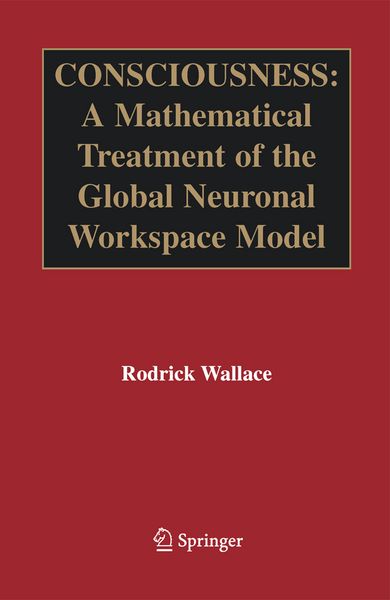
Consciousness A Mathematical Treatment of the Global Neuronal Workspace Model

49,99 €

inkl. gesetzl. MwSt., Versandkostenfrei


Beschreibung

Produktdetails

Einband

Taschenbuch

Erscheinungsdatum

09.12.2014

Abbildungen

XIII, 116 p.

Verlag

Springer Us

Seitenzahl

116

Maße (L/B/H)

23,5/15,5/0,8 cm

Gewicht

213 g

Sprache

Englisch

ISBN

978-1-4899-9562-9

Beschreibung

Rezension

From the reviews:


"To formulate a serious, clear-cut and transparent formal framework for cognitive neuroscience is a challenge … . I think that Wallace’s book presents an appreciable step in the right direction. … Beyond references that are necessary for basic elements of his work, the author has put together additional interesting reading material … . It is a book that can unfold its potential to well-educated readers with genuinely interdisciplinary ambitions … ." (Harald Atmanspacher, Acta Biotheoretica, Vol. 54, 2006)

Produktdetails

Einband

Taschenbuch

Erscheinungsdatum

09.12.2014

Abbildungen

XIII, 116 p.

Verlag

Springer Us

Seitenzahl

116

Maße (L/B/H)

23,5/15,5/0,8 cm

Gewicht

213 g

Sprache

Englisch

ISBN

978-1-4899-9562-9

Herstelleradresse

Springer-Verlag KG
Sachsenplatz 4-6
1201 Wien
AT

Email: ProductSafety@springernature.com

Noch keine Bewertungen vorhanden

Verfassen Sie die erste Bewertung zu diesem Artikel

Helfen Sie anderen Kundinnen und Kunden durch Ihre Meinung.

Kundinnen und Kunden meinen

Bewertungen (0)

  • Produktbild: Consciousness
  • Produktbild: Consciousness

  • Preface.- What is consciousness?- The Global Neuronal Workspace model. An introduction to information theory. The Shannon Coding Theorem. More heuristics: a 'tuning theorem'. The Shannon-McMillan Theorem. The Rate Distortion Theorem. Large deviations.- Fluctuations. The fundamental homology with statistical physics. Cognition as generalized language.- Theory. Two neural network examples. Interacting cognitive modules.- Representations. Language-on-a-network models. 'Biological' phase transitions. Universality class distribution. Universality class tuning. More on behavior far from the critical point. Extending the model. The simplest tunable retina. Tuning the visual retina. The torus and the sphere. Expanding the workspace. Energy efficiency and consciousness. Where does all this lead? Sociocultural context as selection pressure. Autocognitive developmental disorder. Toward a 'General Cognitive Model'. Evading the mereological fallacy.- References. Appendix on coarse graining.