Beschreibung
Produktdetails
Einband
Gebundene Ausgabe
Erscheinungsdatum
01.12.2014
Verlag
Oxford AcademicSeitenzahl
314
Maße (L/B/H)
24/16,1/2,3 cm
Gewicht
590 g
Sprache
Englisch
ISBN
978-0-19-937874-6
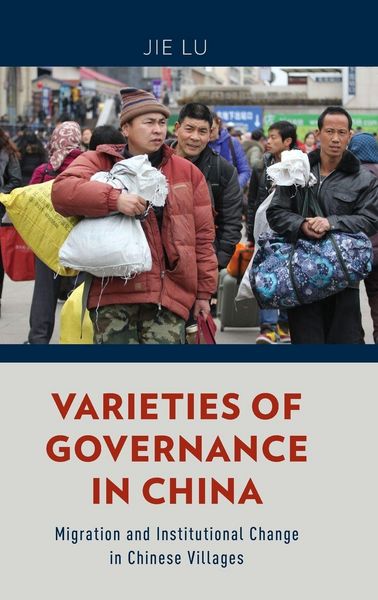
It is well understood that "good institutions" are essential for good governance. But even institutions that follow similar designs vary significantly with regard to performance across countries and even across regions within the same country. Following China's abolishment of the Commune system to accommodate market-oriented reforms in the 1980s, decentralized, grassroots democracy was introduced in rural China in order to improve the quality of local governance. In this book, Jie Lu looks at variance among local governance institutions in China to examine under what conditions indigenously cultivated institutions are able to succeed, particularly under pressures of economic modernization.
Lu argues that any governance institution can perform effectively as long as it can produce collective action and accountability, but that the relative effectiveness of institutions is contingent upon the social environment in which they are embedded. When economic conditions prompt outward migration, social environments are reshaped such that rules-based national institutions will trump indigenous forms. In identifying the optimal social conditions for the good performance of different governance institutions and theorizing the effects of social change on these institutions, Lu deepens understanding of how institutions, particularly in developing countries, change, and under what conditions institutional modernization or engineering may succeed or fail.
Varieties of Governance in China is the first book to use a coherent framework to simultaneously examine various aspects of rural China's governance-including public goods provision, conflict resolution, disaster and crisis relief, and raising modest credit and small loans-covering both formal and informal institutions. It is also the first book to systematically examine how community structural transformation, primarily driven by rural-urban migration, affects the performance and change of institutions in rural China, as well as their implications for Chinese villages' decentralized governance.
Noch keine Bewertungen vorhanden
Verfassen Sie die erste Bewertung zu diesem Artikel
Helfen Sie anderen Kundinnen und Kunden durch Ihre Meinung.
Kurze Frage zu unserer Seite
Vielen Dank für dein Feedback
Wir nutzen dein Feedback, um unsere Produktseiten zu verbessern. Bitte habe Verständnis, dass wir dir keine Rückmeldung geben können. Falls du Kontakt mit uns aufnehmen möchtest, kannst du dich aber gerne an unseren Kund*innenservice wenden.
zum Kundenservice