Beschreibung
Produktdetails
Einband
Taschenbuch
Erscheinungsdatum
08.08.2014
Verlag
LAP LAMBERT Academic PublishingSeitenzahl
56
Maße (L/B/H)
22/15/0,4 cm
Gewicht
102 g
Sprache
Englisch
ISBN
978-3-659-57978-3
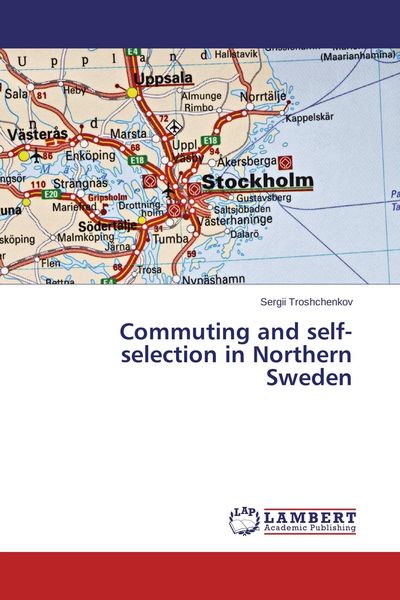
The book presents the results from estimation of the job-search model on earning and commuting in the Northern Sweden. The aim of this study is to examine the potential role of the earnings in the decision-making period on the choice of being a commuter and covariance between unmeasured traits in the earning and commuting equations. Understanding reasons of selectivity helps to avoid the selection bias, which leads to inconsistent estimation of results and policy misapplications. The analysis of the male and female samples of the population that start commuting, from either urban or rural areas, was carried by the joint maximum likelihood estimation of the earning equation and commuting equation in the subsequent period. The results indicate positive selection based on the observable characteristics and a negative selection based on the unobserved traits for the female sub-samples.
Noch keine Bewertungen vorhanden
Verfassen Sie die erste Bewertung zu diesem Artikel
Helfen Sie anderen Kundinnen und Kunden durch Ihre Meinung.
Kurze Frage zu unserer Seite
Vielen Dank für dein Feedback
Wir nutzen dein Feedback, um unsere Produktseiten zu verbessern. Bitte habe Verständnis, dass wir dir keine Rückmeldung geben können. Falls du Kontakt mit uns aufnehmen möchtest, kannst du dich aber gerne an unseren Kund*innenservice wenden.
zum Kundenservice