Gutscheinbedingungen

**Gültig vom 24.08.2026 bis 26.08.2026 | Gültig für nicht preisgebundene fremdsprachige Bücher | Einzelne Artikel können ausgeschlossen sein | Online auf www.bücher.de einlösbar | Click & Collect nur mit Online-Zahlung (Paypal/Kreditkarte) vorab | Nicht kombinierbar mit anderen Gutscheinen oder Preisaktionen | Nur einmal pro Einkauf einlösbar | Gutschein wird auf max. 500€ Bestellwert angerechnet | Keine Barauszahlung | Nicht gültig für Versandkosten und Services

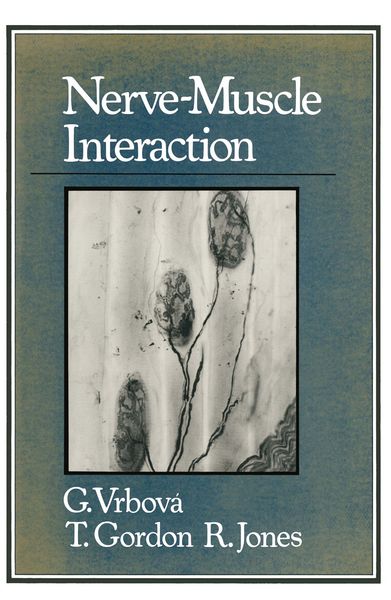
  • Produktbild: Nerve-Muscle Interaction
  • Produktbild: Nerve-Muscle Interaction

Nerve-Muscle Interaction

48,99 €

inkl. gesetzl. MwSt., Versandkostenfrei


Beschreibung

Produktdetails

Einband

Taschenbuch

Erscheinungsdatum

01.05.2012

Abbildungen

XIII, 233 p. 37 illus.

Verlag

Springer Netherland

Seitenzahl

233

Maße (L/B/H)

23,5/15,5/1,4 cm

Gewicht

382 g

Auflage

Softcover reprint of the original 1st ed. 1978

Sprache

Englisch

ISBN

978-94-010-9543-3

Beschreibung

Produktdetails

Einband

Taschenbuch

Erscheinungsdatum

01.05.2012

Abbildungen

XIII, 233 p. 37 illus.

Verlag

Springer Netherland

Seitenzahl

233

Maße (L/B/H)

23,5/15,5/1,4 cm

Gewicht

382 g

Auflage

Softcover reprint of the original 1st ed. 1978

Sprache

Englisch

ISBN

978-94-010-9543-3

Herstelleradresse

Springer-Verlag KG
Sachsenplatz 4-6
1201 Wien
AT

Email: GPSR Kontakt

Noch keine Bewertungen vorhanden

Verfassen Sie die erste Bewertung zu diesem Artikel

Helfen Sie anderen Kundinnen und Kunden durch Ihre Meinung.

Kundinnen und Kunden meinen

Bewertungen (0)

  • Produktbild: Nerve-Muscle Interaction
  • Produktbild: Nerve-Muscle Interaction
  • 1 Early muscle development.- 1.1 Early stages of muscle fibre development.- 1.2 Lack of specialization of myotubes.- 1.3 The dependance of the structural integrity of the developing muscle fibres on innervation.- 2 Development of the motor nerves and their encounter with muscle fibres.- 2.1 Origin of motor nerve fibres and their growth into the periphery.- 2.2 Development of nerves and muscles and their interdependence.- 2.3 Development of stable nerve-muscle connections.- 2.4 Are nerve-muscle connections specified?.- 2.5 Conclusions.- 3 Development of the neuromuscular junction.- 3.1 Distribution of ACh receptors during early development.- 3.2 Stabilization of chemosensitivity at the neuromuscular junction.- 3.3 Development of the subneural apparatus.- 3.4 Formation of stable nerve-muscle connections.- 3.5 Changes of chemosensitivity outside the endplate.- 3.6 Maintenance of endplate chemosensitivity.- 3.7 Pattern of innervation of muscle fibres.- 3.8 Conclusions.- 4 Differentiation of skeletal muscle fibres.- 4.1 The muscles of lower vertebrates and birds.- 4.2 Mammalian muscles.- 4.3 How is differentiation into different fibre types induced?.- 4.4 Conclusions.- 5 The effects of denervation on muscle fibre properties and the regulation of chemosensitivity.- 5.1 Morphological changes following denervation.- 5.2 Metabolic changes in denervated muscles.- 5.3 Changes in contractile properties of denervated muscle.- 5.4 Changes in electrical properties of the membrane on denervation.- 5.5 Changes of chemosensitivity at the endplate.- 5.6 Conclusions.- 6 Re-innervation of the muscle by its motor nerve.- 6.1 Nerve growth.- 6.2 Establishment of nerve-muscle connections by the regenerating nerve fibre.- 6.3 Maturation of the regenerated axon and recovery of the muscle.- 6.4 Effects of muscle on normal and regenerating motor nerve terminals.- 6.5 Conclusion.- 7 The mammalian motor unit.- 7.1 Specialization of motoneurones.- 7.2 Matching properties of different motoneurones to the muscle fibres they supply.- 7.3 Specialization of the vascular bed of slow and fast mammalian muscles.- 7.4 How is the matching of muscle fibres to their motoneurones brought about?.- 7.5 Development of the motor unit.- 7.6 Conclusions.- 8 Plasticity in the neuromuscular system.- 8.1 Can different skeletal muscle fibres be transformed from one type to another?.- 8.2 Can the characteristic properties of neurones and their terminals be altered?.- 8.3 Specificity of nerve-muscle connections.- 8.4 Conclusions.- 9 Some examples of disturbances of nerve-muscle interactions.- 9.1 Disturbances caused by a change in the function of the motoneurone.- 9.2 Consequences of disease of the motoneurone, or axon.- 9.3 Disturbance due to disease of the neuromuscular junction.- 9.4 Disease of the muscle.- 9.5 Retrograde influences on the motoneurone.- References.