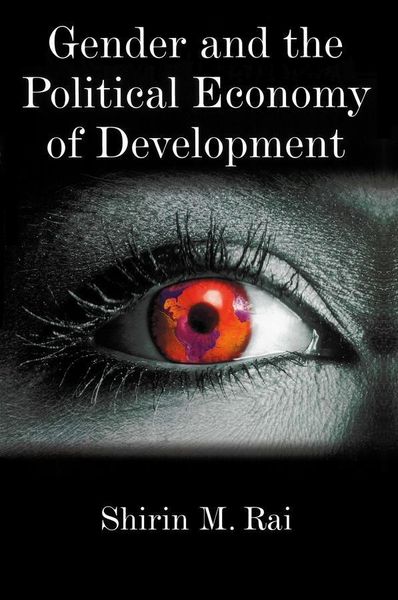
Gender and the Political Economy of Development From Nationalism to Globalization
-
- Hardcover
- Taschenbuch
- eBook ausgewählt
-
Form:Einzelkauf Download
-
Sprache:Englisch
-
eBook Format:ePUB
- PDF 19,99 €
- ePUB 19,99 € ausgewählt
19,99 €
inkl. gesetzl. MwSt.Beschreibung
Produktdetails
Format
ePUB
Kopierschutz
Ja
Family Sharing
Nein
Text-to-Speech
Ja
Erscheinungsdatum
28.05.2013
Verlag
John Wiley & SonsSeitenzahl
272 (Printausgabe)
Dateigröße
631 KB
Auflage
1. Auflage
Sprache
Englisch
EAN
9780745668345
"Rai subjects the projects of both national development and
globalization to searching scrutiny through a gender lens. Her
emphasis on the intersection of gender and other forms of
inequality is very timely. An excellent text for a wide range of
courses in politics, sociology and development studies."
--Diane Elson, University of Essex
Shirin Rai pushes us to rethink development. She brings us to
ear a feminist analysis that grows out of her nuanced understanding
of both China's and India's gendered experience. Readers will
find fresh ideas and sharp caveats about how patriarchy is
sustained and fought over globally.
--Cynthia Enloe, Clark University
This important book ranges across contemporary debates in the
study of gender and political economy. It situates differing
gender-based theories in the context of wider political and
historical processes such as colonialism, post-colonialism, Cold
War politics, the New World Order, globalization and
democratization.
Shirin Rai focuses on the gendered nature of the political
economy of development, and the shifts that have occurred as
economies and states have moved from a development process that is
state-focused to one that is clearly framed by globalization.
Differences between men and women, and differences between women in
contrasting social and geographical positions, are explored in
relation to their influence on political practice. Rai considers
how the structures of economic and political power frame men and
women and examines the consequences of these gendered positionings.
She makes important connections between the political narratives of
different levels of governance and examines the discourse of
empowerment at these different levels.
The book concludes by reflecting on the way men and women are
coping with the challenges of globalization and argues that women's
movements need to re-establish the link between the recognition of
difference and the redistribution of economic and social resources
if they are to maintain their radical edge.
This will be essential reading for undergraduates and graduates
in politics, development studies and gender studies.
globalization to searching scrutiny through a gender lens. Her
emphasis on the intersection of gender and other forms of
inequality is very timely. An excellent text for a wide range of
courses in politics, sociology and development studies."
--Diane Elson, University of Essex
Shirin Rai pushes us to rethink development. She brings us to
ear a feminist analysis that grows out of her nuanced understanding
of both China's and India's gendered experience. Readers will
find fresh ideas and sharp caveats about how patriarchy is
sustained and fought over globally.
--Cynthia Enloe, Clark University
This important book ranges across contemporary debates in the
study of gender and political economy. It situates differing
gender-based theories in the context of wider political and
historical processes such as colonialism, post-colonialism, Cold
War politics, the New World Order, globalization and
democratization.
Shirin Rai focuses on the gendered nature of the political
economy of development, and the shifts that have occurred as
economies and states have moved from a development process that is
state-focused to one that is clearly framed by globalization.
Differences between men and women, and differences between women in
contrasting social and geographical positions, are explored in
relation to their influence on political practice. Rai considers
how the structures of economic and political power frame men and
women and examines the consequences of these gendered positionings.
She makes important connections between the political narratives of
different levels of governance and examines the discourse of
empowerment at these different levels.
The book concludes by reflecting on the way men and women are
coping with the challenges of globalization and argues that women's
movements need to re-establish the link between the recognition of
difference and the redistribution of economic and social resources
if they are to maintain their radical edge.
This will be essential reading for undergraduates and graduates
in politics, development studies and gender studies.
Noch keine Bewertungen vorhanden
Verfassen Sie die erste Bewertung zu diesem Artikel
Helfen Sie anderen Kundinnen und Kunden durch Ihre Meinung.
Kurze Frage zu unserer Seite
Vielen Dank für dein Feedback
Wir nutzen dein Feedback, um unsere Produktseiten zu verbessern. Bitte habe Verständnis, dass wir dir keine Rückmeldung geben können. Falls du Kontakt mit uns aufnehmen möchtest, kannst du dich aber gerne an unseren Kund*innenservice wenden.
zum Kundenservice