
Gutscheinbedingungen

**Gültig bis 10.06.2026 / Gültig für gebrauchte Bücher / Mindestbestellwert 20,00 € / Einzelne Artikel können ausgeschlossen sein / Online auf www.bücher.de.de / Nicht kombinierbar mit anderen Gutscheinen oder Preisaktionen / Nur einmal pro Einkauf einlösbar / Gutschein wird auf max. 500€ Bestellwert angerechnet / Keine Barauszahlung / Nicht gültig für Versandkosten und Services

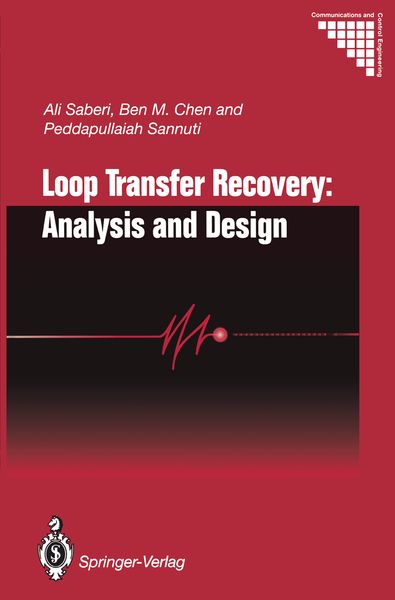
  • Produktbild: Loop Transfer Recovery: Analysis and Design
  • Produktbild: Loop Transfer Recovery: Analysis and Design

Loop Transfer Recovery: Analysis and Design

107,99 €

inkl. gesetzl. MwSt., Versandkostenfrei

Lieferung nach Hause

Beschreibung

Produktdetails

Einband

Taschenbuch

Erscheinungsdatum

01.12.2011

Verlag

Springer London

Seitenzahl

352

Maße (L/B/H)

23,5/15,5/2 cm

Gewicht

557 g

Auflage

Softcover reprint of the original 1st edition 1993

Sprache

Englisch

ISBN

978-1-4471-3224-0

Beschreibung

Produktdetails

Einband

Taschenbuch

Erscheinungsdatum

01.12.2011

Verlag

Springer London

Seitenzahl

352

Maße (L/B/H)

23,5/15,5/2 cm

Gewicht

557 g

Auflage

Softcover reprint of the original 1st edition 1993

Sprache

Englisch

ISBN

978-1-4471-3224-0

Herstelleradresse

Springer-Verlag GmbH
Tiergartenstr. 17
69121 Heidelberg
DE

Email: ProductSafety@springernature.com

Kundinnen und Kunden meinen

0 Bewertungen

Informationen zu Bewertungen

Zur Abgabe einer Bewertung ist eine Anmeldung im Konto notwendig. Die Authentizität der Bewertungen wird von uns nicht überprüft. Wir behalten uns vor, Bewertungstexte, die unseren Richtlinien widersprechen, entsprechend zu kürzen oder zu löschen.

Die Bewertungen sind nach Format, Anzahl Sterne und Datum sortiert.

Verfassen Sie die erste Bewertung zu diesem Artikel

Helfen Sie anderen Kund*innen durch Ihre Meinung

Kundinnen und Kunden meinen

0 Bewertungen filtern

  • Produktbild: Loop Transfer Recovery: Analysis and Design
  • Produktbild: Loop Transfer Recovery: Analysis and Design
  • 1 Introduction.- 1.1 Introduction.- 1.2 Problem formulation.- 1.3 Preliminaries.- 2 Preliminary Analysis of Continuous LTR.- 2.1 Introduction.- 2.2 Preliminary analysis.- 2.2.1 Luenberger observer based controller.- 2.2.2 Full order observer based controller.- 2.2.3 Reduced order observer based controller.- 2.2.4 Relationship between the recovery matrices Mf(s) and Mr(s).- 2.A Proof of Lemma 2.2.1.- 2.B Proof of Proposition 2.2.2.- 3 Continuous LTR — Detailed Analysis.- 3.1 Introduction.- 3.2 Recovery analysis while not using the knowledge of F.- 3.3 Analysis for recoverable target loop transfer functions.- 3.4 Recovery analysis in a given subspace.- 3.5 Duality of LTRI and LTRO.- 3.A Proof of Lemma 3.2.1.- 3.B Proof of Lemma 3.2.2.- 3.C Proof of Proposition 3.2.2.- 3.D Proof of Lemma 3.2.3.- 3.E Proof of Corollary 3.3.2.- 3.F Proof of Lemma 3.4.2.- 3.G Proof of Lemma 3.4.3.- 4 Continuous LTR — Design.- 4.1 Introduction.- 4.2 Design constraints and the available freedom.- 4.3 ATEA design method.- 4.3.1 General ATEA design.- 4.3.2 Design for exactly recoverable target loop transfer functions.- 4.4 Optimization based design methods.- 4.4.1 H2-optimization based design algorithms.- 4.4.2 H?-optimization based design algorithms.- 4.5 Design for recovery over a specified subspace.- 4.6 LTR design for output break point.- 4.7 Comparison of ATEA and optimization based design algorithms.- 4.A Proof of Theorem 4.3.1.- 4.B Proof of Theorem 4.3.2.- 4.C Proof of Theorem 4.4.2.- 5 Introduction to Discrete LTR.- 5.1 Introduction.- 5.2 Problem formulation.- 5.3 Preliminaries.- 6 Preliminary Analysis of Discrete LTR.- 6.1 Introduction.- 6.2 Controller structures for discrete LTR.- 6.2.1 Luenberger estimator based controller.- 6.2.2 Prediction estimator based controller.- 6.2.3 Current estimator based controller.- 6.2.4 Reduced order estimator based controller.- 6.3 Preliminary analysis.- 6.A Proof of Proposition 6.3.1.- 7 Discrete LTR — Detailed Analysis.- 7.1 Introduction.- 7.2 Recovery analysis while not using the knowledge of F.- 7.3 Analysis for recoverable target loop transfer functions.- 7.4 Recovery analysis in a given subspace.- 7.5 Duality of LTRI and LTRO.- 7.A Proof of Lemma 7.2.2.- 7.B Proof of Corollary 7.3.1.- 7.C Proof of Theorem 7.4.4.- 8 Discrete LTR — Design.- 8.1 Introduction.- 8.2 Design constraints and the available freedom.- 8.3 Design by eigenstructure assignment.- 8.4 Optimization based design methods.- 8.4.1 H?-optimization based algorithm.- 8.4.2 H2-optimization based algorithm.- 8.5 Design for recovery over a specified subspace.- 8.6 LTR design for output break point.- 8.A Proof of Theorem 8.4.1.- 9 Closed-Loop Transfer Recovery.- 9.1 Introduction.- 9.2 Continuous CLTR.- 9.2.1 Problem formulation.- 9.2.2 General analysis.- 9.2.3 Design methods and examples.- 9.3 Discrete CLTR.- 9.3.1 Problem formulation.- 9.3.2 General analysis.- 9.3.3 Design methods and examples.- 9.A Proof of Lemma 9.2.1.- 10 Some Issues of Controller Architecture.- 10.1 Introduction.- 10.2 Recoverability with an arbitrarily structured controller.- 10.3 CSS architecture based controllers for LTR.- 10.3.1 Full order CSS architecture based controller.- 10.3.2 Reduced order CSS architecture based controller.- 10.3.3 Properties of the CSS architecture based controllers.- 10.4 Design examples.- 10.5 Open research problems.- 10.A Proof of Theorem 10 2 1.- 10.B Proof of Lemma 10.3.1.- 10.C Proof of Theorem 10 3 1.