KI-Beratung Beta

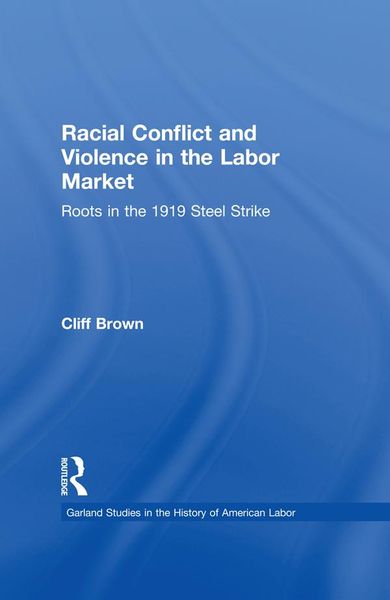
Produktbild: Racial Conflicts and Violence in the Labor Market

Racial Conflicts and Violence in the Labor Market Roots in the 1919 Steel Strike

74,99 €

inkl. gesetzl. MwSt.

Beschreibung

This book focuses on community-level race relations during the 1919 Steel Strike, when intense job competition contributed to racial conflict among the nation's steel workers. As the Great Migration brought thousands of black workers to northern cities, their lower labor costs generated racially split...

Beschreibung

This book focuses on community-level race relations during the 1919 Steel Strike, when intense job competition contributed to racial conflict among the nation's steel workers. As the Great Migration brought thousands of black workers to northern cities, their lower labor costs generated racially split labor markets in the industrial sector. Further, the discriminatory policies of labor unions forced many blacks to serve as strike breakers during periods of class conflict. As a result, the migration heightened racial conflict and undercut important union organizing initiatives. The 1919 Steel Strike illustrates how racial divisions crippled many American unions, a pattern that helps to explain the demise of organized labor during the 1920's. No previous studies of the 1919 Steel Strike have systematically compared community processes to determine how local events shaped the strike's outcome. Despite the failure of the 1919 Steel Strike, the varied experiences of workers in different communities reveal much about the causes of racial conflict and the possibilities of interracial solidarity. This study finds that patterns of black migration, local government repression of labor, the organizational strength of local unions, and employers' efforts to inflame racial tension all help to explain community-level variation in interracial solidarity and conflict. (Ph. D. dissertation, Emory University, 1996; revised with new preface)

Produktdetails

Format

PDF

Kopierschutz

Ja

Family Sharing

Nein

Text-to-Speech

Nein

Produktdetails

Format

PDF

Format

eBooks im PDF-Format haben eine festgelegte Seitengröße und eignen sich daher nur bedingt zum Lesen auf einem tolino eReader oder Smartphone. Für den vollen Lesegenuss empfehlen wir Ihnen bei PDF-eBooks die Verwendung eines Tablets oder Computers.

Kopierschutz

Ja

Kopierschutz

Zum Lesen dieses eBooks auf Geräten der tolino Familie sowie auf sonstigen eReadern und am PC benötigen Sie eine ByteBook-ID. Weitere Hinweise zum Lesen von kopiergeschützten eBooks finden Sie unter Hilfe/Downloads.

Family Sharing

Nein

Family Sharing

Mit Family Sharing können Sie eBooks innerhalb Ihrer Familie (max. sechs Mitglieder im gleichen Haushalt) teilen. Sie entscheiden selbst, welches Buch Sie mit welchem Familienmitglied teilen möchten. Auch das parallele Lesen durch verschiedene Familienmitglieder ist durch Family Sharing möglich. Um eBooks zu teilen oder geteilt zu bekommen, muss jedes Familienmitglied ein Konto bei Thalia oder einem anderen tolino-Buchhändler haben. Weitere Informationen finden Sie unter Hilfe/Family-Sharing.

Text-to-Speech

Nein

Text-to-Speech

Bedeutet Ihnen Stimme mehr als Text? Mit der Funktion Text-to-Speech können Sie sich im tolino webReader und in der aktuellen Thalia – Lesen & Hören App das eBook vorlesen lassen. Weitere Informationen finden Sie unter Hilfe/Text-to-Speech.

Erscheinungsdatum

09.01.2014

Verlag Taylor & Francis eBooks
Seitenzahl

240 (Printausgabe)

Dateigröße

3202 KB

Sprache

Englisch

EAN

9781317776512

Barrierefreiheit
  • navigierbares Inhaltsverzeichnis
  • kurze Alternativtexte (z.B. für Abbildungen) vorhanden
  • keine Vorlesefunktionen des Lesesystems deaktiviert
  • navigierbarer Index
  • Seitennummerierung folgt dem gedruckten Werk

Noch keine Bewertungen vorhanden

Verfassen Sie die erste Bewertung zu diesem Artikel

Helfen Sie anderen Kundinnen und Kunden durch Ihre Meinung.

Kundinnen und Kunden meinen

Bewertungen (0)

Weitere Artikel findest du in

Die Leseprobe wird geladen.
  • Produktbild: Racial Conflicts and Violence in the Labor Market