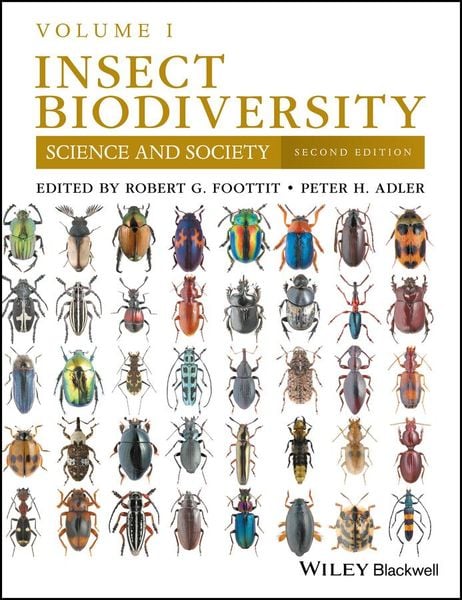
Produktbild: Insect Biodiversity

Insect Biodiversity Science and Society, Volume 1

139,99 €

inkl. gesetzl. MwSt., Versandkostenfrei

Lieferung nach Hause

Beschreibung

Produktdetails

Einband

Gebundene Ausgabe

Erscheinungsdatum

02.10.2017

Herausgeber

Robert G. Foottit + weitere

Verlag

John Wiley & Sons Inc

Seitenzahl

904

Maße (L/B/H)

26/20,2/4 cm

Gewicht

1881 g

Auflage

2nd edition

Sprache

Englisch

ISBN

978-1-118-94553-7

Beschreibung

Produktdetails

Einband

Gebundene Ausgabe

Erscheinungsdatum

02.10.2017

Herausgeber

Verlag

John Wiley & Sons Inc

Seitenzahl

904

Maße (L/B/H)

26/20,2/4 cm

Gewicht

1881 g

Auflage

2nd edition

Sprache

Englisch

ISBN

978-1-118-94553-7

Herstelleradresse

Libri GmbH
Europaallee 1
36244 Bad Hersfeld
DE

Email: gpsr@libri.de

Kundinnen und Kunden meinen

0 Bewertungen

Informationen zu Bewertungen

Zur Abgabe einer Bewertung ist eine Anmeldung im Konto notwendig. Die Authentizität der Bewertungen wird von uns nicht überprüft. Wir behalten uns vor, Bewertungstexte, die unseren Richtlinien widersprechen, entsprechend zu kürzen oder zu löschen.

Die Bewertungen sind nach Format, Anzahl Sterne und Datum sortiert.

Verfassen Sie die erste Bewertung zu diesem Artikel

Helfen Sie anderen Kund*innen durch Ihre Meinung

Kundinnen und Kunden meinen

0 Bewertungen filtern

Weitere Artikel findest du in

Die Leseprobe wird geladen.
  • Produktbild: Insect Biodiversity
  • 1 Introduction 1
    2 The Importance of Insects 9
    Part I Insect Biodiversity: Regional Examples 45
    3 Insect Biodiversity in the Nearctic Region 47
    4 Amazonian Rainforests and Their Richness and Abundance of Terrestrial Arthropods on the Edge of Extinction: Abiotic-Biotic Players in the Critical Zone 65
    5 Insect Biodiversity in the Afrotropical Region 93
    6 Biodiversity of Australasian Insects 111
    7 Insect Biodiversity in the Palearctic Region 141
    Part II Insect Biodiversity: Taxon Examples 203
    8 Biodiversity of Aquatic Insects 205
    9 Biodiversity of Diptera 229
    10 Biodiversity of Heteroptera 279
    11 Biodiversity of Coleoptera 337
    12 Biodiversity of Hymenoptera 419
    13 Diversity and Significance of Lepidoptera: A Phylogenetic Perspective 463
    Part III Insect Biodiversity: Tools and Approaches 497
    14 The Science of Insect Taxonomy: Prospects and Needs 499
    15 Insect Species - Concepts and Practice 527
    16 Molecular Dimensions of Insect Taxonomy in the Genomics Era 547
    17 DNA Barcodes and Insect Biodiversity 575
    18 Insect Biodiversity Informatics 593
    19 Parasitoid Biodiversity and Insect Pest Management 603
    20 The Taxonomy of Crop Pests: The Aphids 627
    21 Adventive (Non-Native) Insects and the Consequences for Science and Society of Species that Become Invasive 641
    22 Biodiversity of Blood-sucking Flies: Implications for Humanity 713
    23 Reconciling Ethical and Scientific Issues for Insect Conservation 747
    24 Taxonomy and Management of Insect Biodiversity 767
    25 Insect Biodiversity - Millions and Millions 783
    List of Contributors xix
    Foreword, Second Edition xxiii
    Preface, First Edition xxvii
    Preface, Second Edition xxix
    Acknowledgements xxxi
    1 Introduction 1
    Peter H. Adler and Robert G. Foottit
    References 5
    2 The Importance of Insects 9
    Geoffrey G. E. Scudder
    2.1 Diversity 9
    2.2 Ecological Role 10
    2.3 Effects on Natural Resources, Agriculture, and Human Health 13
    2.4 Insects and Advances in Science 14
    2.5 Insects and the Public 23
    References 25
    Part I Insect Biodiversity: Regional Examples 45
    3 Insect Biodiversity in the Nearctic Region 47
    Hugh V. Danks and Andrew B. T. Smith
    3.1 Influence of Insect Biodiversity on Society in the Nearctic Region 49
    3.2 Insect Conservation 50
    3.3 Species Diversity and the State of Knowledge 53
    3.4 Variations in Biodiversity 56
    3.5 Conclusions and Needs 58
    Acknowledgments 60
    References 60
    4 Amazonian Rainforests and Their Richness and Abundance of Terrestrial Arthropods on the Edge of Extinction: Abiotic-Biotic Players in the Critical Zone 65
    Terry L. Erwin, Laura S. Zamorano and Christy J. Geraci
    4.1 The Climatic Setting and Critical Zone Establishment 69
    4.2 Characterization of Typical Lowland Rainforest Composition in the Western Basin 71
    4.3 Sampling Arthropod Biodiversity in Amazonian Forests 73
    4.4 Richness of Various Lineages and Guilds 79
    4.5 General Patterns 79
    4.6 Morphospecies Richness to Biodiversity 80
    4.7 Beetles: Life Attributes Have Led to Contemporary Hyperdiversity 83
    4.8 Summary and Guide to Future Research, or "Taking a Small Step into the Biodiversity Vortex" 85
    Acknowledgments 86
    References 86
    5 Insect Biodiversity in the Afrotropical Region 93
    Clarke H. Scholtz and Mervyn W. Mansell
    5.1 What Do We Know about Afrotropical Insects? 95
    5.2 An Information-Management Program 95
    5.3 The Role of Insects in Ecosystem Processes and as Indicators of Environmental Quality - Dung Beetles as a Case Study 98
    5.4 Africa-Wide Pests and Training Appropriate Taxonomists - Fruit Flies as a Case Study 100
    5.5 Sentinel Groups 103
    5.6 Conclusions 105
    References 107
    6 Biodiversity of Australasian Insects 111
    Peter S. Cranston
    6.1 Australasia - The Locale 111
    6.2 Some Highlights of Australasian Insect Biodiversity 112
    6.3 Drowning by Numbers? How Many Insect Species are in Australasia? 116
    6.4 Australasian Insect Biodiversity - Overview and Special Elements 118
    6.5 Threatening Processes to Australasian Insect Biodiversity 123
    6.6 Australasian Biodiversity Conservation 127
    6.7 Conclusion 129
    References 129
    7 Insect Biodiversity in the Palearctic Region 141
    Boris A. Korotyaev, Alexander S. Konstantinov and Mark G. Volkovitsh
    7.1 Preface: Societal Importance of Biodiversity in the Palearctic Region 141
    7.2 Introduction 144
    7.3 Geographic Position, Climate, and Zonality 144
    7.4 General Features of Palearctic Insect Biodiversity 148
    7.5 Biodiversity of Some Insect Groups in the Palearctic 153
    7.6 Biodiversity of Insect Herbivores 158
    7.7 Boundaries and Insect Biodiversity 162
    7.8 Local Biodiversity 164
    7.9 Insect Biodiversity and Habitats 166
    7.10 Insect Biodiversity and the Mountains 169
    7.11 Temporal Changes in Insect Biodiversity 171
    7.12 Insect Diversity in Major Biogeographical Divisions of the Palearctic 172
    Acknowledgments 187
    References 189
    Part II Insect Biodiversity: Taxon Examples 203
    8 Biodiversity of Aquatic Insects 205
    John C. Morse
    8.1 Overview of Taxa 206
    8.2 Species Numbers 212
    8.3 Societal Benefits and Risks 214
    8.4 Biodiversity Concerns for Aquatic Insects 218
    References 220
    9 Biodiversity of Diptera 229
    Gregory W. Courtney, Thomas Pape, Jeffrey H. Skevington and Bradley J. Sinclair
    9.1 Overview of Taxa 239
    9.2 Societal Importance 246
    9.3 Diptera of Forensic, Medicolegal, and Medical Importance 253
    9.4 Diptera as Model Organisms and Research Tools 253
    9.5 Diptera in Conservation 254
    9.6 Diptera as Part of Our Cultural Legacy 256
    References 257
    10 Biodiversity of Heteroptera 279
    Thomas J. Henry
    10.1 Overview of the Heteroptera 280
    10.2 The Importance of Heteropteran Biodiversity 311
    Acknowledgments 313
    References 313
    11 Biodiversity of Coleoptera 337
    Patrice Bouchard, Andrew B. T. Smith, Hume Douglas, Matthew L. Gimmel, Adam J. Brunke and Kojun Kanda
    11.1 Overview of Extant Taxa 344
    11.2 Overview of Fossil Taxa 357
    11.3 Societal Benefits and Risks 357
    11.4 Threatened Beetles 394
    11.5 Conclusions 395
    Acknowledgments 395
    References 395
    12 Biodiversity of Hymenoptera 419
    John T. Huber
    12.1 Evolution and Higher Classification 422
    12.2 Numbers of Species and Individuals 426
    12.3 Morphological and Biological Diversity 428
    12.4 Importance to Humans 430
    12.5 Ecological Importance 431
    12.6 Conservation 432
    12.7 Fossils 432
    12.8 Collecting, Preservation, and Study Techniques 433
    12.9 Taxonomic Diversity 436
    12.10 Summary and Conclusions 445
    Acknowledgments 446
    References 446
    13 Diversity and Significance of Lepidoptera: A Phylogenetic Perspective 463
    Paul Z. Goldstein
    13.1 Relevance of Lepidoptera: Science 464
    13.2 Relevance of Lepidoptera: Society 465
    13.3 Diversity and Diversification: A Clarification of Numbers and Challenges 466
    13.4 State of Lepidopteran Systematics and Phylogenetics 467
    13.5 General Overview 468
    13.6 Needs and Challenges for Advancing Lepidopteran Studies 488
    Acknowledgments 489
    References 489
    Part III Insect Biodiversity: Tools and Approaches 497
    14 The Science of Insect Taxonomy: Prospects and Needs 499
    Quentin D. Wheeler and Kelly B. Miller
    14.1 The What and Why of Taxonomy 500
    14.2 Insect Taxonomy: Missions and "Big Questions" 509
    14.3 Insect Taxonomy's Grand Challenge Questions 510
    14.4 Transforming Insect Taxonomy 513
    14.5 Insect Taxonomy: Needs and Priorities 514
    14.6 Accelerating Descriptive Taxonomy 517
    14.7 Beware Sirens of Expediency 521
    14.8 Conclusions 522
    References 522
    15 Insect Species - Concepts and Practice 527
    Michael F. Claridge
    15.1 Early Species Concepts - Linnaeus 528
    15.2 Biological Species Concepts 529
    15.3 Phylogenetic Species Concepts 533
    15.4 Species Concepts and Speciation - a Digression? 534
    15.5 Insect Species - Practical Problems 535
    15.6 Conclusions 540
    References 540
    16 Molecular Dimensions of Insect Taxonomy in the Genomics Era 547
    Amanda Roe, Julian Dupuis and Felix Sperling
    16.1 Opportunities in Insect Taxonomy 547
    16.2 Genomic Methods 553
    16.3 General Challenges and Considerations 556
    16.4 Conclusions 560
    References 561
    17 DNA Barcodes and Insect Biodiversity 575
    John-James Wilson, Kong-Wah Sing, Robin M. Floyd and Paul D. N. Hebert
    17.1 Species Concepts and Recognition 576
    17.2 DNA Barcoding Methodology 577
    17.3 Basal Hexapod Orders 578
    17.4 Archaeognatha (Bristletails) and Zygentoma (Silverfish) 580
    17.5 Odonata (Dragonflies) 580
    17.6 Ephemeroptera (Mayflies) 580
    17.7 Orthoptera (Grasshoppers) 580
    17.8 Phasmatodea (Walking Sticks), Embioptera (Webspinners), Grylloblattodea (Icecrawlers), and Mantophasmatodea (Gladiators) 581
    17.9 Plecoptera (Stoneflies) and Dermaptera (Earwigs) 581
    17.10 Mantodea (Mantids) 581
    17.11 Blattodea (Cockroaches) and Isoptera (Termites) 581
    17.12 Psocoptera (Booklice) and Phthiraptera (Lice) 581
    17.13 Thysanoptera (Thrips) and Hemiptera (True Bugs) 582
    17.14 Hymenoptera (Wasps) 582
    17.15 Strepsiptera (Twisted-wing Parasites) 582
    17.16 Coleoptera (Beetles) 582
    17.17 Neuroptera (Lacewings), Megaloptera (Dobsonflies), and Raphidioptera (Snakeflies) 583
    17.18 Trichoptera (Caddisflies) 583
    17.19 Lepidoptera (Butterflies and Moths) 583
    17.20 Diptera (Flies) 584
    17.21 Siphonaptera (Fleas) and Mecoptera (Scorpionflies) 584
    17.22 Conclusions 584
    Acknowledgments 585
    References 585
    18 Insect Biodiversity Informatics 593
    Norman F. Johnson
    18.1 Biodiversity Data 594
    18.2 Technical Infrastructure 595
    18.3 Standards 597
    18.4 Current Status and Impediments to Progress 599
    18.5 Prospects 600
    Acknowledgments 601
    References 601
    19 Parasitoid Biodiversity and Insect Pest Management 603
    John Heraty
    19.1 What Is a Parasitoid? 604
    19.2 Biodiversity and Success of Insect Parasitoids 605
    19.3 Systematics, Parasitoids, and Pest Management 612
    19.4 Summary 617
    Acknowledgments 618
    References 618
    20 The Taxonomy of Crop Pests: The Aphids 627
    Gary L. Miller and Robert G. Foottit
    20.1 Historical Background 627
    20.2 Economic Importance and Early Taxonomy 628
    20.3 Early Aphid Studies - A North American Example 628
    20.4 Recognizing Aphid Species 631
    20.5 The Focus Becomes Finer 632
    20.6 Adventive Aphid Species 633
    20.7 Conclusions 634
    References 634
    21 Adventive (Non-Native) Insects and the Consequences for Science and Society of Species that Become Invasive
    Alfred G. Wheeler, Jr and E. Richard Hoebeke
    21.1 Terminology 642
    21.2 Distributional Status: Native or Adventive? 643
    21.3 Global Transport: Pathways and Vectors 645
    21.4 Early History of Adventive Insects in North America 648
    21.5 Numbers, Taxonomic Composition, and Geographic Origins of Adventive Insects 649
    21.6 Impact of Adventive Insects 653
    21.7 Economic Considerations: Agriculture, Forestry, and Horticulture 658
    21.8 Implications for Animal and Human Health 661
    21.9 Ecological Impacts 663
    21.10 Biological Control 667
    21.11 Biological Invasions and Global Climate Change 670
    21.12 Systematics, Biodiversity, and Adventive Species 671
    21.13 Concluding Thoughts 671
    Acknowledgments 674
    References 675
    22 Biodiversity of Blood-sucking Flies: Implications for Humanity 713
    Peter H. Adler
    22.1 Numbers and Estimates 714
    22.2 Overview of Blood-sucking Flies and Diseases 717
    22.3 Rationale for Biodiversity Studies of Blood-sucking Flies 725
    22.4 Biodiversity Exploration 727
    22.5 Societal Consequences of Disregarding Biodiversity 729
    22.6 Present and Future Concerns 730
    22.7 Conclusions 733
    Acknowledgments 734
    References 734
    23 Reconciling Ethical and Scientific Issues for Insect Conservation 747
    Michael J. Samways
    23.1 Valuing Nature 749
    23.2 Insects and Ecosystems 755
    23.3 Two Challenges 758
    23.4 Synthesizing Deeper Values and Practical Issues 759
    23.5 Summary 760
    Acknowledgments 760
    References 760
    24 Taxonomy and Management of Insect Biodiversity 767
    Ke Chung Kim
    24.1 Insect Biodiversity 768
    24.2 Biodiversity Loss and Humanity 769
    24.3 Biodiversity and Taxonomy 770
    24.4 Biodiversity Inventory and Ecology 772
    24.5 Backyard Biodiversity and Sustainability 774
    24.6 Taxonomic Bottlenecks in Managing Insect Biodiversity 775
    24.7 Advancing the Science of Insect Biodiversity 776
    References 777
    25 Insect Biodiversity - Millions and Millions 783
    May Berenbaum
    Acknowledgments 789
    References 791
    Index 793