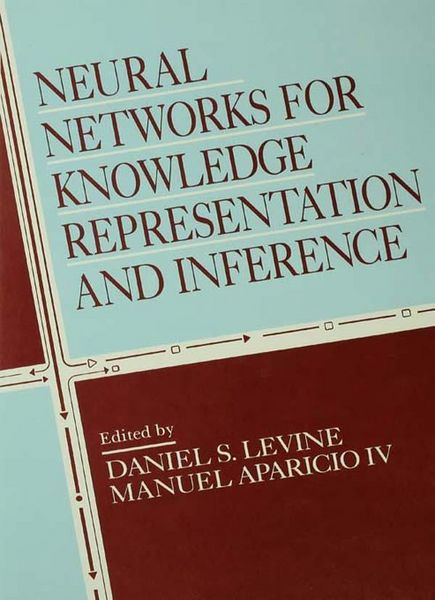
Neural Networks for Knowledge Representation and Inference
-
- Einzelkauf Download ausgewählt
-
Sprache:Englisch
-
eBook Format:PDF
- ePUB 3 36,99 €
- PDF 36,99 € ausgewählt
36,99 €
inkl. gesetzl. MwSt.Beschreibung
Produktdetails
Format
Kopierschutz
Ja
Family Sharing
Nein
Text-to-Speech
Nein
Erscheinungsdatum
15.04.2013
Herausgeber
Daniel S. Levine + weitereVerlag
Taylor & Francis eBooksSeitenzahl
528 (Printausgabe)
Dateigröße
11956 KB
Sprache
Englisch
EAN
9781134771547
The second published collection based on a conference sponsored by the Metroplex Institute for Neural Dynamics -- the first is Motivation, Emotion, and Goal Direction in Neural Networks (LEA, 1992) -- this book addresses the controversy between symbolicist artificial intelligence and neural network theory. A particular issue is how well neural networks -- well established for statistical pattern matching -- can perform the higher cognitive functions that are more often associated with symbolic approaches. This controversy has a long history, but recently erupted with arguments against the abilities of renewed neural network developments. More broadly than other attempts, the diverse contributions presented here not only address the theory and implementation of artificial neural networks for higher cognitive functions, but also critique the history of assumed epistemologies -- both neural networks and AI -- and include several neurobiological studies of human cognition as a real system to guide the further development of artificial ones.
Organized into four major sections, this volume:
* outlines the history of the AI/neural network controversy, the strengths and weaknesses of both approaches, and shows the various capabilities such as generalization and discreetness as being along a broad but common continuum;
* introduces several explicit, theoretical structures demonstrating the functional equivalences of neurocomputing with the staple objects of computer science and AI, such as sets and graphs;
* shows variants on these types of networks that are applied in a variety of spheres, including reasoning from a geographic database, legal decision making, story comprehension, and performing arithmetic operations;
* discusses knowledge representation process in living organisms, including evidence from experimental psychology, behavioral neurobiology, and electroencephalographic responses to sensory stimuli.
Noch keine Bewertungen vorhanden
Verfassen Sie die erste Bewertung zu diesem Artikel
Helfen Sie anderen Kundinnen und Kunden durch Ihre Meinung.
Kurze Frage zu unserer Seite
Vielen Dank für dein Feedback
Wir nutzen dein Feedback, um unsere Produktseiten zu verbessern. Bitte habe Verständnis, dass wir dir keine Rückmeldung geben können. Falls du Kontakt mit uns aufnehmen möchtest, kannst du dich aber gerne an unseren Kund*innenservice wenden.
zum Kundenservice