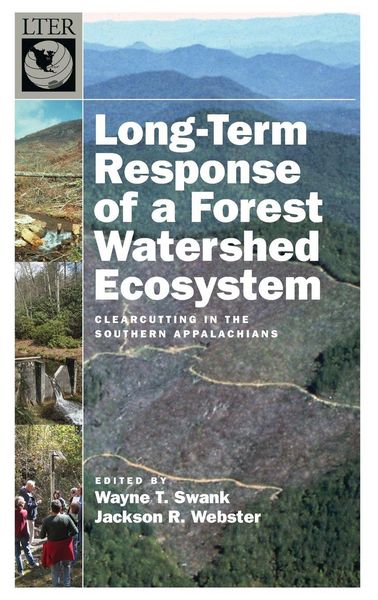
Long-Term Response of a Forest Watershed Ecosystem Clearcutting in the Southern Appalachians
83,99 €
inkl. gesetzl. MwSt.,
Lieferung nach Hause
Beschreibung
Produktdetails
Einband
Gebundene Ausgabe
Erscheinungsdatum
03.03.2014
Verlag
Oxford University PressSeitenzahl
268
Maße (L/B/H)
24/16,1/2 cm
Gewicht
499 g
Sprache
Englisch
ISBN
978-0-19-537015-7
This latest addition to the Long-Term Ecological Research Network series gives an overarching account of the recovery and management of a forest watershed ecosystem. It synthesizes and cross-references important and rare-to find, long-term data in 14 chapters that deal with the hydrologic, biogeochemical, and ecological processes of mixed deciduous forests. The data is representative of the entire U.S., and shows the effects of commercial clearcutting using examples from the Southeastern U.S. and a range of East coast forests. It includes responses of both forest and stream components of the watershed and provides unique insights into the interrelationships between the effects of natural disturbances (floods, droughts, insects, and disease, etc.) versus management disturbances.
Clearly illustrating the importance and need for long-term research to evaluate recovery processes of long-lived ecosystems, the work will serve academics, professionals, and students seeking to understand more fully the effects of forest-cutting on forest and stream ecosystems.
Noch keine Bewertungen vorhanden
Verfassen Sie die erste Bewertung zu diesem Artikel
Helfen Sie anderen Kundinnen und Kunden durch Ihre Meinung.
Kurze Frage zu unserer Seite
Vielen Dank für dein Feedback
Wir nutzen dein Feedback, um unsere Produktseiten zu verbessern. Bitte habe Verständnis, dass wir dir keine Rückmeldung geben können. Falls du Kontakt mit uns aufnehmen möchtest, kannst du dich aber gerne an unseren Kund*innenservice wenden.
zum Kundenservice