Beschreibung
Produktdetails
Einband
Gebundene Ausgabe
Erscheinungsdatum
24.04.2014
Abbildungen
1 map
Herausgeber
Kolb Robert + weitereVerlag
Oxford University PressSeitenzahl
688
Maße (L/B/H)
25/17,5/4,1 cm
Gewicht
1347 g
Sprache
Englisch
ISBN
978-0-19-960470-8
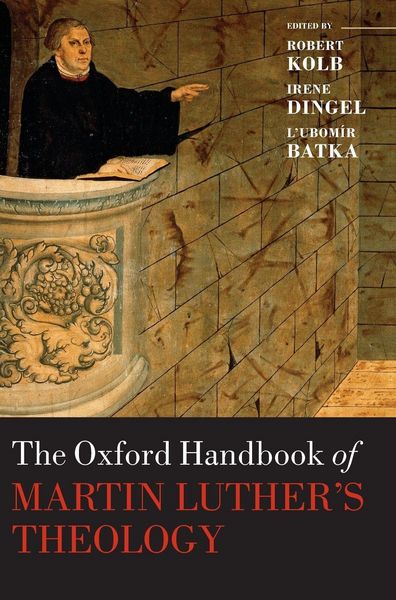
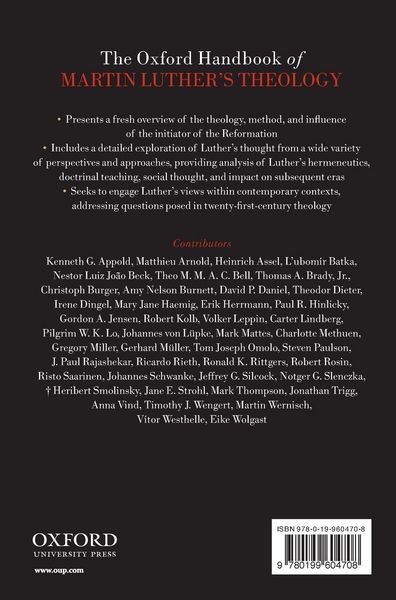
As celebrations of the five-hundredth anniversary of Martin Luther's initiation of the most dramatic reform movement in the history of Christianity approach, 47 essays by historians and theologians from 15 countries provide insight into the background and context, the content, and the impact of his way of thought. Nineteenth-century Chinese educational reformers, twentieth-century African and Indian social reformers, German philosophers and Christians of many
traditions on every continent have found in Luther's writings stimulation and provocation for addressing modern problems. This volume offers studies of the late medieval intellectual milieus in which his thought was formed, the hermeneutical principles that guided his reading and application of the Bible,
the content of his formulations of Christian teaching on specific topics, his social and ethic thought, the ways in which his contemporaries, both supporters and opponents, helped shape his ideas, the role of specific genre in developing his positions on issues of the day, and the influences he has exercised in the past and continues to exercise today in various parts of the world and the Christian church. Authors synthesize the scholarly debates and analysis of Luther's thinking and point to
future areas of research and exploration of his thought.
traditions on every continent have found in Luther's writings stimulation and provocation for addressing modern problems. This volume offers studies of the late medieval intellectual milieus in which his thought was formed, the hermeneutical principles that guided his reading and application of the Bible,
the content of his formulations of Christian teaching on specific topics, his social and ethic thought, the ways in which his contemporaries, both supporters and opponents, helped shape his ideas, the role of specific genre in developing his positions on issues of the day, and the influences he has exercised in the past and continues to exercise today in various parts of the world and the Christian church. Authors synthesize the scholarly debates and analysis of Luther's thinking and point to
future areas of research and exploration of his thought.
Noch keine Bewertungen vorhanden
Verfassen Sie die erste Bewertung zu diesem Artikel
Helfen Sie anderen Kundinnen und Kunden durch Ihre Meinung.
Kurze Frage zu unserer Seite
Vielen Dank für dein Feedback
Wir nutzen dein Feedback, um unsere Produktseiten zu verbessern. Bitte habe Verständnis, dass wir dir keine Rückmeldung geben können. Falls du Kontakt mit uns aufnehmen möchtest, kannst du dich aber gerne an unseren Kund*innenservice wenden.
zum Kundenservice