Beschreibung
Produktdetails
Einband
Gebundene Ausgabe
Erscheinungsdatum
01.01.2014
Herausgeber
Brian Jackson + weitereVerlag
University Of South Carolina PressSeitenzahl
280
Maße (L/B/H)
22,9/15,2/1,9 cm
Gewicht
585 g
Sprache
Englisch
ISBN
978-1-61117-318-5
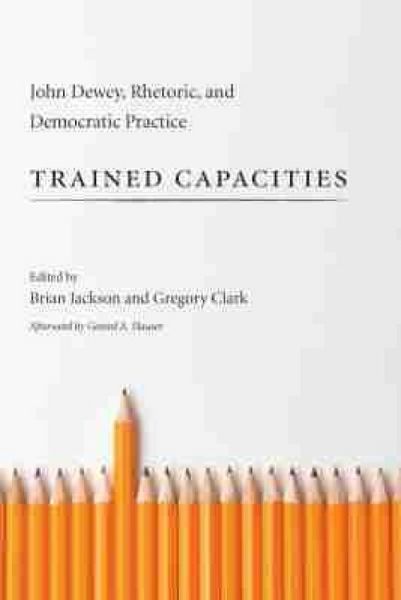
The essays in this collection, written by sixteen scholars in rhetoric and communications studies, demonstrate American philosopher John Dewey's wide-ranging influence on rhetoric in an intellectual tradition that addresses the national culture's fundamental conflicts between self and society, freedom and responsibility, and individual advancement and the common good. Editors Brian Jackson and Gregory Clark propose that this influence is at work both in theoretical foundations, such as science, pragmatism, and religion, and in Dewey's debates with other public intellectuals such as Jane Addams, Walter Lippmann, James Baldwin, and W. E. B. Du Bois.
Jackson and Clark seek to establish Dewey as an essential source for those engaged in teaching others how to compose timely, appropriate, useful, and eloquent responses to the diverse and often-contentious rhetorical situations that develop in a democratic culture. They contend that there is more at stake than instruction in traditional modes of public discourse because democratic culture encompasses a variety of situations, private or public, civic or professional, where people must cooperate in the work of advancing a common project. What prepares people to intervene constructively in such situations is instruction in those rhetorical practices of democratic interaction that is implicit throughout Dewey's work.
Dewey's writing provides a rich framework on which a distinctly American tradition of a democratic rhetorical practice can be built--a tradition that combines the most useful concepts of classical rhetoric with those of modern progressive civic engagement. Jackson and Clark believe Dewey's practice takes rhetoric beyond the traditional emphasis on political democracy to provide connections to rich veins of American thought such as individualism, liberalism, progressive education, collectivism, pragmatism, and postindustrial science and communication. They frame Dewey's voluminous work as constituting a modern expression of continuing education for the ""trained capacities"" required to participate in democratic culture. For Dewey human potential is best realized in the free flow of artful communication among the individuals who together constitute society.
The book concludes with an afterword by Gerard A. Hauser, College Professor of Distinction in the Department of Communication at the University of Colorado Boulder, USA.
Noch keine Bewertungen vorhanden
Verfassen Sie die erste Bewertung zu diesem Artikel
Helfen Sie anderen Kundinnen und Kunden durch Ihre Meinung.
Kurze Frage zu unserer Seite
Vielen Dank für dein Feedback
Wir nutzen dein Feedback, um unsere Produktseiten zu verbessern. Bitte habe Verständnis, dass wir dir keine Rückmeldung geben können. Falls du Kontakt mit uns aufnehmen möchtest, kannst du dich aber gerne an unseren Kund*innenservice wenden.
zum Kundenservice