
Gutscheinbedingungen

**Gültig bis 10.06.2026 / Gültig für gebrauchte Bücher / Mindestbestellwert 20,00 € / Einzelne Artikel können ausgeschlossen sein / Online auf www.bücher.de.de / Nicht kombinierbar mit anderen Gutscheinen oder Preisaktionen / Nur einmal pro Einkauf einlösbar / Gutschein wird auf max. 500€ Bestellwert angerechnet / Keine Barauszahlung / Nicht gültig für Versandkosten und Services

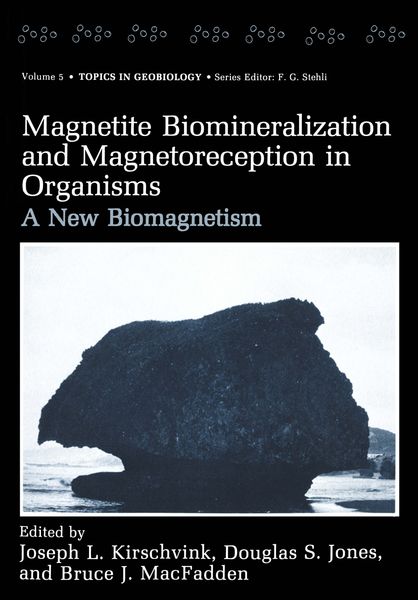
  • Produktbild: Magnetite Biomineralization and Magnetoreception in Organisms
  • Produktbild: Magnetite Biomineralization and Magnetoreception in Organisms
  • Produktbild: Magnetite Biomineralization and Magnetoreception in Organisms
Band 5

Magnetite Biomineralization and Magnetoreception in Organisms A New Biomagnetism

Aus der Reihe Topics in Geobiology

146,99 €

inkl. gesetzl. MwSt., Versandkostenfrei

Lieferung nach Hause

Beschreibung

Produktdetails

Einband

Taschenbuch

Erscheinungsdatum

04.10.2011

Herausgeber

Joseph L. Kirschvink + weitere

Verlag

Springer Us

Seitenzahl

704

Maße (L/B/H)

24,4/17/3,8 cm

Gewicht

1256 g

Auflage

1985

Sprache

Englisch

ISBN

978-1-4613-7992-8

Beschreibung

Produktdetails

Einband

Taschenbuch

Erscheinungsdatum

04.10.2011

Herausgeber

Verlag

Springer Us

Seitenzahl

704

Maße (L/B/H)

24,4/17/3,8 cm

Gewicht

1256 g

Auflage

1985

Sprache

Englisch

ISBN

978-1-4613-7992-8

Herstelleradresse

Springer-Verlag KG
Sachsenplatz 4-6
1201 Wien
AT

Email: [email protected]

Kundinnen und Kunden meinen

0 Bewertungen

Informationen zu Bewertungen

Zur Abgabe einer Bewertung ist eine Anmeldung im Konto notwendig. Die Authentizität der Bewertungen wird von uns nicht überprüft. Wir behalten uns vor, Bewertungstexte, die unseren Richtlinien widersprechen, entsprechend zu kürzen oder zu löschen.

Die Bewertungen sind nach Format, Anzahl Sterne und Datum sortiert.

Verfassen Sie die erste Bewertung zu diesem Artikel

Helfen Sie anderen Kund*innen durch Ihre Meinung

Kundinnen und Kunden meinen

0 Bewertungen filtern

  • Produktbild: Magnetite Biomineralization and Magnetoreception in Organisms
  • Produktbild: Magnetite Biomineralization and Magnetoreception in Organisms
  • Produktbild: Magnetite Biomineralization and Magnetoreception in Organisms
  • I. Introduction and Background.- 1 • Iron Biomineralization: A Geobiological Perspective.- 1. Introduction.- 2. Biological Aspects of Iron Mineralization.- 3. Biological Functions of Iron Biomineralization.- 4. Geological Aspects of Biogenic Fe Oxides and Sulfides.- References.- 2 • Ferrimagnetic Properties of Magnetite.- 1. Introduction.- 2. Basic Data.- 3. Bulk Properties.- 4. Magnetic Domain States.- 5. Remanent Magnetizations.- 6. Magnetic Granulometry.- References.- 3 • The Geomagnetic Field: Its Nature, History, and Biological Relevance.- 1. Introduction.- 2. The Main Geomagnetic Field.- 3. The Field of External Origin.- References.- II. Experimental Techniques and Instrumentation.- 4 • An Introduction to the Use of SQUID Magnetometers in Biomagnetism.- 1. Introduction.- 2. Operating Principles of SQUIDs.- 3. Cryogenics.- 4. Instrument Configurations.- 5. Applications of SQUID Magnetometers in Biomagnetism.- 6. Conclusions.- References.- 5 • Detection, Extraction, and Characterization of Biogenic Magnetite.- 1. Introduction.- 2. Magnetometry Studies.- 3. Extraction and Characterization of Biogenic Magnetite.- 4. Discussion.- 5. Summary.- References.- 6 • Studying Mineral Particulates of Biogenic Origin by Transmission Electron Microscopy and Electron Diffraction: Some Guidelines and Suggestions.- 1. Introduction.- 2. Sample Preparation for Electron Microscopy.- 3. Studying the Sample in the Microscope.- 4. Analysis of Electron Diffraction Powder Patterns.- 5. Conclusions.- Selected References.- 7 • The Cellular Localization of Particulate Iron.- 1. Introduction.- 2. Anatomical Techniques.- 3. An Example: The Bumblebee.- 4. Conclusions.- References.- 8 • Large-Volume, Magnetically Shielded Room: A New Design and Material.- 1. Introduction.- 2. General Principles of Electric and Magnetic Shielding.- 3. Practical Techniques for Building Magnetically Shielded Rooms.- 4. Three Specific Examples.- 5. Summary.- References.- III. Magnetoreception: Theoretical Considerations.- 9 • Limits to Induction-Based Magnetoreception.- 1. Introduction.- 2. Noise and General Considerations.- 3. The Induction Magnetoreception Organ.- 4. Conclusion.- 5. Addendum: A Comment on Navigation.- References.- 10 • Energetics and Sensitivity Considerations of Ferromagnetic Magnetoreceptors.- 1. Introduction.- 2. Energy Considerations.- 3. Response Times.- 4. Sensitivity to Field Changes.- 5. Other Types of Receptors.- 6. Tests of the Hypothesis.- References.- 11 • Particle-Size Considerations for Magnetite-Based Magnetoreceptors.- 1. Introduction.- 2. The Thermally Driven Variance Model of Magnetic Intensity Reception.- 3. Discussion.- 4. Summary.- References.- 12 • Are Animal Maps Magnetic?.- 1. Introduction.- 2. The Compass Sense.- 3. The Map Sense.- 4. Problems with Magnetic Maps.- 5. Future Research.- References.- IV. Magnetoreception and Magnetic Minerals in Living Organisms.- 13 • Mössbauer Spectroscopy of Iron Biomineralization Products in Magnetotactic Bacteria.- 1. Introduction to Mössbauer Spectroscopy.- 2. Application of Mössbauer Spectroscopy to Magnetotactic Bacteria.- References.- 14 • Magnetotactic Microorganisms Found in Muds from Rio de Janeiro: A General View.- 1. Introduction.- 2. The Geomagnetic Field.- 3. Results.- 4. Conclusions.- References.- 15 • Structure, Morphology, and Crystal Growth of Bacterial Magnetite.- 1. Introduction.- 2. Instrumentation: High-Resolution Transmission Electron Microscopy.- 3. Materials and Methods.- 4. Results.- 5. Discussion: Bioprecipitation of Bacterial Magnetite.- 6. Conclusions.- References.- 16 • Biomineralization Processes of the Radula Teeth of Chitons.- 1. Introduction.- 2. Materials and Methods.- 3. Anatomy and Operation of the Radula Apparatus.- 4. Anatomy of the Radula Sac.- 5. Blood Chemistry.- 6. The Ultrastructure of the Mineralization Zone.- 7. Concluding Remarks.- References.- 17 • Magnetic Remanence and Response to Magnetic Fields in Crustacea.- 1. Introduction.- 2. Experimental Studies.- 3. Discussion.- 4. Summary.- References.- 18 • Magnetic Field Sensitivity in Honeybees.- 1. Introduction.- 2. Magnetic Fields Cause Misdirection in the Waggle Dance.- 3. Magnetically Oriented Horizontal Dances.- 4. Magnetic Orientation of Comb-Building.- 5. Magnetic Fields and Orientation in Time.- 6. The Magnetic Receptor System.- 7. Summary and Conclusions.- References.- 19 • Magnetic Butterflies: A Case Study of the Monarch (Lepidoptera, Danaidae).- 1. Introduction.- 2. Natural History of the Monarch Butterfly.- 3. Materials and Methods.- 4. Induced Magnetization.- 5. Ontogeny of Magnetic Mineralization.- 6. Intraspecific and Interspecific Variation.- 7. Attempts to Characterize the Magnetic Mineralogy.- 8. Summary and Conclusions.- References.- 20 • Magnetoreception and Biomineralization of Magnetite: Fish.- 1. Introduction.- 2. Magnetic Sensitivity in Yellowfin Tuna.- 3. Detection of Magnetic Material in Fish.- 4. Characterization of the Magnetic Material.- 5. Identification and Analysis of the Magnetic Material.- 6. Discussion.- References.- 21 • Magnetoreception and Biomineralization of Magnetite in Amphibians and Reptiles.- 1. Introduction.- 2. Amphibians.- 3. Reptiles.- 4. Conclusion.- References.- 22 • Avian Navigation, Geomagnetic Field Sensitivity, and Biogenic Magnetite.- 1. The Sensory Basis of Bird Navigation.- 2. Orientation Experiments with Homing Pigeons.- 3. Orientation Experiments with Migratory Birds.- 4. Effects of Small Magnetic Field Changes on Navigation: The Possibility of a Geomagnetic Map.- 5. Laboratory Attempts to Measure Avian Magnetic Field Sensitivity.- 6. Magnetite in Birds and Possible Mechanisms of Magnetic Field Sensitivity.- References.- 23 • Magnetic Remanence in Bats.- 1. Introduction.- 2. Methods.- 3. Results.- 4. Discussion.- References.- 24 • Magnetoreception and Biomineralization of Magnetite in Cetaceans.- 1. Introduction.- 2. Behavioral Studies.- 3. Anatomical Studies.- 4. Conclusion.- References.- 25 • Magnetoreception and the Search for Magnetic Material in Rodents.- 1. Introduction.- 2. Influence of Magnetic Fields on Physiology.- 3. Magnetoreception.- 4. The Search for the Magnetoreceptor.- 5. Summary.- References.- V. Human Magnetoreception: An Editorial Introduction.- 26 • Magnetoreception by Man and Other Primates.- 1. Introduction.- 2. Physiological Responses to Changes in the Ambient Magnetic Field.- 3. Magnetoreception.- 4. Magnetoreceptors?.- 5. Discussion.- 6. Summary.- References.- 27 • Statistical and Methodological Critique of Baker’s Chapter.- 1. Statistics in General.- 2. “Chair” Experiments Results Section.- 3. Princeton Data Do Not Support Baker.- 4. Magnets vs. Controls for Baker’s Experiments.- 5. Magnets vs. Controls for K-6.- 6. Physiology of Magnetoreceptors.- 7. Summary.- References.- 28 • Human Navigation: Attempts to Replicate Baker’s Displacement Experiment.- 29 • Human Homing Orientation: Critique and Alternative Hypotheses.- 1. Introduction.- 2. Bus Tests Conducted at Ithaca, New York.- 3. Oriented Distributions from “Random” Data.- References.- Notes.- Reply to Baker.- 30 • Absence of Human Homing Ability as Measured by Displacement Experiments.- 31 • A Study of the Homeward Orientation of Visually Handicapped Humans.- 1. Introduction.- 2. Methods.- 3. Results.- 4. Discussion.- References.- 32 • An Attempt to Replicate the Spinning Chair Experiment.- 33 • A Cautionary Note on Magnetoreception in Dowsers.- 34 • Human Navigation: A Summary of American Data and Interpretation.- 1. The American Data.- 2. The American Criticisms.- 3. Concluding Remarks.- References.- VI. Biogenic Magnetite in the Fossil Record.- 35 • A Search for Bacterial Magnetite in the Sediments of Eel Marsh, Woods Hole, Massachusetts.- 1. Introduction.- 2. Bacterial Magnetite.- 3. Methods.- 4. Results.- 5. Discussion.- Appendix 1: Eel Marsh NRM and Saturation Magnetization Data.- Appendix 2: Description of Computer Procedure Used to Make Stability Field Diagram 8a.- References.- 36 • Possible Biogenic Magnetite Fossils from the Late Miocene Potamida Clays of Crete.- 1. Introduction.- 2. Samples.- 3. Laboratory Extraction of Magnetite.- 4. Magnetic Studies.- 5. Size and Shape Distribution of Magnetite.- 6. Origin of Magnetite.- 7. Conclusion and Applications.- References.