• Produktbild: Skill and Education: Reflection and Experience
  • Produktbild: Skill and Education: Reflection and Experience

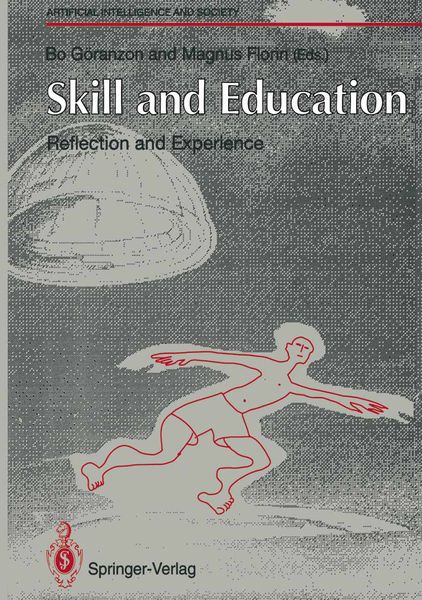
Skill and Education: Reflection and Experience

Aus der Reihe Human-centred Systems

49,99 €

inkl. gesetzl. MwSt., Versandkostenfrei

Lieferung nach Hause

Beschreibung

Produktdetails

Einband

Taschenbuch

Erscheinungsdatum

05.10.1992

Herausgeber

Bo Göranzon + weitere

Verlag

Springer Berlin

Seitenzahl

291

Maße (L/B/H)

24,2/17/1,8 cm

Gewicht

550 g

Auflage

1st Edition.

Sprache

Englisch

ISBN

978-3-540-19758-4

Beschreibung

Portrait

Magnus Florin, schwedischer Schriftsteller, Kritiker und Dramaturg, wurde 1955 in Uppsala geboren. Er schreibt Kurzprosa, Lyrik, Libretti, Romane und Essays. Unter anderem leitete Florin das Radiotheater von Sveriges Radio, heute ist er Chefdramaturg am Königlichen Dramatischen Theater in Stockholm.

Produktdetails

Einband

Taschenbuch

Erscheinungsdatum

05.10.1992

Herausgeber

Verlag

Springer Berlin

Seitenzahl

291

Maße (L/B/H)

24,2/17/1,8 cm

Gewicht

550 g

Auflage

1st Edition.

Sprache

Englisch

ISBN

978-3-540-19758-4

Herstelleradresse

Springer-Verlag KG
Sachsenplatz 4-6
1201 Wien
AT

Email: [email protected]

Kundinnen und Kunden meinen

0 Bewertungen

Informationen zu Bewertungen

Zur Abgabe einer Bewertung ist eine Anmeldung im Konto notwendig. Die Authentizität der Bewertungen wird von uns nicht überprüft. Wir behalten uns vor, Bewertungstexte, die unseren Richtlinien widersprechen, entsprechend zu kürzen oder zu löschen.

Die Bewertungen sind nach Format, Anzahl Sterne und Datum sortiert.

Verfassen Sie die erste Bewertung zu diesem Artikel

Helfen Sie anderen Kund*innen durch Ihre Meinung

Kundinnen und Kunden meinen

0 Bewertungen filtern

  • Produktbild: Skill and Education: Reflection and Experience
  • Produktbild: Skill and Education: Reflection and Experience
  • Section I. Introduction.- 1. Introduction.- I. Reflection and Experience.- Section II. Tacit Knowledge.- 2. Tacit Knowledge and Silenced Knowledge: Fundamental Problems and Controversies.- 3. Why is Wittgenstein Important?.- 4 Rule-Following, Intransitive Understanding and Tacit Knowledge. An Investigation of the Wittgensteinian Concept of Practice as Regards Tacit Knowing.- Section III. Traditions of Knowledge and Professional Skills.- 5. On Creativity and Development.- 6. Language and Experience.- 7. The Psychology of Apprenticeship: a Discussion Paper.- Section IV. Educational Computing.- 8. The Introduction of Information Technology into the Workplace - Some Practical Considerations.- 9. Expert Systems: Channels for Dialogue.- Section V. Computers and Law.- 10. Comtrolling the Application of Knowledge-Based Systems.- 11. Law and Expert Systems.- Section VI. The Information Society?.- 12. The Image of the Intelligent Machine in Science Fiction.- 13. Computers and Thought: a Modern Version of Old Illussions.- 14. Concluding Remarks Part I: Towards Human - Centred Systems.- II. The Diderot Project: Enlightment, Skill and Education.- 15. Remarks on the Diderot Project.- Section VII. Reflections on Diderot.- 16. Caliban’s Revenge.- 17. The Dome of Michelangelo.- 18. Diderot’s Russian University.- 19. Diderot and the Dramatization of Philosophical Thought.- 20. The Translator as Actor.- 21. Translating the Self.- Section VIII. On the Two Cultures.- 22. One Culture, Two Cultures, Three Cultures.- 23. On from “The Two Cultures”.- 24. The Metaphor of Caliban in our Technological Culture.- 25. Leadership and Character, or a Little Touch of Harry.- 26. Concluding Remarks Part II.- Name Index.