Gutscheinbedingungen

**Gültig vom 20.07.2026 bis 22.07.2026 | Gültig für nicht preisgebundene fremdsprachige Bücher | Einzelne Artikel können ausgeschlossen sein | Nicht kombinierbar mit anderen Gutscheinen oder Preisaktionen | Nur einmal pro Einkauf einlösbar | Gutschein wird auf max. 500€ Bestellwert angerechnet | Keine Barauszahlung | Nicht gültig für Versandkosten und Services

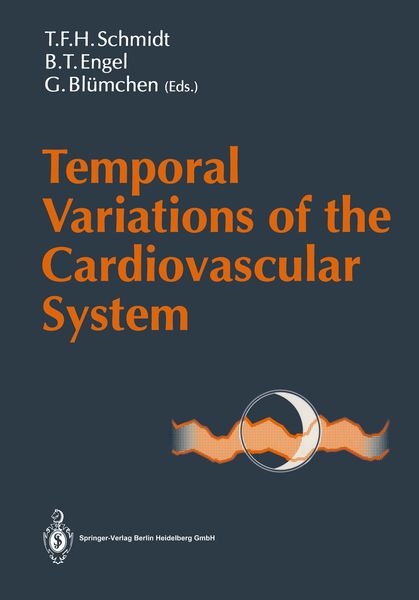
  • Produktbild: Temporal Variations of the Cardiovascular System
  • Produktbild: Temporal Variations of the Cardiovascular System

Temporal Variations of the Cardiovascular System

49,99 €

inkl. gesetzl. MwSt., Versandkostenfrei

Lieferung nach Hause

Beschreibung

Produktdetails

Einband

Taschenbuch

Erscheinungsdatum

03.10.2013

Herausgeber

Thomas F.H. Schmidt + weitere

Verlag

Springer Berlin

Seitenzahl

401

Maße (L/B/H)

24,4/17/2,3 cm

Gewicht

721 g

Auflage

Softcover reprint of the original 1st ed. 1992

Sprache

Englisch

ISBN

978-3-662-02750-9

Beschreibung

Produktdetails

Einband

Taschenbuch

Erscheinungsdatum

03.10.2013

Herausgeber

Verlag

Springer Berlin

Seitenzahl

401

Maße (L/B/H)

24,4/17/2,3 cm

Gewicht

721 g

Auflage

Softcover reprint of the original 1st ed. 1992

Sprache

Englisch

ISBN

978-3-662-02750-9

Herstelleradresse

Springer-Verlag GmbH
Tiergartenstr. 17
69121 Heidelberg
DE

Email: GPSR Kontakt

Noch keine Bewertungen vorhanden

Verfassen Sie die erste Bewertung zu diesem Artikel

Helfen Sie anderen Kundinnen und Kunden durch Ihre Meinung.

Kundinnen und Kunden meinen

Bewertungen (0)

  • Produktbild: Temporal Variations of the Cardiovascular System
  • Produktbild: Temporal Variations of the Cardiovascular System
  • Day-Night Variations in the Cardiovascular System. Historical and Other Notes by an Outsider.- Basic Principles of Human Circadian Rhythms.- Diurnal Heart Rate Rhythms in Small Mammals: Species-Specific Patterns and Their Environmental Modulation.- Long-Term Changes of Heart Rate in Tree Shrews: Indicators of Social Stress?.- Spectral Analysis of Heart Rate During Different States of Activity.- The Neurovegetative System as a Link Between Internal and External Environments.- The Relationship Between Cardiovascular Responses in the Laboratory and in the Field: The Importance of “Active Coping”.- Diurnal Variation and Triggers of Onset of Cardiovascular Disease.- Daily Variations in ST Segment Depression in Patients with Coronary Heart Disease.- Nocturnal Hemodynamic Responses to Chronic,Mild Atrial Demand Pacing in Nonhuman Primates.- Feasibility of Continuous Noninvasive 24-h Ambulatory Finger Blood Pressure Measurement with Portapres: Comparison with Intrabrachial Pressure.- A New Dimension of Blood Pressure Measurement in Man: 24-h Ambulatory Continuous Noninvasive Recording with Portapres.- Peripheral Resistance Changes upon Stand-up Compared to Those upon Tilt-up and Onset to Cycling: Implication of the Cardiopulmonary Reflex.- Blood Pressure Control by Day Versus Night.- Dynamic Evaluation of Neural Cardiovascular Regulation Through the Analysis of Blood Pressure and Pulse Interval Variability over 24 Hours.- Sources of Variability and Methodological Considerations in Ambulatory Blood Pressure.- Factors Associated with Differences in the Diurnal Variation of Blood Pressure in Humans.- Effects of Behavioral Rhythms on Blood Pressure Rhythms.- The Relationship Between Self-Reported Emotional Strain and Ambulatory Blood Pressure and Heart Rate.- The Effect of Occupational and Domestic Stress on the Diurnal Rhythm of Blood Pressure.- Impact of Shifted Sleeping and Working Phases on Diurnal Blood Pressure Rhythm.- How and How Often Should Blood Pressure Be Measured for Optimum Hypertension Control?.- Sleep-Related Breathing Disorders and Nocturnal Hypertension.- Seasonal and Environmental Temperature Effects on Arterial Blood Pressure.- Age-Dependent Variation of Diurnal Blood Pressure Profile in Normotensive Subjects.- Recent Advances in the Chronopharmacology of Cardiovascular Active Drugs.- Chronopharmacokinetic Aspects with Special Reference to Cardiovascular Drugs.- Nocturnal Hemodynamic Effects of Commonly Used Cardiovascular Drugs: Possible Implications for Clinical and Pharmacological Management.