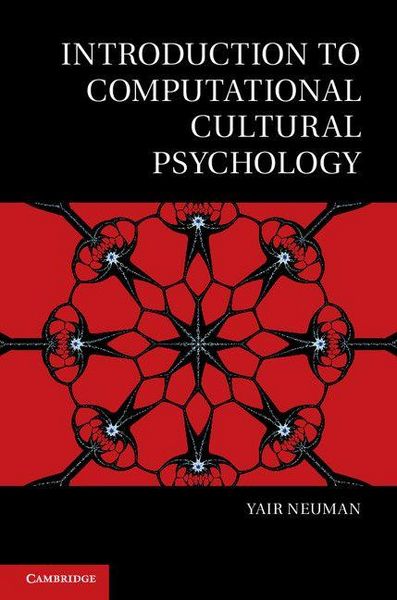
Introduction to Computational Cultural Psychology
-
- Hardcover ausgewählt
- Taschenbuch
- eBook
-
Sprache:Englisch
114,99 €
inkl. gesetzl. MwSt.,
Beschreibung
Produktdetails
Einband
Gebundene Ausgabe
Erscheinungsdatum
06.02.2014
Abbildungen
17 b/w illus. 10 tables, Zeichnungen, schwarz-weiss, Tabellen, schwarz-weiss
Verlag
Cambridge AcademicSeitenzahl
230
Maße (L/B/H)
23,5/15,7/1,7 cm
Gewicht
490 g
Sprache
Englisch
ISBN
978-1-107-02584-4
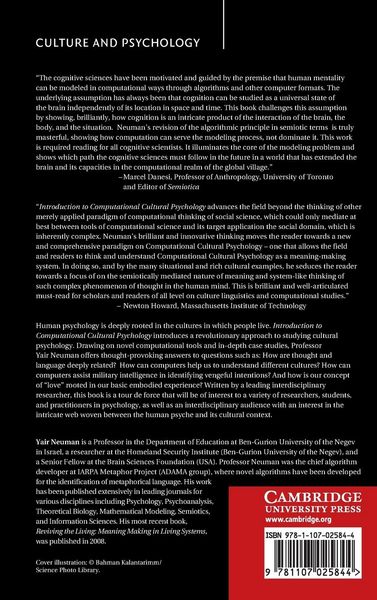
Human psychology is deeply rooted in the culture in which people live. Introduction to Computational Cultural Psychology introduces a revolutionary approach for studying cultural psychology. Drawing on novel computational tools and in-depth case studies, Professor Yair Neuman offers thought-provoking answers to questions such as: how are thought and language deeply related? How can computers help us to understand different cultures? How can computers assist military intelligence in identifying vengeful intentions? And how is our concept of 'love' rooted in our basic embodied experience? Written by a leading interdisciplinary researcher this book is a 'tour-de-force' which will be of interest to a variety of researchers, students and practitioners in psychology as well as an interdisciplinary audience with an interest in the intricate web weaved between the human psyche and its cultural context.
Noch keine Bewertungen vorhanden
Verfassen Sie die erste Bewertung zu diesem Artikel
Helfen Sie anderen Kundinnen und Kunden durch Ihre Meinung.
Kurze Frage zu unserer Seite
Vielen Dank für dein Feedback
Wir nutzen dein Feedback, um unsere Produktseiten zu verbessern. Bitte habe Verständnis, dass wir dir keine Rückmeldung geben können. Falls du Kontakt mit uns aufnehmen möchtest, kannst du dich aber gerne an unseren Kund*innenservice wenden.
zum Kundenservice