• Produktbild: Viral Cytopathology
  • Produktbild: Viral Cytopathology
Band 19

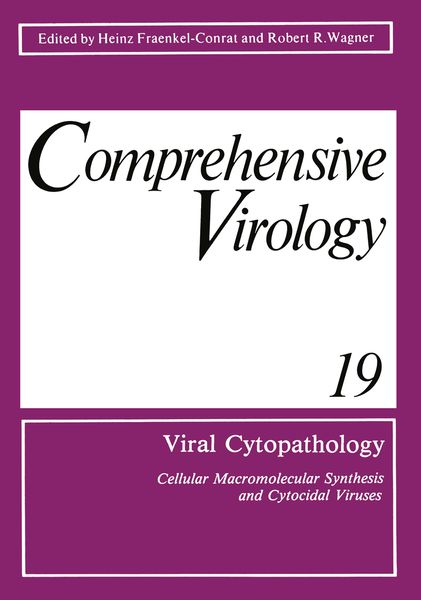
Viral Cytopathology Cellular Macromolecular Synthesis and Cytocidal Viruses Including a Cumulative Index to the Authors and Major Topics Covered in Volumes 1–19

49,99 €

inkl. gesetzl. MwSt., Versandkostenfrei

Lieferung nach Hause

Beschreibung

Produktdetails

Einband

Taschenbuch

Erscheinungsdatum

19.01.2012

Herausgeber

Heinz Fraenkel-Conrat + weitere

Verlag

Springer Us

Seitenzahl

556

Maße (L/B/H)

25,4/17,8/3 cm

Gewicht

1040 g

Auflage

1984

Sprache

Englisch

ISBN

978-1-4613-5702-5

Beschreibung

Produktdetails

Einband

Taschenbuch

Erscheinungsdatum

19.01.2012

Herausgeber

Verlag

Springer Us

Seitenzahl

556

Maße (L/B/H)

25,4/17,8/3 cm

Gewicht

1040 g

Auflage

1984

Sprache

Englisch

ISBN

978-1-4613-5702-5

Herstelleradresse

Springer-Verlag GmbH
Tiergartenstr. 17
69121 Heidelberg
DE

Email: GPSR Kontakt

Noch keine Bewertungen vorhanden

Verfassen Sie die erste Bewertung zu diesem Artikel

Helfen Sie anderen Kundinnen und Kunden durch Ihre Meinung.

Kundinnen und Kunden meinen

Bewertungen (0)

  • Produktbild: Viral Cytopathology
  • Produktbild: Viral Cytopathology
  • 1 Cytopathic Effects of Viruses: A General Survey.- 1. Defining the Problem.- 2. Historical Background.- 2.1. Early Observations on Virus-Induced Cytopathology.- 2.2. Early Observations on Virus-Induced Alterations in Cell Macromolecular Synthesis.- 3. Viral Cytopathology: General Principles.- 3.1. Cellular Differentiation and Susceptibility to Viral Infection.- 3.2. Methods for Studying Viral Cytopathic Effects.- 3.3. Variability of Cytopathic Effects.- 4. Specific Cytopathic Viruses: An Overview.- 4.1. Picornavirus Cytopathology.- 4.2. Poxvirus Cytopathology.- 4.3. Rhabdovirus Cytopathology.- 4.4. Adenovirus Cytopathology.- 4.5. Viral Toxicity.- 5. Some Subcellular Targets of Pathogenic Viruses.- 5.1. Cellular Membrane Effects of Certain Viruses.- 5.2. Effects of Viruses on Lysosomes.- 5.3. Effects of Viruses on the Cytoskeleton.- 6. Summary.- 7. References.- 2 Transcription by RNA Polymerase II.- 1. Introduction.- 2. Polymerase II Control Regions: In Vivo.- 2.1. Initiation Regions.- 2.2. Immediate Upstream Sequences.- 2.3. Enhancer Regions.- 3. Polymerase II Promoters: In Vitro.- 3.1. Initiation Region.- 3.2. Immediate Upstream Region.- 3.3. Enhancer Region.- 4. RNA Polymerase II and Factors.- 4.1. RNA Polymerase II.- 4.2. Termination of Transcription.- 4.3. Factors Necessary for Accurate Transcription.- 4.4. Promoter-Specific Factors.- 5. Closing Comments.- 6. References.- 3 Regulation of Eukaryotic Translation.- 1. Introduction.- 2. The Rate-Limiting Step in Translation.- 3. Functional Domains in Messenger RNA.- 3.1. AUG Initiation Codon.- 3.2. The 5?-Terminal Cap Structure.- 3.3. 5?-Leader Sequence.- 3.4. 3?-Terminal Poly (A).- 3.5. 3?-Untranslated Sequence.- 4. Initiation of Translation.- 4.1. Dissociation of Ribosomes into Subunits.- 4.2. Recognition of Met-tRNAf by eIF-2.- 4.3. Binding of Met-tRNAf/eIF-2/GTP to 40 S Subunits.- 4.4. The mRNA-Binding Step.- 5. Role of Initiation Factors in Binding of mRNA.- 5.1. Initiation Factor 2.- 5.2. Other Initiation Factors.- 6. Translational Control by mRNA Competition.- 6.1. mRNA Competition for eIF-2.- 6.2. mRNA Competition for Other Initiation Factors.- 6.3. Further Examples of mRNA Competition.- 7. Translational Control by Regulation of eIF-2 Activity.- 7.1. Heme Deprivation.- 7.2. Double-Stranded RNA.- 7.3. Interferon.- 7.4. Other Conditions that Affect eIF-2 Activity.- 7.5. Nature of the Translational Inhibitor.- 8. Translational Regulation by Other Means.- 8.1. Translational Repression.- 8.2. Heat Shock.- 8.3. Phosphorylation of Ribosomal Protein.- 8.4. Virus-Induced Shut-Off of Host Translation.- 9. Parameters Determining Translational Efficiency of an mRNA Species.- 10. References.- 4 Picornavirus Inhibition of Host Cell Protein Synthesis.- 1. Introduction and Scope.- 2. Properties of Inhibition of Host Cell Protein Synthesis by Poliovirus.- 2.1. General Description.- 2.2. Requirement for Expression of Viral Genome.- 2.3. Poliovirus Inhibition of Other Viral Protein Synthesis.- 2.4. Integrity of Untranslated mRNA.- 3. Proposed Models for Inhibition.- 3.1. Double-Stranded RNA.- 3.2. Viral Capsid Proteins.- 3.3. Inherent Translational Efficiencies.- 3.4. Membrane Alterations and Intracellular Ionic Modifications.- 3.5. Inactivation of Initiation Factors.- 4. Initiation Factors.- 4.1. Summary of Eukaryotic Initiation Factors.- 4.2. Involvement of Initiation Factors in Poliovirus-Induced Inhibition of Cellular Protein Synthesis: Discovery of Cap-Binding Protein.- 5. Cap Recognition Activity.- 5.1. The 24,000-Dalton Cap-Binding Protein.- 5.2. ATP/Mg2+-Dependent Cap-Binding Proteins.- 5.3. Cap-Binding Protein Complex: eIF-4F.- 5.4. Cap-Binding Proteins in Poliovirus-Infected Cells.- 5.5. Function of Cap-Binding Proteins.- 6. Polioviral Mediator of Host Cell Shut-off.- 7. Other Picornaviruses.- 7.1. Differences from Poliovirus.- 7.2. mRNA Competition.- 7.3. Host Cell-Specific Interactions.- 7.4. Role of Alterations in Ionic Environment.- 7.5. Unstudied Picornaviruses.- 8. Other Viruses That May Utilize Mechanisms Similar to Poliovirus.- 8.1. Reovirus.- 8.2. Semliki Forest Virus.- 8.3. Frog Virus 3.- 9. Concluding Remarks.- 10. References.- 5 Rhabdovirus Cytopathology: Effects on Cellular Macromolecular Synthesis.- 1. Introduction.- 2. Properties of Rhabdoviruses: A Brief Survey.- 2.1. Structure—Function Relationships.- 2.2. Reproduction Strategies of Rhabdoviruses.- 2.3. Rhabdovirus Genetics.- 3. Cellular Responses to Rhabdovirus Infection.- 3.1. Cytopathology.- 3.2. Variations in Host Cell Susceptibility.- 4. Protein Synthesis Inhibition by Vesicular Stomatitis Virus.- 4.1. Definition of the Problem.- 4.2. Host Cell and Environmental Factors.- 4.3. Viral Properties as Candidates for Inhibiting Cell Protein Synthesis.- 4.4. VSV Genetics and Protein Synthesis Inhibition.- 4.5. Inhibitors of VSV Functions that Affect Protein Synthesis Inhibition.- 4.6. Competition between Cell and Viral Messengers?.- 4.7. Viral Products as Putative Inhibitors of Cellular Protein Synthesis.- 4.8. Cellular Target for Inhibition of Protein Synthesis.- 5. VSV Inhibition of Cellular Nucleic Acid Synthesis.- 5.1. Host Cell Responses.- 5.2. Viral Properties as Candidates for Inhibiting Cellular Nucleic Acid Synthesis.- 5.3. Temperature-Sensitive Mutants and DI Particles Restricted in Transcription.- 5.4. Use of UV Irradiation to Identify VSV Genetic Information Responsible for Shutting Off Cellular RNA Synthesis.- 5.5. Cellular Targets for VSV Inhibition of RNA Synthesis.- 5.6. Inhibition of Transcription Initiation on DNA Templates in Cell-Free Systems.- 5.7. Effect of VSV on Cellular and Viral DNA Synthesis.- 6. Summary.- 7. References.- 6 Adenovirus Cytopathology.- 1. Introduction.- 2. Adenovirus—Mammalian Cell Interactions.- 2.1. The Adenovirus Productive Cycle.- 2.2. Abortive and Partially-Productive Infections.- 2.3. General Features of the Response of Permissive Cells to Adenovirus Infection.- 3. Effects of Adenovirus Infection on Cellular DNA Metabolism.- 3.1. Inhibition of Cellular DNA Synthesis in Productively-Infected Cells.- 3.2. The Induction of Cellular DNA Synthesis in Quiescent Cells.- 4. Cellular RNA Metabolism in Adenovirus-Infected Cells.- 4.1. Inhibition of Production of Cellular mRNA.- 4.2. Induction of Cellular Gene Expression in Adenovirus-Infected Cells.- 4.3. Posttranscriptional and Transcriptional Regulation of Ribosomal RNA Synthesis in Adenovirus-Infected Cells.- 5. Selective Translation of Viral mRNA in Productively-Infected Cells.- 6. Summary and Conclusions.- 7. References.- 7 The Effects of Herpesviruses on Cellular Macromolecular Synthesis.- 1. Introduction.- 2. Early Studies.- 3. Effects on DNA Synthesis.- 4. Effects on RNA Synthesis.- 4.1. General.- 4.2. Messenger RNA.- 4.3. Functional mRNA.- 5. Effects on Protein Synthesis.- 5.1. Polyribosomes.- 5.2. Polypeptides.- 5.3. Enzymes.- 5.4. A Virion-Associated Inhibitor.- 5.5. Two Distinct Stages.- 5.6. Specificity of Shut-off.- 5.7. Cellular Stress Proteins.- 5.8. Differences between HSV-1 and HSV-2.- 5.9. Genetic Mapping.- 6. Other Herpesviruses.- 6.1. Epstein—Barr Virus.- 6.2. Herpesvirus Saimiri.- 6.3. Cytomegalovirus.- 7. Mechanisms.- 7.1. Multiplicity of Infection.- 7.2. Breakdown of Polysomes.- 7.3. Reversibility of Early Shut-off.- 7.4. Ionic Imbalance.- 7.5. Delayed Shut-off.- 7.6. Inhibition of Transcription.- 7.7. Inhibition of DNA Synthesis.- 7.8. Relationship between DNA and Protein Shut-off.- 7.9. Inhibition of ?-Protein Synthesis.- 8. Conclusion.- 9. References.- 8 Poxvirus Cytopathogenicity: Effects on Cellular Macromolecular Synthesis.- 1. Introduction.- 1.1. Virus Cytopathogenicity.- 1.2. Poxvirus Structure.- 1.3. Poxvirus Replication.- 2. Poxvirus Cytopathogenicity.- 2.1. Mechanisms of Morphological Lesions.- 2.2. Inhibition of Host Cell RNA Synthesis.- 2.3. Inhibition of Host Cell DNA Synthesis.- 2.4. Inhibition of Host Protein Synthesis.- 3. Concluding Remarks.- 4. References.- 9 Reovirus Cytopathology: Effects on Cellular Macromolecular Synthesis and the Cytoskeleton.- 1. Introduction.- 1.1. Reovirus Structure.- 1.2. The Reovirus Replicative Cycle.- 1.3. Reovirus Genetics and the Genetic Approach to the Analysis of Reovirus Cytopathogenicity.- 2. Reovirus Effects on Host Cell DNA Synthesis.- 3. Reovirus Effects on Host Cell RNA and Protein Synthesis.- 4. Reovirus Effects on Cytoskeletal Organization.- 5. Summary.- 6. References.- 10 Inhibition of Host Cell Macromolecular Synthesis following Togavirus Infection.- 1. Introduction.- 2. Acute Infection by Alphaviruses in Vertebrate Cell Cultures.- 2.1. Effect on Cellular Protein Synthesis.- 2.2. Effect on Cellular RNA Synthesis.- 2.3. Effect on Cellular DNA Synthesis.- 2.4. Necessary Host Components for Viral Replication.- 3. Chronic and Persistent Infection by Alphaviruses in Vertebrate Cell Cultures.- 4. Infections by Flaviviruses in Vertebrate Cell Cultures.- 4.1. Acute Infection.- 4.2. Persistent Infection.- 5. Infection by Togaviruses in Invertebrate Cell Cultures.- 5.1. Acute Infection.- 5.2. Persistent Infection.- 6. Concluding Remarks.- 7. References.- Cumulative Contents.- Cumulative Author Index.- Cumulative Subject Index.