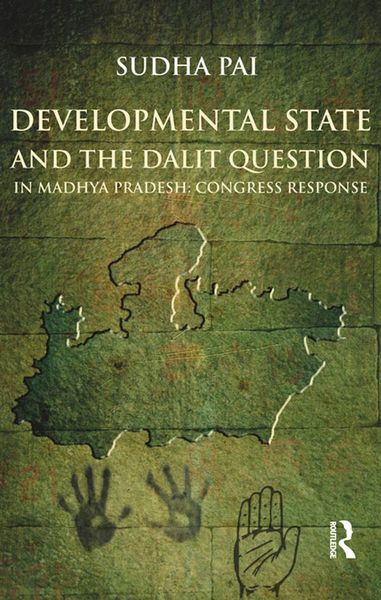
Developmental State and the Dalit Question in Madhya Pradesh: Congress Response
-
- Hardcover
- Taschenbuch
- eBook ausgewählt
-
Form:Einzelkauf Download
-
Sprache:Englisch
-
eBook Format:PDF
- PDF 81,49 € ausgewählt
- ePUB 3 80,99 €
81,49 €
inkl. gesetzl. MwSt.Beschreibung
Produktdetails
Format
Kopierschutz
Ja
Family Sharing
Nein
Text-to-Speech
Nein
Erscheinungsdatum
13.05.2013
Verlag
Taylor & Francis eBooksSeitenzahl
554 (Printausgabe)
Dateigröße
2668 KB
Auflage
1. Auflage
Sprache
Englisch
EAN
9781136197857
Dalit assertion has been a central feature of the states in the Hindi heartland since the mid-1980s, leading to the rise of political consciousness and identity-based lower-caste parties. The present study focuses on the different political response of the Congress party to identity assertion in Madhya Pradesh under the leadership of Digvijay Singh. In Uttar Pradesh and Bihar, in response to the strong wave of Dalit assertion that swept the region, parties such as the Bahujan Samaj Party (BSP) and the Rashtriya Janata Dal (RJD) used strategies of political mobilisation to consolidate Dalit/backward votes and capture state power. In Madhya Pradesh, in contrast, the Congress party and Digvijay Singh at the historic Bhopal Conference held in January 2002 adopted a new model of development that attempted to mobilise Dalits and tribals and raise their standard of living by providing them economic empowerment. This new Dalit Agenda constitutes an alternative strategy at gaining Dalit/tribal support through of state-sponsored economic upliftment as opposed to the political mobilisation strategy employed by the BSP in Uttar Pradesh.
The present study puts to test the limits of the model of state-led development, of the use of political power by an enlightened political elite to introduce change from above to address the weaker sections of society. The working of the state is thus analysed in the context of the society in which it is embedded and the former's ability to insulate itself from powerful vested interests. In interrogating this state-led redistributive paradigm, the study has generated empirical data based on extensive fieldwork and brought to the fore both the potentials and the limitations of using the model of 'development from above' in a democracy. It suggests that the absence of an upsurge from below limits the ability of an enlightened political elite that mans the developmental state to introduce social change and help the weaker sections of society.
Noch keine Bewertungen vorhanden
Verfassen Sie die erste Bewertung zu diesem Artikel
Helfen Sie anderen Kundinnen und Kunden durch Ihre Meinung.
Kurze Frage zu unserer Seite
Vielen Dank für dein Feedback
Wir nutzen dein Feedback, um unsere Produktseiten zu verbessern. Bitte habe Verständnis, dass wir dir keine Rückmeldung geben können. Falls du Kontakt mit uns aufnehmen möchtest, kannst du dich aber gerne an unseren Kund*innenservice wenden.
zum Kundenservice