KI-Beratung Beta

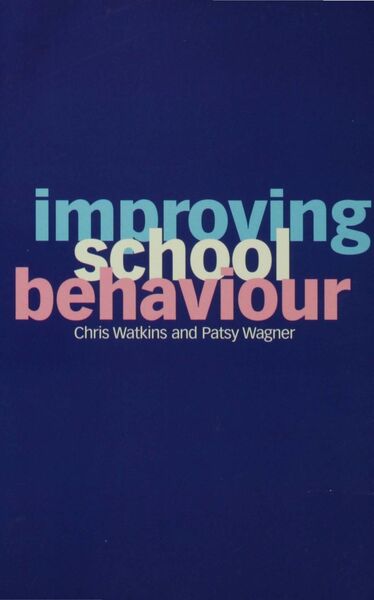
Produktbild: Improving School Behaviour

Improving School Behaviour

98,49 €

inkl. gesetzl. MwSt.

Beschreibung

`Certainly worth reading in order to be reminded of some positive reasons for entering the teaching profession: to value the process of education as much as the content, to view children holistically and to consider schools as places of learning for all' - British Journal of Special Education

Behaviour...

Beschreibung

`Certainly worth reading in order to be reminded of some positive reasons for entering the teaching profession: to value the process of education as much as the content, to view children holistically and to consider schools as places of learning for all' - British Journal of Special Education

Behaviour difficulties in our schools will not go away, but they can be significantly reduced. This book makes available to practitioners and students the frameworks and ideas which will help them minimize behaviour difficulty in school.

The authors address three important levels: the school, the classroom and the individual. At each level, they show how to identify and analyze patterns of difficulty, and then identify methods for improvement.

Improving School Behaviour has been written in order to bring to readers useful approaches founded in a comprehensive range of useful international research, and in years of experience in working with schools. It is a mine of helpful ideas and practical approaches. This is not recipe book, or a source of quick fixes or favourite theories.

The authors:

· challenge simplified rhetoric about school behaviour

· help practitioners identify real areas and effective methods for improvement.

· identify the shortcomings of much conventional wisdom about improving behaviour,

· show how to implement practical, evidence-based alternatives which can lead to improved results.

Improving School Behaviour is an essential resource for all those who are not afraid to improve. It is suitable for use in settings for all age-ranges.

Produktdetails

Format

PDF

Kopierschutz

Nein

Family Sharing

Nein

Text-to-Speech

Nein

Produktdetails

Format

PDF

Format

eBooks im PDF-Format haben eine festgelegte Seitengröße und eignen sich daher nur bedingt zum Lesen auf einem tolino eReader oder Smartphone. Für den vollen Lesegenuss empfehlen wir Ihnen bei PDF-eBooks die Verwendung eines Tablets oder Computers.

Kopierschutz

Nein

Kopierschutz

Dieses eBook können Sie uneingeschränkt auf allen Geräten der tolino Familie, allen sonstigen eReadern und am PC lesen. Das eBook ist nicht kopiergeschützt und kann ein personalisiertes Wasserzeichen enthalten. Weitere Hinweise zum Lesen von eBooks mit einem personalisierten Wasserzeichen finden Sie unter Hilfe/Downloads.

Family Sharing

Nein

Family Sharing

Mit Family Sharing können Sie eBooks innerhalb Ihrer Familie (max. sechs Mitglieder im gleichen Haushalt) teilen. Sie entscheiden selbst, welches Buch Sie mit welchem Familienmitglied teilen möchten. Auch das parallele Lesen durch verschiedene Familienmitglieder ist durch Family Sharing möglich. Um eBooks zu teilen oder geteilt zu bekommen, muss jedes Familienmitglied ein Konto bei Thalia oder einem anderen tolino-Buchhändler haben. Weitere Informationen finden Sie unter Hilfe/Family-Sharing.

Text-to-Speech

Nein

Text-to-Speech

Bedeutet Ihnen Stimme mehr als Text? Mit der Funktion Text-to-Speech können Sie sich im tolino webReader und in der aktuellen Thalia – Lesen & Hören App das eBook vorlesen lassen. Weitere Informationen finden Sie unter Hilfe/Text-to-Speech.

Erscheinungsdatum

01.05.2010

Verlag Sage Publications
Seitenzahl

160 (Printausgabe)

Dateigröße

4073 KB

Auflage

1

Sprache

Englisch

EAN

9780857026453

Barrierefreiheit
  • keine Information zur Barrierefreiheit bekannt

Noch keine Bewertungen vorhanden

Verfassen Sie die erste Bewertung zu diesem Artikel

Helfen Sie anderen Kundinnen und Kunden durch Ihre Meinung.

Kundinnen und Kunden meinen

Bewertungen (0)

Weitere Artikel findest du in

Die Leseprobe wird geladen.
  • Produktbild: Improving School Behaviour