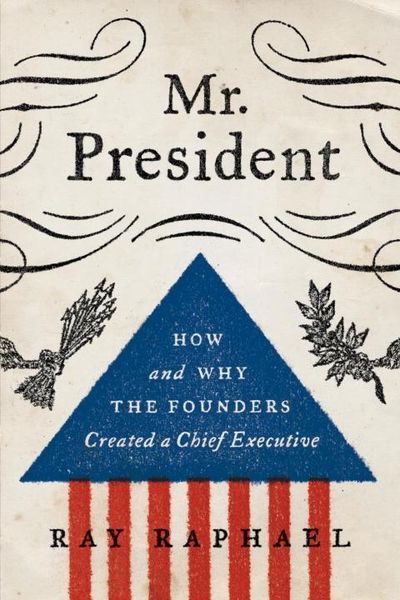
Mr. President How and Why the Founders Created a Chief Executive
-
- Taschenbuch
- eBook ausgewählt
-
Form:Einzelkauf Download
-
Sprache:Englisch
5,49 €
inkl. gesetzl. MwSt.Beschreibung
Produktdetails
Format
ePUB
Kopierschutz
Ja
Family Sharing
Ja
Text-to-Speech
Ja
Erscheinungsdatum
06.03.2012
Verlag
Knopf Doubleday Publishing GroupSeitenzahl
336 (Printausgabe)
Dateigröße
2348 KB
Sprache
Englisch
EAN
9780307958563
The little-known story of the dramatic political maneuverings and personalities behind the creation of the office of the president, with ramifications that continue to this day.
On June 1, 1787, when the Federal Convention first talked of establishing a new executive branch, James Wilson moved that "the Executive consist of a single person." To us this might sound obvious, but not so at the time. Americans had just won their independence from an autocratic monarch, and they feared that a single leader might commandeer power or oppress citizens. Should the framers even flirt with one-man rule? For the first and only time that summer, there was silence. Not one of the loquacious delegates dared speak up.
Eventually Benjamin Franklin rose, then others. James Madison, Alexander Hamilton, and George Mason joined the debate, and for three months their deliberations continued. By early September the framers had made up their minds. A chief executive, the "president," would be appointed by Congress to serve for seven years. He could not be reelected, and his powers were tightly constrained. He could neither negotiate treaties nor appoint Supreme Court justices and ambassadors. The Senate would do all that.
Suddenly, less than two weeks before the convention adjourned, all this changed. How? And who made it happen? Enter Gouverneur Morris, the flamboyant, peg-legged hero of this saga, who pushed through his agenda with amazing political savvy and not a little bluster and deceit. For the first time, by focusing closely on the give-and-take of the convention's dynamics, Ray Raphael reveals how politics and personalities cobbled together a lasting, but flawed, institution.
Charting the presidency as it evolved during the administrations of Washington, Adams, and Jefferson, Raphael shows how, given the Constitution's broad outlines, the president's powers could easily be augmented but rarely diminished. Today we see the result-an office that has become more sweeping, more powerful, and more inherently partisan than the framers ever intended. And the issues of 1787-whether the Electoral College, the president's war powers, or the extent of executive authority-continue to stir our political debates.
On June 1, 1787, when the Federal Convention first talked of establishing a new executive branch, James Wilson moved that "the Executive consist of a single person." To us this might sound obvious, but not so at the time. Americans had just won their independence from an autocratic monarch, and they feared that a single leader might commandeer power or oppress citizens. Should the framers even flirt with one-man rule? For the first and only time that summer, there was silence. Not one of the loquacious delegates dared speak up.
Eventually Benjamin Franklin rose, then others. James Madison, Alexander Hamilton, and George Mason joined the debate, and for three months their deliberations continued. By early September the framers had made up their minds. A chief executive, the "president," would be appointed by Congress to serve for seven years. He could not be reelected, and his powers were tightly constrained. He could neither negotiate treaties nor appoint Supreme Court justices and ambassadors. The Senate would do all that.
Suddenly, less than two weeks before the convention adjourned, all this changed. How? And who made it happen? Enter Gouverneur Morris, the flamboyant, peg-legged hero of this saga, who pushed through his agenda with amazing political savvy and not a little bluster and deceit. For the first time, by focusing closely on the give-and-take of the convention's dynamics, Ray Raphael reveals how politics and personalities cobbled together a lasting, but flawed, institution.
Charting the presidency as it evolved during the administrations of Washington, Adams, and Jefferson, Raphael shows how, given the Constitution's broad outlines, the president's powers could easily be augmented but rarely diminished. Today we see the result-an office that has become more sweeping, more powerful, and more inherently partisan than the framers ever intended. And the issues of 1787-whether the Electoral College, the president's war powers, or the extent of executive authority-continue to stir our political debates.
Kundinnen und Kunden meinen
Verfassen Sie die erste Bewertung zu diesem Artikel
Helfen Sie anderen Kund*innen durch Ihre Meinung
Kurze Frage zu unserer Seite
Vielen Dank für dein Feedback
Wir nutzen dein Feedback, um unsere Produktseiten zu verbessern. Bitte habe Verständnis, dass wir dir keine Rückmeldung geben können. Falls du Kontakt mit uns aufnehmen möchtest, kannst du dich aber gerne an unseren Kund*innenservice wenden.
zum Kundenservice