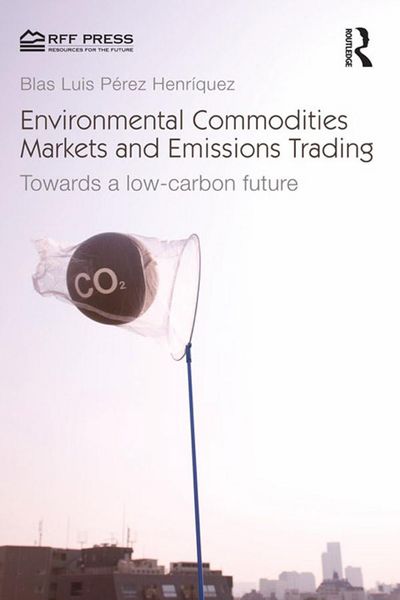
Environmental Commodities Markets and Emissions Trading Towards a Low-Carbon Future
-
- Hardcover
- Taschenbuch
- eBook ausgewählt
-
Form:Einzelkauf Download
-
Sprache:Englisch
-
eBook Format:ePUB 3
- ePUB 3 69,99 € ausgewählt
- PDF 69,99 €
69,99 €
inkl. gesetzl. MwSt.Beschreibung
Produktdetails
Format
ePUB 3
Kopierschutz
Ja
Family Sharing
Nein
Text-to-Speech
Ja
Erscheinungsdatum
05.03.2013
Verlag
Taylor & Francis eBooksSeitenzahl
296 (Printausgabe)
Dateigröße
3728 KB
Sprache
Englisch
EAN
9781136521782
Market-based solutions to environmental problems offer great promise, but require complex public policies that take into account the many institutional factors necessary for the market to work and that guard against the social forces that can derail good public policies. Using insights about markets from the new institutional economics, this book sheds light on the institutional history of the emissions trading concept as it has evolved across different contexts. It makes accessible the policy design and practical implementation aspects of a key tool for fighting climate change: emissions trading systems (ETS) for environmental control.
Blas Luis Pérez Henríquez analyzes past market-based environmental programs to extract lessons for the future of ETS. He follows the development of the emissions trading concept as it evolved in the United States and was later applied in the multinational European Emissions Trading System and in sub-national programs in the United States such as the Regional Greenhouse Gas Initiative (RGGI) and California's ETS. This ex-post evaluation of an ETS as it evolves in real time in the real world provides a valuable supplement to what is already known from theoretical arguments and simulation studies about the advantages and disadvantages of the market strategy.
Political cycles and political debate over the use of markets for environmental control make any form of climate policy extremely contentious. Pérez Henríquez argues that, despite ideological disagreements, the ETS approach, or, more popularly, 'cap-and-trade' policy design, remains the best hope for a cost-effective policy to reduce GHG emissions around the world.
Kundinnen und Kunden meinen
Verfassen Sie die erste Bewertung zu diesem Artikel
Helfen Sie anderen Kund*innen durch Ihre Meinung
Kurze Frage zu unserer Seite
Vielen Dank für dein Feedback
Wir nutzen dein Feedback, um unsere Produktseiten zu verbessern. Bitte habe Verständnis, dass wir dir keine Rückmeldung geben können. Falls du Kontakt mit uns aufnehmen möchtest, kannst du dich aber gerne an unseren Kund*innenservice wenden.
zum Kundenservice