KI-Beratung Beta

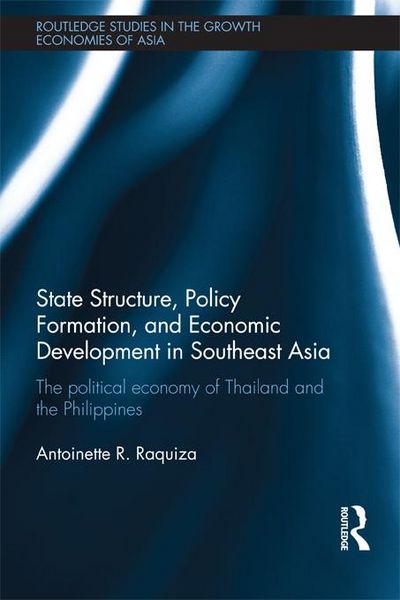
Produktbild: State Structure, Policy Formation, and Economic Development in Southeast Asia

State Structure, Policy Formation, and Economic Development in Southeast Asia The Political Economy of Thailand and the Philippines

84,49 €

inkl. gesetzl. MwSt.

Beschreibung

Why do some small, developing countries industrialize and others don't? What factors account for different economic performance among states that are vulnerable to external shocks, crony capitalism, and political instability? This book argues that the answer lies in the structuring of state power, specifically...

Beschreibung

Why do some small, developing countries industrialize and others don't? What factors account for different economic performance among states that are vulnerable to external shocks, crony capitalism, and political instability? This book argues that the answer lies in the structuring of state power, specifically the way different sets of governing elites - political leaders and economic technocrats - are embedded in political organisations and state institutions, and the way these elites relate to each other in the economic development policy process. Conducting a comparative historical analysis of Thailand and the Philippines, the book argues that the institutional settings of governing elites influence economic outcomes. In Thailand, political power traditionally connects to state institutions in ways that has limited the impact of political turnovers and global downturns - conducive to long-term industrial activities. In contrast, Philippine state power derives from family networks that merge social and political power, suited to fast-moving, short-term commercial interests. In focusing on this political and institutional story, the author analyses the current development dilemmas of countries, weighed down by historical legacies of unstable regimes, dependency, and social conflict, and how they are likely to develop in the future.

Produktdetails

Format

PDF

Kopierschutz

Ja

Family Sharing

Nein

Text-to-Speech

Nein

Produktdetails

Format

PDF

Format

eBooks im PDF-Format haben eine festgelegte Seitengröße und eignen sich daher nur bedingt zum Lesen auf einem tolino eReader oder Smartphone. Für den vollen Lesegenuss empfehlen wir Ihnen bei PDF-eBooks die Verwendung eines Tablets oder Computers.

Kopierschutz

Ja

Kopierschutz

Zum Lesen dieses eBooks auf Geräten der tolino Familie sowie auf sonstigen eReadern und am PC benötigen Sie eine ByteBook-ID. Weitere Hinweise zum Lesen von kopiergeschützten eBooks finden Sie unter Hilfe/Downloads.

Family Sharing

Nein

Family Sharing

Mit Family Sharing können Sie eBooks innerhalb Ihrer Familie (max. sechs Mitglieder im gleichen Haushalt) teilen. Sie entscheiden selbst, welches Buch Sie mit welchem Familienmitglied teilen möchten. Auch das parallele Lesen durch verschiedene Familienmitglieder ist durch Family Sharing möglich. Um eBooks zu teilen oder geteilt zu bekommen, muss jedes Familienmitglied ein Konto bei Thalia oder einem anderen tolino-Buchhändler haben. Weitere Informationen finden Sie unter Hilfe/Family-Sharing.

Text-to-Speech

Nein

Text-to-Speech

Bedeutet Ihnen Stimme mehr als Text? Mit der Funktion Text-to-Speech können Sie sich im tolino webReader und in der aktuellen Thalia – Lesen & Hören App das eBook vorlesen lassen. Weitere Informationen finden Sie unter Hilfe/Text-to-Speech.

Erscheinungsdatum

17.06.2013

Verlag Taylor & Francis eBooks
Seitenzahl

224 (Printausgabe)

Dateigröße

2735 KB

Sprache

Englisch

EAN

9781136505027

Barrierefreiheit
  • navigierbares Inhaltsverzeichnis
  • kurze Alternativtexte (z.B. für Abbildungen) vorhanden
  • keine Vorlesefunktionen des Lesesystems deaktiviert
  • navigierbarer Index
  • Seitennummerierung folgt dem gedruckten Werk

Noch keine Bewertungen vorhanden

Verfassen Sie die erste Bewertung zu diesem Artikel

Helfen Sie anderen Kundinnen und Kunden durch Ihre Meinung.

Kundinnen und Kunden meinen

Bewertungen (0)

Weitere Artikel findest du in

Die Leseprobe wird geladen.
  • Produktbild: State Structure, Policy Formation, and Economic Development in Southeast Asia