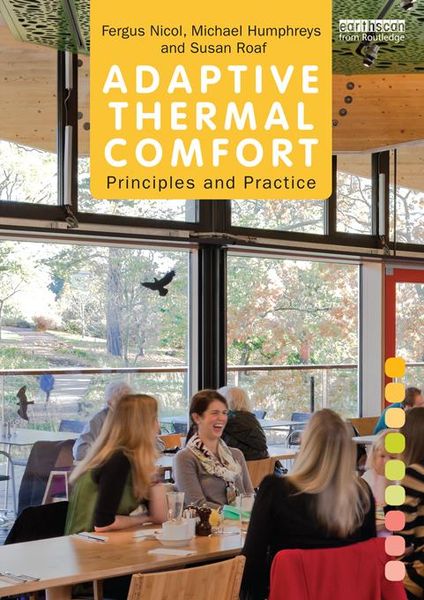
Adaptive Thermal Comfort: Principles and Practice
-
- Taschenbuch
- eBook ausgewählt
-
Form:Einzelkauf Download
-
Sprache:Englisch
-
eBook Format:PDF
- ePUB 3 71,99 €
- PDF 71,99 € ausgewählt
71,99 €
inkl. gesetzl. MwSt.Beschreibung
Produktdetails
Format
Kopierschutz
Ja
Family Sharing
Nein
Text-to-Speech
Nein
Erscheinungsdatum
15.03.2012
Verlag
Taylor & Francis eBooksSeitenzahl
208 (Printausgabe)
Dateigröße
7328 KB
Sprache
Englisch
EAN
9781136336485
The fundamental function of buildings is to provide safe and healthy shelter. For the fortunate they also provide comfort and delight. In the twentieth century comfort became a 'product' produced by machines and run on cheap energy. In a world where fossil fuels are becoming ever scarcer and more expensive, and the climate more extreme, the challenge of designing comfortable buildings today requires a new approach.
This timely book is the first in a trilogy from leaders in the field which will provide just that. It explains, in a clear and comprehensible manner, how we stay comfortable by using our bodies, minds, buildings and their systems to adapt to indoor and outdoor conditions which change with the weather and the climate. The book is in two sections. The first introduces the principles on which the theory of adaptive thermal comfort is based. The second explains how to use field studies to measure thermal comfort in practice and to analyze the data gathered.
Architects have gradually passed responsibility for building performance to service engineers who are largely trained to see comfort as the 'product', designed using simplistic comfort models. The result has contributed to a shift to buildings that use ever more energy. A growing international consensus now calls for low-energy buildings. This means designers must first produce robust, passive structures that provide occupants with many opportunities to make changes to suit their environmental needs. Ventilation using free, natural energy should be preferred and mechanical conditioning only used when the climate demands it.
This book outlines the theory of adaptive thermal comfort that is essential to understand and inform such building designs. This book should be required reading for all students, teachers and practitioners of architecture, building engineering and management - for all who have a role in producing, and occupying, twenty-first century adaptive, low-carbon, comfortable buildings.
Noch keine Bewertungen vorhanden
Verfassen Sie die erste Bewertung zu diesem Artikel
Helfen Sie anderen Kundinnen und Kunden durch Ihre Meinung.
Kurze Frage zu unserer Seite
Vielen Dank für dein Feedback
Wir nutzen dein Feedback, um unsere Produktseiten zu verbessern. Bitte habe Verständnis, dass wir dir keine Rückmeldung geben können. Falls du Kontakt mit uns aufnehmen möchtest, kannst du dich aber gerne an unseren Kund*innenservice wenden.
zum Kundenservice