KI-Beratung Beta

Produktbild: Recent advances in crop protection

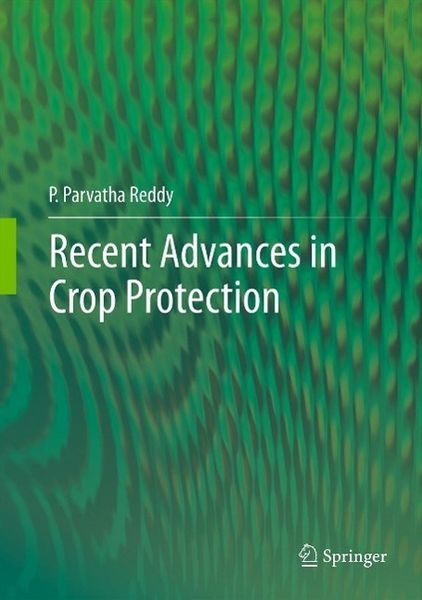
Recent advances in crop protection

149,79 €

inkl. gesetzl. MwSt.

Beschreibung

Produktdetails

Format

PDF

Kopierschutz

Nein

Family Sharing

Nein

Text-to-Speech

Nein

Erscheinungsdatum

14.09.2012

Verlag

Springer India

Seitenzahl

268 (Printausgabe)

Dateigröße

6948 KB

Sprache

Englisch

EAN

9788132207238

Beschreibung

Rezension

From the reviews:

“Reddy (Indian Institute of Horticultural Research) offers an excellent analysis of advances in crop protection methodology. … The key feature of this work is that it provides invaluable information for readers from a cadre of disciplines, not an insignificant accomplishment. Summing Up: Highly recommended. Graduate students, researchers/faculty, and professionals/practitioners.” (R. Frederiksen, Choice, Vol. 50 (8), April, 2013)

Produktdetails

Format

PDF

eBooks im PDF-Format haben eine festgelegte Seitengröße und eignen sich daher nur bedingt zum Lesen auf einem tolino eReader oder Smartphone. Für den vollen Lesegenuss empfehlen wir Ihnen bei PDF-eBooks die Verwendung eines Tablets oder Computers.

Kopierschutz

Nein

Dieses eBook können Sie uneingeschränkt auf allen Geräten der tolino Familie, allen sonstigen eReadern und am PC lesen. Das eBook ist nicht kopiergeschützt und kann ein personalisiertes Wasserzeichen enthalten. Weitere Hinweise zum Lesen von eBooks mit einem personalisierten Wasserzeichen finden Sie unter Hilfe/Downloads.

Family Sharing

Nein

Mit Family Sharing können Sie eBooks innerhalb Ihrer Familie (max. sechs Mitglieder im gleichen Haushalt) teilen. Sie entscheiden selbst, welches Buch Sie mit welchem Familienmitglied teilen möchten. Auch das parallele Lesen durch verschiedene Familienmitglieder ist durch Family Sharing möglich. Um eBooks zu teilen oder geteilt zu bekommen, muss jedes Familienmitglied ein Konto bei Thalia oder einem anderen tolino-Buchhändler haben. Weitere Informationen finden Sie unter Hilfe/Family-Sharing.

Text-to-Speech

Nein

Bedeutet Ihnen Stimme mehr als Text? Mit der Funktion Text-to-Speech können Sie sich im tolino webReader und in der aktuellen Thalia – Lesen & Hören App das eBook vorlesen lassen. Weitere Informationen finden Sie unter Hilfe/Text-to-Speech.

Barrierefreiheit

  • keine Information zur Barrierefreiheit bekannt

Erscheinungsdatum

14.09.2012

Verlag

Springer India

Seitenzahl

268 (Printausgabe)

Dateigröße

6948 KB

Sprache

Englisch

EAN

9788132207238

Noch keine Bewertungen vorhanden

Verfassen Sie die erste Bewertung zu diesem Artikel

Helfen Sie anderen Kundinnen und Kunden durch Ihre Meinung.

Kundinnen und Kunden meinen

Bewertungen (0)

Weitere Artikel findest du in

  • Produktbild: Recent advances in crop protection
  • PREFACE
    1. INTRODUCTION 1.1. Emerging pest scenario
    1.2. Impact of climate change 1.3. Need for novel approaches to crop protection
    1.4. Recent advances in crop protection
    1.5. References 2. AVERMECTINS 2.1. Distinguishing characteristics of Streptomyces avermitilis
    2.2. Chemical structure of avermectins
    2.3. Abamectin 2.4. Mode of action
    2.5. Commercial products
    2.6. Pest management using avermectins
    2.7. Conclusions
    2.8. References 3. BACTERIOPHAGES
    3.1. What is a bacteriophage?
    3.2. Control of bacterial plant diseases
    3.3. Biological control
    3.4. Early use of phages in agriculture
    3.5. Advantages and disadvantages of phage therapy
    3.6. Return of phage-based disease management
    3.7. Recent approaches for using phages on bacterial diseases 3.8. Disease management using phages
    3.9. Phages in integrated disease management strategy
    3.10. Other uses of phages in plant pathology
    3.11. Commercialization
    3.12. Future outlook 3.13. References 4. BIOFUMIGATION 4.1. What is biofumigation?
    4.2. Advantages of biofumigation
    4.3. Modes of utilization
    4.4. Biofumigation crops
    4.5. Mode of action
    4.6. Disease management
    4.7. Nematode management
    4.8. Weed management
    4.9. Insect management
    4.10. Maximizing biofumigation potential 4.11. Future outlook
    4.12. References 5. BIOTECHNOLOGICAL APPROACHES 5.1. Role of transgenic crops in agriculture
    5.2. Genes in defense against diseases
    5.3. Genes in defense against insect pests 5.4. Genes in defense against nematode pests
    5.5. Long-term impact of genetically modified plants 5.6. Future trends
    5.7. Conclusions
    5.8. References 6. BIO-PRIMING OF SEEDS
    6.1. What is bio-priming or biological seed treatment?
    6.2. Procedure of seed bio-priming
    6.3. Disease management using bio-priming
    6.4. References 7. DISGUISING THE LEAF SURFACE 7.1. Controlling diseases using film-forming polymers 7.2. Particle films as agents for control of plant diseases
    7.3. Disrupting spore adhesion to leaf surface
    7.4. Conclusions
    7.5. References 8. NON-PATHOGENIC STRAINS
    8.1. Involvement of non-pathogenic Fusarium in soil suppressiveness
    8.2. Selection of non-pathogenic Fusarium
    8.3. Modes of action of non-pathogenic Fusarium
    8.4. Histological and cytological studies 8.5. Integration of non-pathogenic Fusarium with other methods 8.6. Production, formulation and delivery 8.7. Future research
    8.8. Conclusions
    8.9. References
    9. PLANT DEFENSE ACTIVATORS
    9.1. Biological plant defense activators
    9.2. Chemical plant defense activators
    9.3. Synergistic manipulation of plant and insect defenses
    9.4. Integration of biological and chemical plant activators
    9.5. References 10. PLANT GROWTH PROMOTING RHIZOBACTERIA (PGPR) 10.1. Characteristics of an ideal PGPR
    10.2. Ways that PGPR promote plant growth 10.3. Strains of PGPR
    10.4. Disease management using PGPR
    10.5. Nematode management using PGPR
    10.6. Mode of action
    10.7. Biocontrol mechanisms of PGPR
    10.8. Challenges in PGPR research
    10.9. Development of formulations
    10.10. Modes of delivery
    10.11. Future prospects
    10.12. References 11. SOIL SOLARIZATION 11.1. Advantages and disadvantages of soil solarization
    11.2. Method of soil solarization 11.3. Effects of solarization
    11.4. Solarization under different situations
    11.5. Factors limiting effectiveness of solarization
    11.6. Disease management
    11.7. Nematode management
    11.8. Weed management
    11.9. Insect management
    11.10. Integration of solarization with other management methods
    11.11. Mode of action
    11.12. Strategies to enhance efficacy of soil solarization
    11.13. Conclusions 11.14. References
    12. STROBILURIN FUNGICIDES 12.1. Spectrum of activity
    12.2. Diseases controlled
    12.3. Mobility 12.4. Effects on plant health independent of disease control
    12.5. Mode of action 12.6. Resistance
    12.7. Guidelines for reducing resistance risk
    12.8. Commercialization
    12.9. Conclusions
    12.10. References
    13. VARIETY MIXTURES/CULTIVAR MIXTURES/MULTILINES 13.1. Crop monoculture and diversity
    13.2. What is a cultivar mixture? 13.3. Variety and species mixtures in practice
    13.4. Crops and diseases suited to cultivar mixtures 13.5. Use of cultivar mixtures to manage multiple diseases 13.6. How many cultivars make a good mixture? 13.7. Effect of cultivar mixtures on epidemic development 13.8. Mechanisms of variety mixtures for reducing epidemics
    13.9. Effect of cultivar mixtures on evolution of pathogen races or pathotypes 13.10. Mechanisms by which cultivar mixtures suppress disease 13.11. Reported successes with cultivar mixtures 13.12. Agronomic considerations
    13.13. Conclusions
    13.14. References 14. BIOINTENSIVE INTEGRATED PEST MANAGEMENT
    14.1. Integrated pest management (IPM)
    14.2. Biointensive integrated pest management (BIPM)
    14.3. Case studies
    14.4. Transfer of technology
    14.5. Conclusions
    14.6. References 15. PATHOGENESIS-RELATED PROTEINS (PRs) 15.1. Induction
    15.2. Occurrence
    15.3. Functions
    15.4. Relevance of PRs to disease resistance
    15.5. Applications: Brief overview
    15.6. Conclusions
    15.7. References 16. OTHER RECENT ADVANCES 16.1. RNA interference (RNAi) 16.2. Fusion protein-based biopesticides
    16.3. Seed mat technology
    16.4. Environmental methods
    16.5. References SUBJECT INDEX