KI-Beratung Beta

Produktbild: Advanced Materials for Thermal Management of Electronic Packaging
Band 30

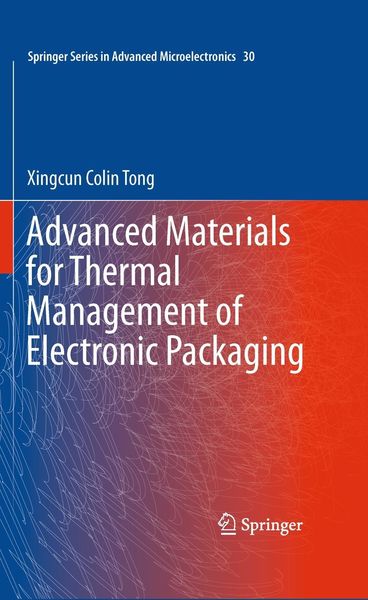
Advanced Materials for Thermal Management of Electronic Packaging

255,73 €

inkl. gesetzl. MwSt.

Beschreibung

Produktdetails

Format

PDF

Kopierschutz

Nein

Family Sharing

Nein

Text-to-Speech

Nein

Erscheinungsdatum

05.01.2011

Verlag

Springer Us

Seitenzahl

618 (Printausgabe)

Dateigröße

22933 KB

Sprache

Englisch

EAN

9781441977595

Beschreibung

Produktdetails

Format

PDF

eBooks im PDF-Format haben eine festgelegte Seitengröße und eignen sich daher nur bedingt zum Lesen auf einem tolino eReader oder Smartphone. Für den vollen Lesegenuss empfehlen wir Ihnen bei PDF-eBooks die Verwendung eines Tablets oder Computers.

Kopierschutz

Nein

Dieses eBook können Sie uneingeschränkt auf allen Geräten der tolino Familie, allen sonstigen eReadern und am PC lesen. Das eBook ist nicht kopiergeschützt und kann ein personalisiertes Wasserzeichen enthalten. Weitere Hinweise zum Lesen von eBooks mit einem personalisierten Wasserzeichen finden Sie unter Hilfe/Downloads.

Family Sharing

Nein

Mit Family Sharing können Sie eBooks innerhalb Ihrer Familie (max. sechs Mitglieder im gleichen Haushalt) teilen. Sie entscheiden selbst, welches Buch Sie mit welchem Familienmitglied teilen möchten. Auch das parallele Lesen durch verschiedene Familienmitglieder ist durch Family Sharing möglich. Um eBooks zu teilen oder geteilt zu bekommen, muss jedes Familienmitglied ein Konto bei Thalia oder einem anderen tolino-Buchhändler haben. Weitere Informationen finden Sie unter Hilfe/Family-Sharing.

Text-to-Speech

Nein

Bedeutet Ihnen Stimme mehr als Text? Mit der Funktion Text-to-Speech können Sie sich im tolino webReader und in der aktuellen Thalia – Lesen & Hören App das eBook vorlesen lassen. Weitere Informationen finden Sie unter Hilfe/Text-to-Speech.

Barrierefreiheit

  • keine Information zur Barrierefreiheit bekannt

Erscheinungsdatum

05.01.2011

Verlag

Springer Us

Seitenzahl

618 (Printausgabe)

Dateigröße

22933 KB

Sprache

Englisch

EAN

9781441977595

Noch keine Bewertungen vorhanden

Verfassen Sie die erste Bewertung zu diesem Artikel

Helfen Sie anderen Kundinnen und Kunden durch Ihre Meinung.

Kundinnen und Kunden meinen

Bewertungen (0)

Weitere Artikel findest du in

  • Produktbild: Advanced Materials for Thermal Management of Electronic Packaging
  • CH. 1. Thermal managing fundamentals and design guide in electronic packaging.- 1.1 Introduction.- 1.2 Thermal management challenges and common.- concerns.- 1.3 Fundamentals of heat transfer.- 1.4 Thermal management solutions.- 1.5 Design for advanced thermal management of electronic packaging.- 1.6 Materials selection for advanced thermal management.- 1.7 Environmental compliance of thermal managing materials.- CH. 2. Characterization methodology of thermal managing materials.- 2.1 Thermal properties and measurement techniques.- 2.2 Electrical properties and measurement techniques.- 2.3 Thermomechanical characterization.- 2.4 Analytical techniques for materials characterization.- 2.5 Surface finish and contact interface compatibility.- 2.6 Reliability analysis and environmental performance evaluation.- CH. 3. Electronic packaging materials and their thermal managements.- 3.1 Materials selection for electronic packaging.- 3.2 Ceramics and semiconductors.- 3.3 Electronic glasses.- 3.4 Polymers.- 3.5 Monolithic metals.- 3.6 Metallic composites.- 3.7 Multimaterial laminates.- 3.8 Printed Circuit Board (PCB) Materials.- 3.9 Thermal interface materials.- 3.10 Advanced thermally conductive materials.- CH. 4. THERMALLY conductive carbonaceous materials and carbon matrix composites.- 4.1 Introduction.- 4.2 Natural and industrial graphite.- 4.3 Pyrolytic graphite.- 4.4 Graphite/Carbon Foams.- 4.5 Thermally conductive carbon fibers.- 4.6 Diamond.- 4.7 Carbon Nanotubes.- 4.8 Carbon/carbon composites.- CH. 5. Thermally conductive polymer matrix composites.- 5.1 Introduction.- 5.2 Polymer matrix types.- 5.3 Reinforcements selection and its effect on thermal conductivity.- 5.4 General fabrication and manufacturing processes.- 5.5 Types and applications for thermal management.- CH. 6. High thermal conductivity metal matrix composites.- 6.1 Introduction.- 6.2 Processing of metal matrix composites.- 6.3 Aluminum matrix composites.- 6.4 Copper matrix composites.- 6.5 Other metal matrix composites.- CH. 7. Thermally conductive ceramic matrix composites.- 7.1 Introduction.- 7.2 Diamond-SiC composites.- 7.3 Carbon-SiC Composites.- 7.4 Reaction-Bonded SiC.- 7.5 Aluminum-toughened SiC.- 7.6 CNT/Ceramic- carbon nanotube composites.- CH. 8. Thermal interface materials in electronic packaging.- 8.1 Thermal contact conductance and requirement for thermal interface materials.- 8.2 Metallic thermal interface materials.- 8.3 Thermal grease.- 8.4 Thermally conductive elastomer materials.- 8.5 Phase change materials.- 8.6 Polymer solder hybrid materials.- 8.7 Fiber-reinforced thermal interface materials.- 8.8 Graphite based thermal interface material.- 8.9 Nanotechnology based thermal interface materials.- 8.10 Thermal interface materials selection.- CH. 9. Materials and design of advanced heat spreader and air cooling heat sink.- 9.1 Introduction.- 9.2 Spreading and constriction resistance.- 9.3 Type of heat spreaders and their materials selection.- 9.4 Air cooling heat sink.- 9.4.1 Heat sink design constraints and design parameters.- 9.5 Nanostructure heat sink and complex spreader sink.- CH. 10. Liquid cooling devices and materials selection.- 10.1 Introduction.- 10.2 Indirect single-phase liquid cooling.- 10.3 Direct immersion cooling.- 10.4 Spray cooling and jet impingement.- 10.5 Heat pipe cooling.- 10.6 Refrigeration cooling.- 10.7 High-flux cooling with phase-change heat transfer.- CH. 11. Thermoelectric cooling through thermoelectric materials.- 11.1 Introduction.- 11.2 Thermoelectric effects.- 11.3 Design and architecture of thermoelectric cooling devices.- 11.4 Thermoelectric materials and future development trends.- CH. 12. Development and applications of advanced thermal managing materials.- 12.1 Materials development routine and methodology.- 12.2 Smart composites and multifunctional materials for thermal management.- 12.3 Thermal managing materials with enhanced EMI shielding and absorbing performance.- 12.4 Applications.- 12.5 Future trends.-