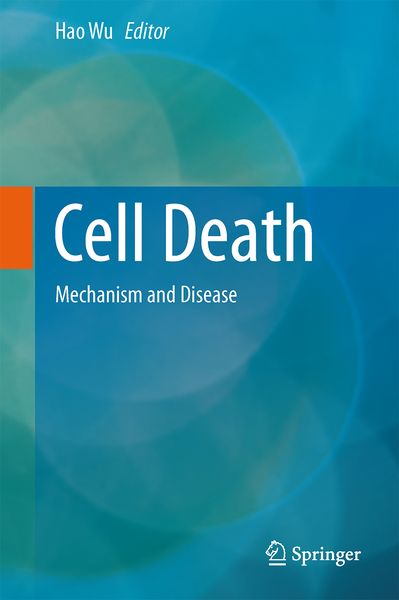
Cell Death Mechanism and Disease
-
- Hardcover ausgewählt
- Taschenbuch
- eBook
-
Sprache:Englisch
92,99 €
UVP
106,99 €
inkl. gesetzl. MwSt.,
Beschreibung
Produktdetails
Einband
Gebundene Ausgabe
Erscheinungsdatum
14.11.2013
Abbildungen
XII, 272 p. 46 illus., 42 illus. in color.
Herausgeber
Hao WuVerlag
Springer UsSeitenzahl
272
Maße (L/B/H)
24,1/16/2,1 cm
Gewicht
542 g
Sprache
Englisch
ISBN
978-1-4614-9301-3
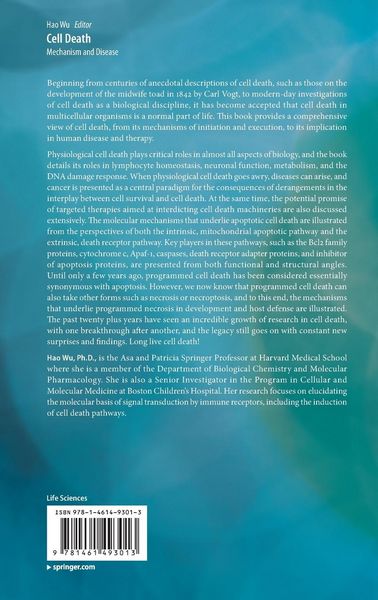
Beginning from centuries of anecdotal descriptions of cell death, such as those on the development of the midwife toad in 1842 by Carl Vogt, to modern-day investigations of cell death as a biological discipline, it has become accepted that cell death in multicellular organisms is a normal part of life. This book provides a comprehensive view of cell death, from its mechanisms of initiation and execution, to its implication in human disease and therapy.
Physiological cell death plays critical roles in almost all aspects of biology, and the book details its roles in lymphocyte homeostasis, neuronal function, metabolism, and the DNA damage response. When physiological cell death goes awry, diseases can arise, and cancer is presented as a central paradigm for the consequences of derangements in the interplay between cell survival and cell death. At the same time, the potential promise of targeted therapies aimed at interdicting cell death machineries are also discussed extensively. The molecular mechanisms that underlie apoptotic cell death are illustrated from the perspectives of both the intrinsic, mitochondrial apoptotic pathway and the extrinsic, death receptor pathway. Key players in these pathways, such as the Bcl2 family proteins, cytochrome c, Apaf-1, caspases, death receptor adapter proteins, and inhibitor of apoptosis proteins, are presented from both functional and structural angles. Until only a few years ago, programmed cell death has been considered essentially synonymous with apoptosis. However, we now know that programmed cell death can also take other forms such as necrosis or necroptosis, and to this end, the mechanisms that underlie programmed necrosis in development and host defense are illustrated. The past twenty plus years have seen an incredible growth of research in cell death, with one breakthrough after another, and the legacy still goes on with constant new surprises and findings. Long live cell death!
Noch keine Bewertungen vorhanden
Verfassen Sie die erste Bewertung zu diesem Artikel
Helfen Sie anderen Kundinnen und Kunden durch Ihre Meinung.
Kurze Frage zu unserer Seite
Vielen Dank für dein Feedback
Wir nutzen dein Feedback, um unsere Produktseiten zu verbessern. Bitte habe Verständnis, dass wir dir keine Rückmeldung geben können. Falls du Kontakt mit uns aufnehmen möchtest, kannst du dich aber gerne an unseren Kund*innenservice wenden.
zum Kundenservice