Gutscheinbedingungen

**Gültig bis 10.06.2026 / Gültig für gebrauchte Bücher / Mindestbestellwert 20,00 € / Einzelne Artikel können ausgeschlossen sein / Online auf www.bücher.de.de / Nicht kombinierbar mit anderen Gutscheinen oder Preisaktionen / Nur einmal pro Einkauf einlösbar / Gutschein wird auf max. 500€ Bestellwert angerechnet / Keine Barauszahlung / Nicht gültig für Versandkosten und Services

  • Produktbild: How Drama Activates Learning
  • Produktbild: How Drama Activates Learning

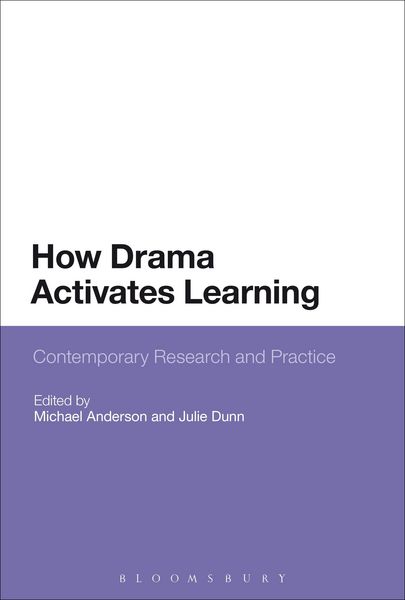
How Drama Activates Learning Contemporary Research and Practice

183,99 €

inkl. gesetzl. MwSt., Versandkostenfrei

Lieferung nach Hause

Beschreibung

Produktdetails

Einband

Gebundene Ausgabe

Erscheinungsdatum

01.08.2013

Herausgeber

Michael Anderson + weitere

Verlag

Bloomsbury Academic

Seitenzahl

336

Maße (L/B/H)

24/16,1/2,3 cm

Gewicht

669 g

Sprache

Englisch

ISBN

978-1-4411-3634-3

Beschreibung

Zitat

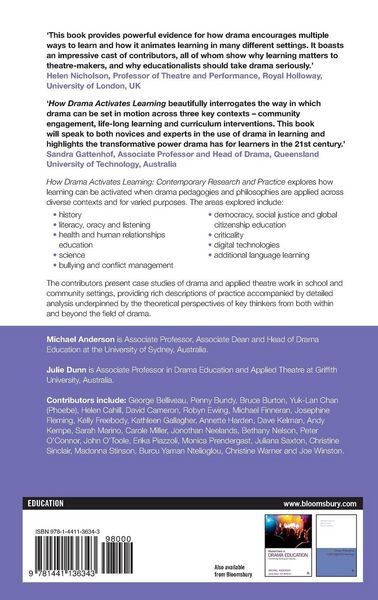
How Drama Activates Learning is a timely addition to the drama and education literature, with much wider relevance beyond this community. Leading international drama education and applied theatre scholars are joined by emerging researchers to create this new compendium of evidence and insights into diverse research and case studies of practice. A dynamic range of practical examples, analysis and theoretical developments are shared in the realms of community development, learning contexts and curriculum areas including history, additional language learning, learning technologies and science. This book highlights convincing reasons for drama to be central to learning processes and interrogates the ways that these processes work. It clearly demonstrates the effectiveness of dramatic practice and research for enabling people to play an active role in imagining and creating future worlds. Susan Davis, Senior Lecturer in Education, CQUniversity Australia This book provides powerful evidence for how drama encourages multiple ways to learn and how it animates learning in many different settings. It boasts an impressive cast of contributors, all of whom show why learning matters to theatre-makers, and why educationalists should take drama seriously. Helen Nicholson, Professor of Theatre and Performance, Royal Holloway, University of London, UK How Drama Activates Learning beautifully interrogates the way in which drama can be set in motion across three key contexts - community engagement, life-long learning and curriculum interventions. This book will speak to both novices and experts in the use of drama in learning and highlights the transformative power drama has for learners in the 21st century. Sandra Gattenhof, Associate Professor and Head of Drama, Queensland University of Technology, Australia

Produktdetails

Einband

Gebundene Ausgabe

Erscheinungsdatum

01.08.2013

Herausgeber

Verlag

Bloomsbury Academic

Seitenzahl

336

Maße (L/B/H)

24/16,1/2,3 cm

Gewicht

669 g

Sprache

Englisch

ISBN

978-1-4411-3634-3

Herstelleradresse

Libri GmbH
Europaallee 1
36244 Bad Hersfeld
DE

Email: gpsr@libri.de

Kundinnen und Kunden meinen

0 Bewertungen

Informationen zu Bewertungen

Zur Abgabe einer Bewertung ist eine Anmeldung im Konto notwendig. Die Authentizität der Bewertungen wird von uns nicht überprüft. Wir behalten uns vor, Bewertungstexte, die unseren Richtlinien widersprechen, entsprechend zu kürzen oder zu löschen.

Die Bewertungen sind nach Format, Anzahl Sterne und Datum sortiert.

Verfassen Sie die erste Bewertung zu diesem Artikel

Helfen Sie anderen Kund*innen durch Ihre Meinung

Kundinnen und Kunden meinen

0 Bewertungen filtern

Die Leseprobe wird geladen.
  • Produktbild: How Drama Activates Learning
  • Produktbild: How Drama Activates Learning
  • Notes on Contributors
    Preface
    Foreword, Cecily O'Neill
    Acknowledgements
    Part 1: Introduction
    1. Drama and Learning: Landscapes of an Aspirational Pedagogy, Michael Anderson (University of Sydney, Australia) and Julie Dunn (Griffith University, Australia)
    Part 2: Activating Communities
    2. Drama, Community and Achievement: Together I'm Someone, Jonothan Neelands (University of Warwick, UK) and Bethany Nelson (Emerson College, USA)
    3. Drama, Cultural Leadership and Reflective Practice: Taking the Road to Zamunda, Chris Sinclair (University of Melbourne, Australia) and Dave Kelman (Western Edge Youth Arts, Australia)
    4. Drama and Social Justice: Power, Participation and Possibility, Kelly Freebody (University of Sydney, Australia) and Michael Finneran (Mary Immaculate College, University of Limerick, Ireland)
    5. Drama, Conflict and Bullying: Working with Adolescent Refugees, Bruce Burton (Griffith University, Australia)
    6. Drama and Global Citizenship Education: Planting Seeds of Social Conscience and Change, Chan Yuk Lan (Phoebe) (Hong Kong Arts Centre, Hong Kong)
    7. Drama, Listening, Risk and Difference: On the Pedagogical Importance of (not) Knowing the Other, Kathleen Gallagher (University of Toronto, Canada) and Burcu Yaman Ntelioglou (University of Toronto, Canada)
    Part 3: Activating Learners
    8. Drama, Creating and Imagining: Rendering the World Newly Strange, Juliana Saxton (University of Victoria, Canada) and Carole Miller (University of Victoria, Canada)
    9. Drama as Critical Pedagogy: Re-imagining Terrorism, Peter O'Connor (University of Auckland, New Zealand)
    10. Drama and Beauty: Promise, Pleasure and Pedagogy, Joe Winston (University of Warwick, UK)
    11. Drama and the Audience: Transformative Encounters in TheatreSpace, Penny Bundy (Griffith University, Australia), Robyn Ewing (University of Sydney, Australia) and Josephine Fleming (University of Sydney, Australia)
    12. Drama, Speaking and Listening: The Treasure of Oracy, John O'Toole (Griffith University, Australia) and Madonna Stinson (Griffith University, Australia)
    13. Drama for Health and Human Relationships Education: Aligning Purpose and Design, Helen Cahill (University of Melbourne, Australia)
    Part 4: Activating Curriculum
    14. Drama and History: A Kind of Integrity, Andy Kempe (University of Reading, UK)
    15. Drama for Additional Language Learning: Dramatic Contexts and Pedagogical Possibilities, Madonna Stinson (Griffith University, Australia) and Erika Piazzoli (Griffith University, Australia)
    16. Drama and Learning Technologies: To Affinity Spaces and Beyond, Michael Anderson (University of Sydney, Australia) and Dave Cameron (University of Newcastle, UK)
    17. Drama and Writing: 'Overcoming the Hurdle of the Blank Page', Julie Dunn (Griffith University, Australia), Annette Harden (St Bernard State School, Australia) and Sarah Marino (Griffith University, Australia)
    18. Drama and Science: An Unlikely Partnership for Inquiry, Christine Warner (Ohio State University, USA)
    19. Drama and Literature: Masks and Love Potions, George Belliveau (University of British Columbia, Canada) and Monica Prendergast (University of Victoria, Canada)
    Part 5: Conclusion
    20. Drama and the Future: Activating New Possibilities, Julie Dunn (Griffith University, Australia) and Michael Anderson (University of Sydney, Australia)
    Index